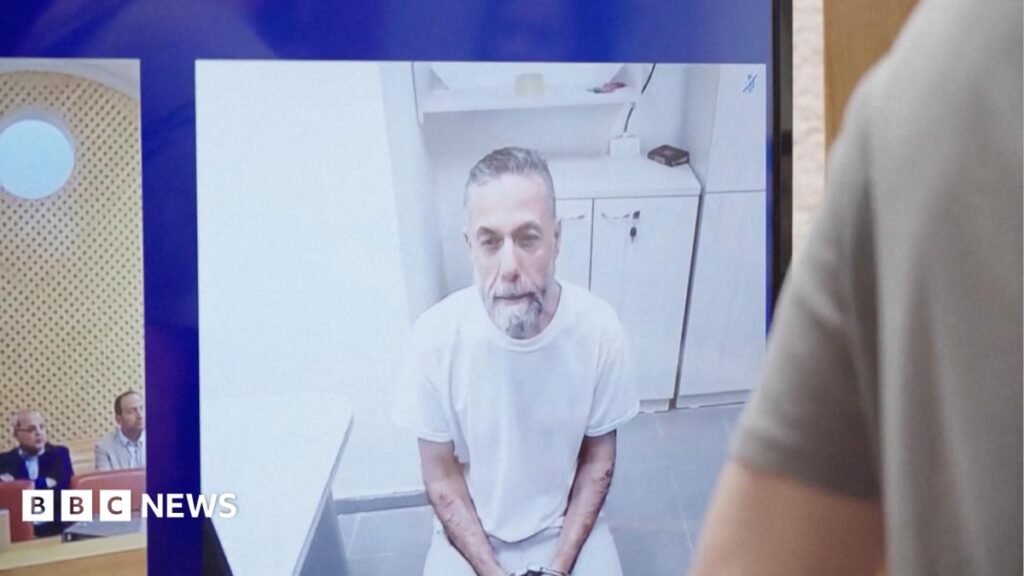
Abu Safiya was director of the Kamal Adwan hospital in northern Gaza, caring for patients and running the hospital while the area was under “almost total siege” by Israeli forces, according to the UN. He was detained in December 2024, when the Israeli military forced patients and medical staff to leave the hospital, saying it
Abu Safiya was director of the Kamal Adwan hospital in northern Gaza, caring for patients and running the hospital while the area was under “almost total siege” by Israeli forces, according to the UN.
He was detained in December 2024, when the Israeli military forced patients and medical staff to leave the hospital, saying it was a “Hamas terrorist stronghold.” At the time, the World Health Organization called for an end to attacks on hospitals in Gaza.
Footage circulating at the time showed Abu Safiya walking through the rubble towards an Israeli armored vehicle in his white doctor’s coat before being taken away for questioning.
A spokesman for the Israel Defense Forces (IDF) said in a statement to the BBC that he was detained on suspicion of involvement in terrorist activities and having a rank in Hamas.
Abu Safiya held the rank of colonel in the health department of the Hamas-run Gaza Interior Ministry, in an agency that provided medical treatment to security and police officers and their families.
However, medical staff and international aid groups who worked with Abu Safiya deny that he cooperated or worked for Hamas.
He is detained under the Illegal Combatants Law, which authorizes the military to detain without charge people from Gaza suspected of posing a security risk for an indefinite period.
The Israel Prison Service has come under heavy criticism in the past for its treatment of Palestinian prisoners and detainees, which it denies.
In November 2025, the United Nations Committee against Torture said it was deeply concerned by reports indicating “a de facto state policy of organized and widespread torture and ill-treatment” of Palestinian detainees in Israeli prisons.
That same month, the Israel-based human rights group Physicians for Human Rights of Israel (PHRI) said at least 94 Palestinian prisoners and detainees had died in Israeli custody in less than two years.
The Israel Prison Service told the BBC that allegations about Abu Safiya’s treatment detailed by his lawyer were false and had no factual basis.
He did not provide information such as detention status, place of detention or medical condition, he said, for privacy and security reasons, but stated that all prisoners and detainees were held in accordance with the law and received medical care according to Health Ministry guidelines.
The IPS added that it rejects accusations of abuse, torture, hunger or denial of medical treatment.
There have been statements calling for action on Abu Safiya’s case from human rights groups such as Amnesty International, whose spokesperson called it “truly horrifying”. PHRI said he should be transferred immediately, receive urgent medical treatment and visit a judge.
PHRI also filed a petition with the Supreme Court in April calling for the release of Abu Safiya and 13 other Palestinian doctors from Gaza detained in Israel without charge.
On Monday, the UN Working Group on Arbitrary Detention adopted an opinion calling Israel’s detention of Abu Safiya arbitrary and calling for his immediate release.
The panel of independent experts also said the case was one of several that had been brought before it that “may indicate a widespread or systematic practice of arbitrary detention in the country.”
The BBC has contacted the Israel Prison Service for comment on the working group’s findings.
Keep following us for the latest insights.