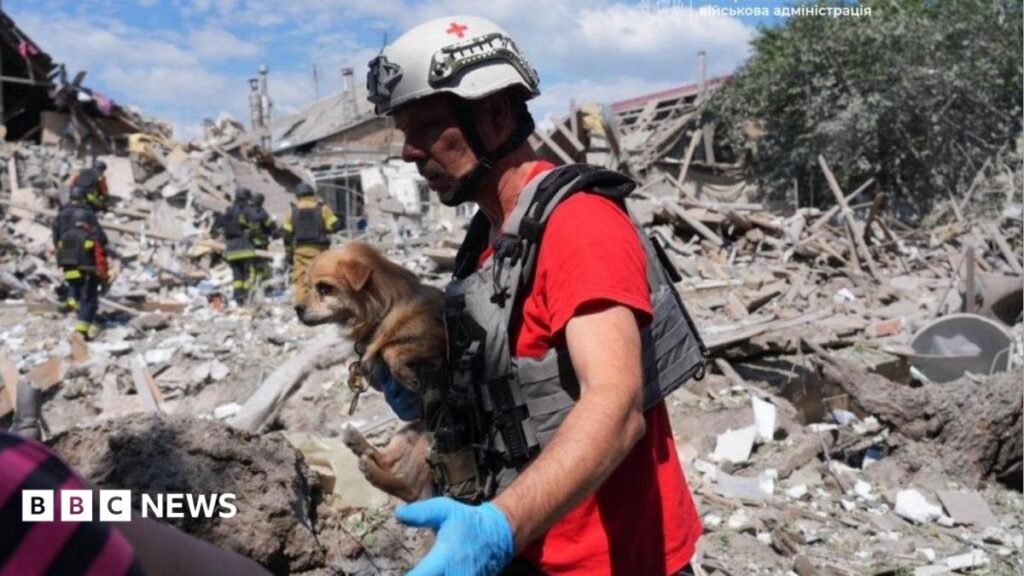
Acting mayor Regina Kharchenko told the BBC that during a particularly intense attack she “did not go to the shelter, but when it was too noisy I took refuge in the bathroom.” A Shahed drone crashed not far from Anna’s office with a large explosion, and another drone crashed into a cable, disrupting the Internet.
Acting mayor Regina Kharchenko told the BBC that during a particularly intense attack she “did not go to the shelter, but when it was too noisy I took refuge in the bathroom.”
A Shahed drone crashed not far from Anna’s office with a large explosion, and another drone crashed into a cable, disrupting the Internet. “That’s just another normal day in Zaporizhzhia,” he said.
Its city is the administrative capital of the Zaporizhzhia region, one of five regions in southern and eastern Ukraine that Russia claims as its own.
The Zaporizhzhia nuclear power plant, the largest in Europe, is located almost 50 kilometers southwest of the city, in part of the region under Russian occupation.
Following the relentless onslaught of Russian attacks, the Zaporizhzhia city council met in an underground shelter to discuss the worsening situation. “The enemy has intensified terror against the civilian population, municipal transport, private buses, cars, homes and even children,” Regina Kharchenko said at the meeting.
Plans had been made to build more shelters across the city and place more anti-drone nets in the busiest and most vulnerable places, the acting mayor later told the BBC, saying anti-shatter films were being applied to the windows of schools, hospitals and public buildings.
“Personally, I’m very scared,” he said. At night, he sometimes sleeps on the floor of a hallway in his house: “I live in a normal building, on the seventh floor. I don’t have a personal bunker with 10 bodyguards. I live a normal life.”
For more tech updates, stay tuned to our blog.