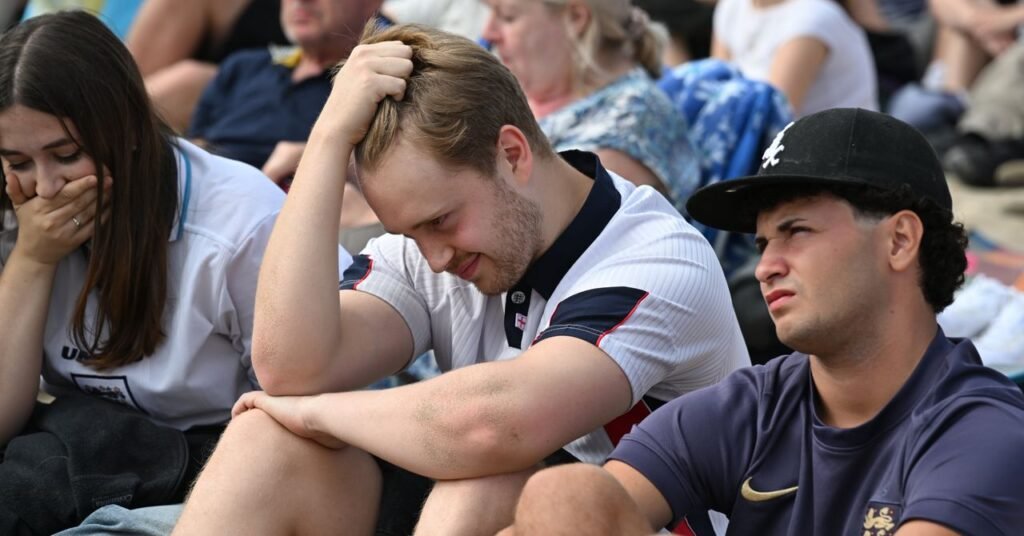
Ready for him Final of the 2026 World Cup? You might think so, but your body will have to be prepared to put in some work, especially if your favorite team makes it. Research shows that watching high-pressure games can increase heart rate, increase stress levels and put additional strain on the cardiovascular system. According
Ready for him Final of the 2026 World Cup? You might think so, but your body will have to be prepared to put in some work, especially if your favorite team makes it.
Research shows that watching high-pressure games can increase heart rate, increase stress levels and put additional strain on the cardiovascular system.
According to a recent study by researchers at Bielefeld University in Germany, fans’ physiological stress increases by approximately 41 percent during a football final compared to a normal day. Heart rate also increased significantly, going from 70.9 beats per minute to 78.7 beats per minute, a difference even compared to other weekends.
Bielefeld investigators tracked 229 fans of the German club Arminia Bielefeld for three months. Participants wore smartwatches that continuously recorded heart rate and a stress index estimated based on heart rate variability, allowing the researchers to compare the day of the 2025 German Cup final with the days leading up to the match.
The physiological reaction to the football final began long before the match began. The researchers observed that fans’ stress levels began to rise in the morning and peaked just before kickoff. Even after the final whistle, the spectators showed signs of high stress.
Where you watch the game also makes a difference. The study found that fans who watched the game in the stadium had an average heart rate of 94.2 beats per minute compared to 79.4 among those who watched the game on television. After their team’s first goal, those present in the stands saw their heart rate increase to an average of up to 108 beats per minute, a much more intense response than that observed in other contexts.
Alcohol consumption seemed to amplify that effect. Participants who reported drinking during the game had heart rates about 5 percent higher than the rest of the fans during the game and almost 12 percent higher after their team’s first goal. Although the researchers did not evaluate medical risks, they note that alcohol can increase cardiovascular stress when people are in an emotional state.
During the first minutes of the match, when the result was still uncertain, heart rates reached their highest levels. Once the game seemed decided, the fans’ heart rates dropped.
However, two goals scored in the final minutes made them finish again, although the chances of a comeback were practically nil. (You can only imagine how fast the Argentine fans’ hearts were beating during this week’s furious comeback against Egypt.) For the authors, this reflects that the body responds not only to the objective possibilities of winning but also to emotions such as hope, pride or attachment to the team.
The findings align with the results of previous studies on the physiological impacts of soccer. That includes a study published in the New England Journal of Medicine after the 2006 World Cup in Germany found that the risk of suffering an acute cardiovascular event nearly tripled during German national team matches among people with pre-existing heart conditions.
Later research shows that games can cause a rise in stress hormones such as cortisol, and found that fans who identify more strongly with their team exhibit stronger biological responses during decisive games.
This article originally appeared in WIRED in Spanish and has been translated from Spanish.
Keep following us for the latest insights.