Just a few days ago, the states’ antitrust challenge to the Paramount-Warner Bros. merger still seemed like a hurdle. Now, it’s looking more like a siege war, as Paramount has agreed to suspend the $111 million deal for at least several months. In doing so, Paramount’s lawyers have effectively admitted that they were unlikely to
Just a few days ago, the states’ antitrust challenge to the Paramount-Warner Bros. merger still seemed like a hurdle.
Now, it’s looking more like a siege war, as Paramount has agreed to suspend the $111 million deal for at least several months. In doing so, Paramount’s lawyers have effectively admitted that they were unlikely to prevail in an upcoming fight over an injunction and would instead attempt to beat the states at trial.
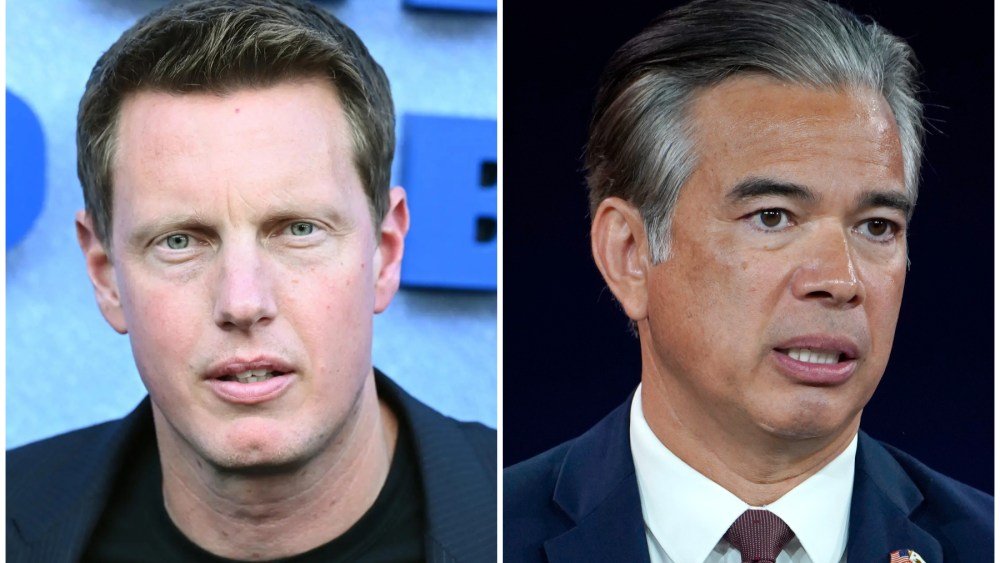
“I think they saw the writing on the wall,” said California Attorney General Rob Bonta. Variety on Friday. “They saw that the outcome of a preliminary injunction motion was a fait accompli. The die was cast. They were going to lose. Otherwise, why not challenge it?”
David Ellison, chairman and CEO of Paramount Skydance, had hoped to win a ruling denying the court order by mid-September, allowing him to close the deal in time to avoid paying Warner Bros. shareholders millions of dollars a day. Their lawyers pushed for a three-day evidentiary hearing in late August, where they could confront the states’ expert economist and undermine the states’ argument that the deal will result in illegal market concentration.
But in a ruling Thursday, Judge Araceli Martínez-Olguín denied Paramount’s attempt to speed up the briefing on that request, indicating that she was unwilling to accept the multi-day hearing. The judge had already granted a 28-day restraining order, finding that the states had made a “clear demonstration” that the merger would likely harm competition, and that the standard for obtaining an injunction would be similar.
Paramount could have chosen to wait for the ruling and then immediately appeal to the Ninth Circuit. But Nexstar attempted to do so after its merger with Tegna was banned in April, and is still stuck in limbo with no guarantee of a resolution anytime soon. Paramount would have faced a similar delay, likely delaying any appeal relief until early 2027.
So where does it go from here?
To trial, where Paramount still believes it has the upper hand over what it calls “one of the weakest merger challenges in modern antitrust history.” The company hopes to get there as soon as possible, ideally before the end of 2026.
Whenever a trial takes place, it won’t be quick enough to avoid having to pay Warner Bros. Discovery shareholders $7 million a day, starting September 30. But that’s a cost Paramount will have to bear to close the deal.
The 12-state coalition will push for a later date, arguing it needs additional time to prepare.
“We think 2027 is appropriate,” Bonta said. “If the judge said April 2027, we wouldn’t disagree with that.”
Paramount agreed not to close the transaction until five days after the trial ruling or June 1, 2027, whichever comes first. Bonta argued that Paramount is pushing for a quick resolution because of “commercial factors” and not due process considerations.
“I’m sure they want a quick trial,” he said. “That’s based on other reasons, not what’s appropriate for a case of this magnitude.”
States will want more time to obtain extensive discoveries, including documents and statements they were unable to obtain during their investigation.
“Paramount and Warner Bros. were dragging their feet. They didn’t give us everything we wanted,” Bonta said. “If they wanted to have a faster trial, they could have given us the information we requested in the pre-litigation discovery process.”
The trial will take place in Martínez-Olguín’s courtroom in Oakland, California, and could last two to three weeks or longer.
Meanwhile, Paramount could try to reopen talks to reach a deal with the states. So far, Bonta said, the company has not offered the type of structural solutions (i.e., divestitures of film or cable distribution assets) that would need to be part of a deal.
Bonta has repeatedly said he is not interested in “behavioral” remedies, such as a consent decree guaranteeing a minimum number of movie releases or 45-day theatrical windows, saying they have proven ineffective in the past.
“We have never achieved anything that comes close to addressing the concerns we have raised,” Bonta said. “We are focused on litigation. We have gained momentum and hope to carry that momentum into trials.”
In its statement, Paramount argued that strategic withdrawal was the best way to reach a decision on the merits of the deal as soon as possible.
“This is the fastest and clearest way to demonstrate that this transaction is good for competition, good for consumers and good for creators, a conclusion that dozens of competition authorities around the world have already reached,” the company said.
Bonta argued otherwise, and it’s now clear that those arguments present more than a minor obstacle.
“This merger, if it comes to fruition, will hurt Americans, it will hurt Californians,” he said. “This will increase their prices. It shouldn’t cost much to enjoy your favorite show on the couch.”
Check back often for more exciting news!