Receive the daily Popular Science newsletter💡 Breakthroughs, discoveries and DIY tips delivered six days a week. By registering, you confirm that you are over 16 years of age, will receive newsletters and promotional content, agree to our Terms of Use, and acknowledge the data practices in our Privacy Policy. You can unsubscribe at any time.
We know that generative AI models are now smart enough to produce images, videos, text and audio that, more often than not, can convincingly pass for something created by a human being. This type of content can be produced in seconds for little to no money, which means we are seeing them hit the internet and its various platforms in droves.
While there are protections to stop phishing and spam, music created with AI is not banned on large audio streaming platforms. In some cases, it has proven to be as popular as music created by humans without the help of AI. But what if you want to make sure that everything you hear is authentically human?
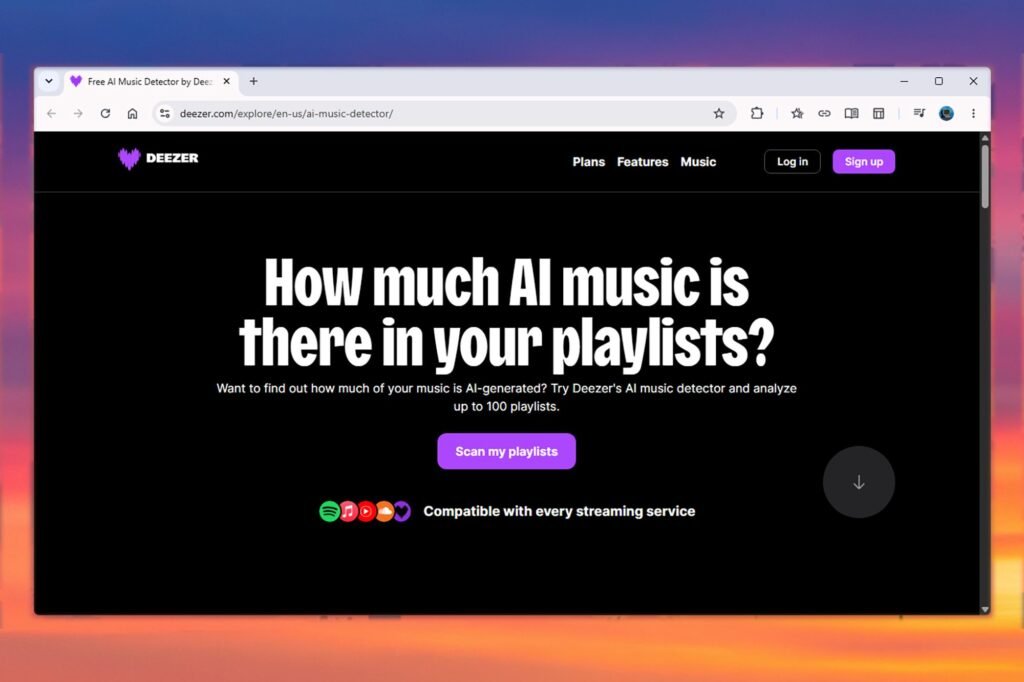
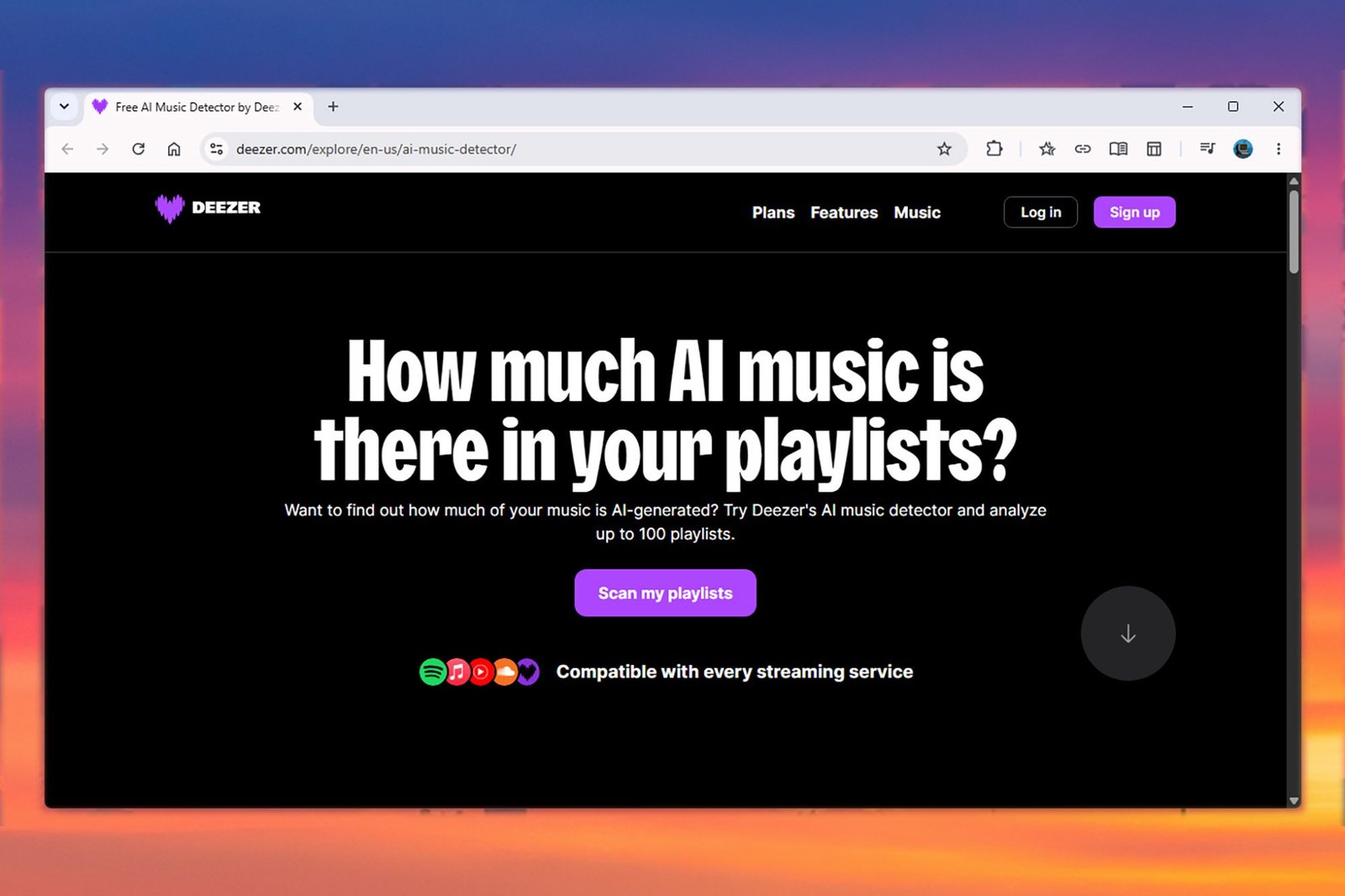
Music streaming service Deezer has now developed a sophisticated AI song detector that you can use for free on 20 different platforms and up to 100 playlists; You don’t even need a Deezer account to use it. Here’s how it works and what happened when we put it to the test on some playlists.
Introducing the Deezer AI music detector
Defining AI music can be complicated: Many artists use various types of software to enhance their music, produce synthetic sounds, and fill in some of the gaps left by human musicians. With this in mind, the line between non-AI music and music created by machines can be a little blurry.
Deezer says its detection tool is configured to detect fully AI-generated music and has a 99.8 percent success rate. In contrast, their research shows that 97 percent of their listeners cannot distinguish between AI-created music and human-created music when given a blind test.
The idea of the tool is not to ban AI music from Deezer, but to accurately tag it so listeners know what kind of songs they are adding to their playlists. According to Deezer, 43 percent of people who switch to the platform from an alternative like Spotify or Tidal and share their playlists have some AI tracks in their library.
Understandably, Deezer doesn’t reveal exactly how it detects AI music to prevent people from finding ways around it. What it does say is that “generative software leaves specific artifacts in the audio signals of AI music” and judging by the accuracy rate Deezer claims, it works well.
Another Deezer statistic: 44 percent of the tracks uploaded to the service each day, some 75,000 songs, are generated by AI. These AI tracks do not appear in Deezer recommendations or editorially curated playlists and represent only 1 to 3 percent of streams on Deezer, with up to 85 percent of those streams identified as fraudulently manipulated in some way.
Putting it to the test
You can try Deezer’s free AI detection tool in your browser (available here): just click Scan my playlists and follow the instructions on the screen. Choose from the list of streaming services it works with (which is pretty much all of them), then enter the relevant login details so Deezer can gain access.
Deezer says the only data it gets from your account is securely protected and limited to what it needs to analyze your playlists – meaning there’s no contact or payment information, for example. You must give Deezer’s AI detection tool permission to connect to your account, but you can then revoke access through your music streaming app’s settings.
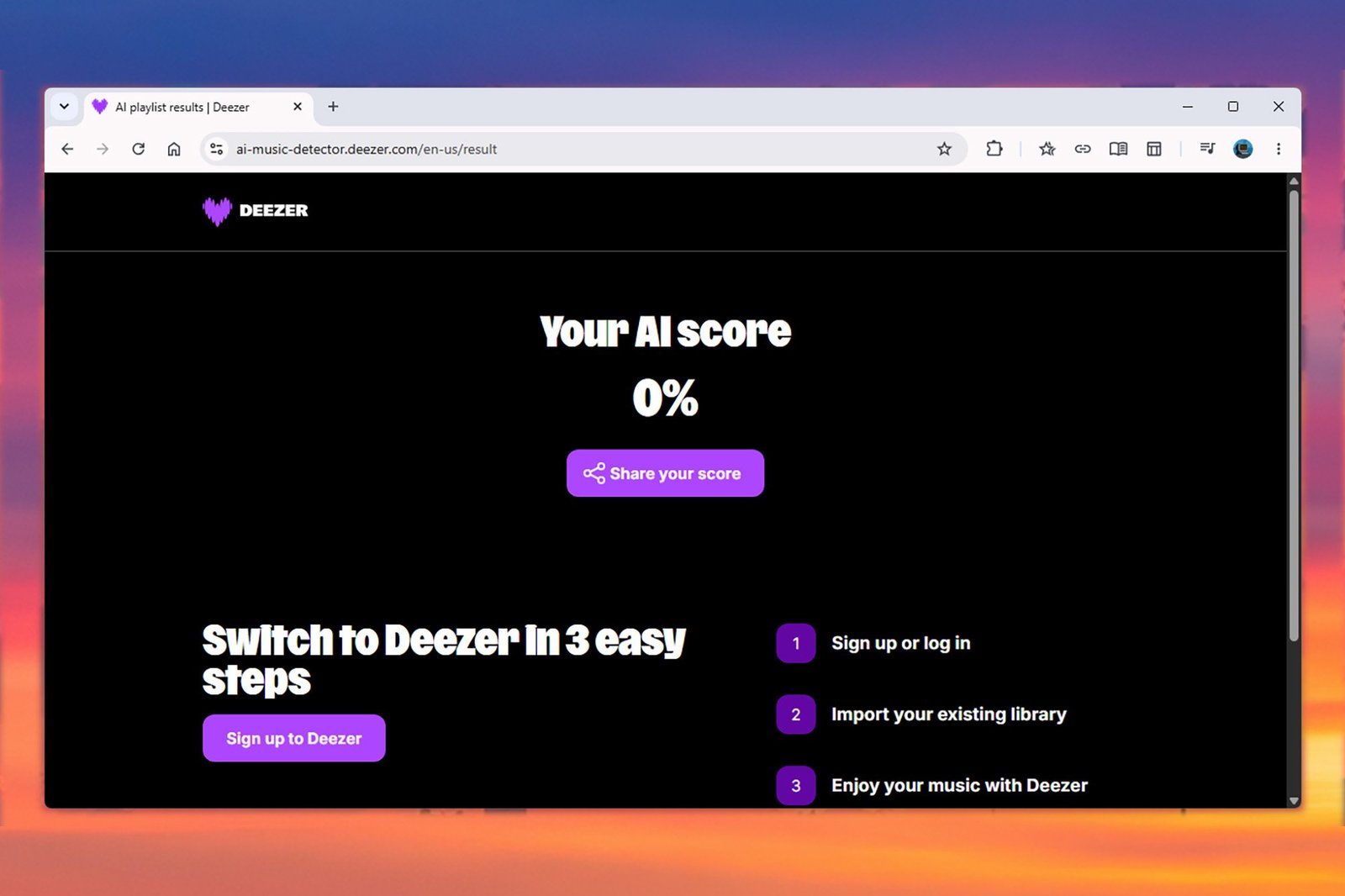
I first tested this with my Spotify library, because as far as I know, there is no AI music in any of my playlists. After a few minutes of importing and analyzing, my score returned to 0 percent; my Spotify account is AI-free, as expected. On the results screen, you have the option to share your score and of course sign up to Deezer if you haven’t already.
Next, I tested the AI detection tool on my YouTube Music account, which includes some lo-fi ambient mixes that I believe have been generated by AI. This time, the scanner detected a trace of AI: 1 percent, which is probably about right considering the size and number of my playlists. However, Deezer won’t tell you which songs are actually AI-generated.
It is clear that AI music is not going anywhere, but for many listeners it is important that it is labeled as such, so that they can avoid it or not, depending on people’s preference. It seems like this type of AI creation might be a little easier to detect than writing or images, which will be helpful as the flood of artificial tunes continues.

Awards for the House of the Future of Popular Science 2026
Check back often for more exciting news!