WASHINGTON– The Trump administration is preparing to increase funding by hundreds of millions of dollars for programs designed to counter China’s growing influence around the world, after halting many such initiatives last year during a series of budget and personnel cuts. The administration notified Congress late last week that it intends to spend $175.8 million
WASHINGTON– The Trump administration is preparing to increase funding by hundreds of millions of dollars for programs designed to counter China’s growing influence around the world, after halting many such initiatives last year during a series of budget and personnel cuts.
The administration notified Congress late last week that it intends to spend $175.8 million to replace aging and obsolete undersea telecommunications cables in the Caribbean and Central America to prevent China from moving in. The Associated Press obtained a copy of the notice on Monday.
The administration has expressed deep concern about China’s activities in the Americas, rejecting Chinese ownership of ports at both ends of the Panama Canal, infrastructure projects funded by China’s Belt and Road Initiative in the region, and Chinese investment in the telecommunications sector.
A State Department official said China’s economic activities in the Western Hemisphere pose risks to U.S. national security and prosperity. The official, who was not authorized to speak publicly on the matter and spoke on condition of anonymity, said China’s offers may appear cheaper but end up being more expensive due to cost overruns, hidden maintenance fees and poor performance.
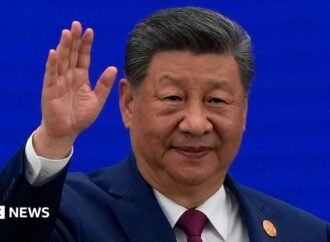
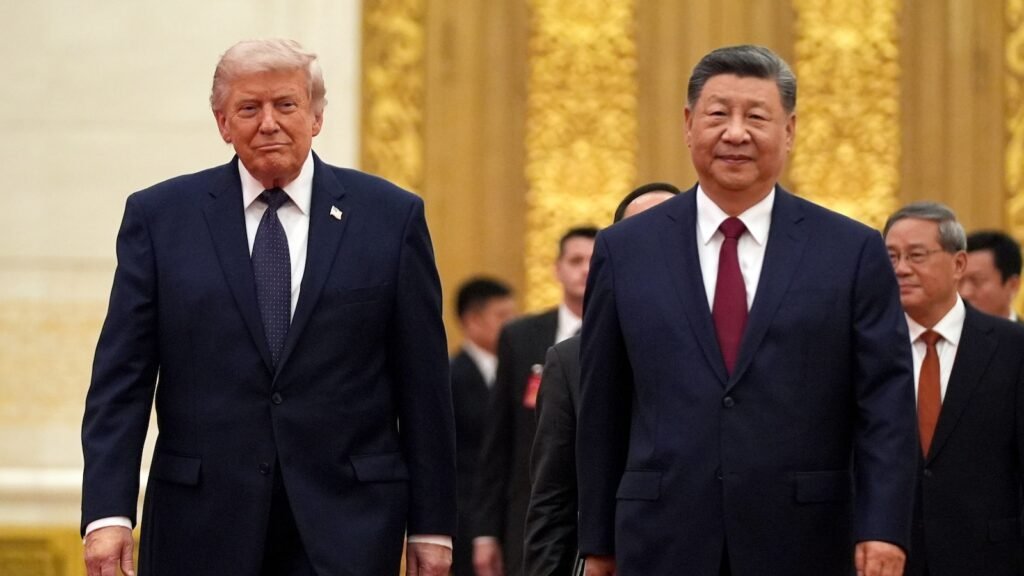
The undersea cable funding appears to be part of a broader push to restore support for initiatives aimed at mitigating Chinese influence globally that would cost many hundreds of millions of dollars more. This comes even as President Donald Trump and Chinese leader Xi Jinping show signs of cooperation and Xi prepares to visit the United States this fall.
The State Department is considering spending nearly $500 million more on programs targeting China throughout the Western Hemisphere, Africa and Asia, according to an internal State Department document obtained by the AP.
“The United States must respond to the CCP’s growing economic, technological, and diplomatic influence around the world, which undermines our national interests,” the document says, using the acronym of the Chinese Communist Party.
Many of those proposed programs are designed to “regain diplomatic influence” through investments in areas where the United States had previously been spending money but stopped when the Department of Government Efficiency (DOGE), led by Elon Musk, carried out deep government budget and personnel cuts last year.
Those cuts, which dismantled the U.S. Agency for International Development and eliminated several hundred diplomatic posts around the world, also affected previously approved projects, including some aimed at countering China.
A senior US official, who spoke on condition of anonymity to discuss the administration’s future plans, confirmed the Trump administration’s intention to increase funding to counter China, but could not discuss specifics. The official acknowledged discussions about large-scale projects, but said many were still in the discussion phase.
The program outlined to Congress on Friday is called “Project to Fight CCP Control of Caribbean and Central American Underwater Cables.”
According to the notification, it will “fund the installation of strategically selected submarine cable infrastructure” and support foreign governments in partnering with private sector submarine cable installers. The money “will support the replacement of outdated undersea telecommunications cables in the Caribbean and Central America region with safe, American and reliable alternatives,” he said.
Even as the war with Iran and peace efforts in Gaza and Lebanon continue, the Trump administration has focused on the Western Hemisphere, capturing Venezuelan leader Nicolás Maduro earlier this year, increasing pressure on Cuba’s socialist government in the months since and imposing severe sanctions on the Nicaraguan government.
Under the new program, funds are expected to be granted or support submarine cable projects that benefit El Salvador, Guatemala, Honduras, Nicaragua and Haiti, according to the document. The United States has weak ties with Nicaragua and would not work with that country’s government.
China’s embassy in Washington did not immediately respond to requests for comment.
At the same time, the administration has drawn up plans to spend more than $340 million on more than 50 targeted anti-China projects around the world, including many in the Western Hemisphere, according to the internal State Department document outlining several proposals.
The administration notified Congress in May that it had spent several hundred million dollars in anti-China funds from the 2024 budget that was approved by the Biden administration. However, many other projects funded for 2024 and 2025 were put on hold.
Among the plans to be resurrected is the creation of security operations centers in Argentina and Belize to monitor Chinese threats to critical infrastructure and cyber platforms across the region. Initiatives would also return to protect Ecuador, Jamaica, Mexico, Paraguay, Peru and Uruguay from alleged Chinese attempts to infiltrate port operations and illegally exploit deep sea fishing and critical mineral extraction.
More broadly, the proposal, which is still under consideration, would counter Chinese influence in the selection of a successor to the Dalai Lama “by developing proprietary technology to ensure secure communications and information collection.” It would also pursue international support for China’s space program and respond to Chinese companies seeking to export surveillance and censorship technology.
The document does not describe the initiatives in detail.
Trump is expected to meet Xi in September, around the time of the UN General Assembly’s annual meeting of world leaders in New York. To prepare for that meeting, Secretary of State Marco Rubio met with Chinese Foreign Minister Wang Yi last week at a regional security conference in the Philippines.
Trump has wavered between anger and elation at Xi, whom the American leader has sought to cultivate as an ally even as China pursues goals antithetical to many of his administration. The final impact of the proposed new programs will not be known for many months or years.
Keep following us for the latest insights.