
Get the Popular Science daily newsletter💡 Breakthroughs, discoveries, and DIY tips sent six days a week. By signing up, you confirm you are 16+, will receive newsletters and promotional content and agree to our Terms of Use and acknowledge the data practices in our Privacy Policy. You may unsubscribe at any time. We all know
We all know what a siren sounds like—they’re hard to avoid. From police cars to emergency warning systems, it’s hard to spend a day in a city without hearing at least one siren. But what are they exactly?
The answer, it turns out, is more interesting than “that loud sound you hear during emergencies.” The physics of the siren is unlike any instrument.
With most acoustic instruments, the sound comes from vibration. That’s true if you’re blowing air through a tuba, strumming a guitar, or hitting a drum–it’s the vibration that determines the pitch. Not so with sirens. These instruments produce sound by pushing air through slots that are quickly opening and closing, typically because of a spinning rotor. The rapid switch between open and closed slots produces pressure pulses in the air, and that’s the sound you hear. And you can change the sound by changing the spacing of the open slots.
It’s a little hard to grasp, granted. This old clip from the classic kids science show Mr. Wizard makes it very comprehensible:

How Does A Siren Work? (Mr. Wizard)
How Does A Siren Work? (Mr. Wizard)
It’s an odd idea, right? And it’s one humans only discovered in the early 1800s.
In an essay published in The Oxford Handbook of Mobile Music Studies Volume 2, Harvard music professor Alexander Rehding credits the invention to French scientist Charles Cagniard de la Tour in 1819. The name was a reference to the sirens in Homer’s Odyssey, which are often depicted as mermaids—de la Tour’s siren could make music underwater or in the open air.
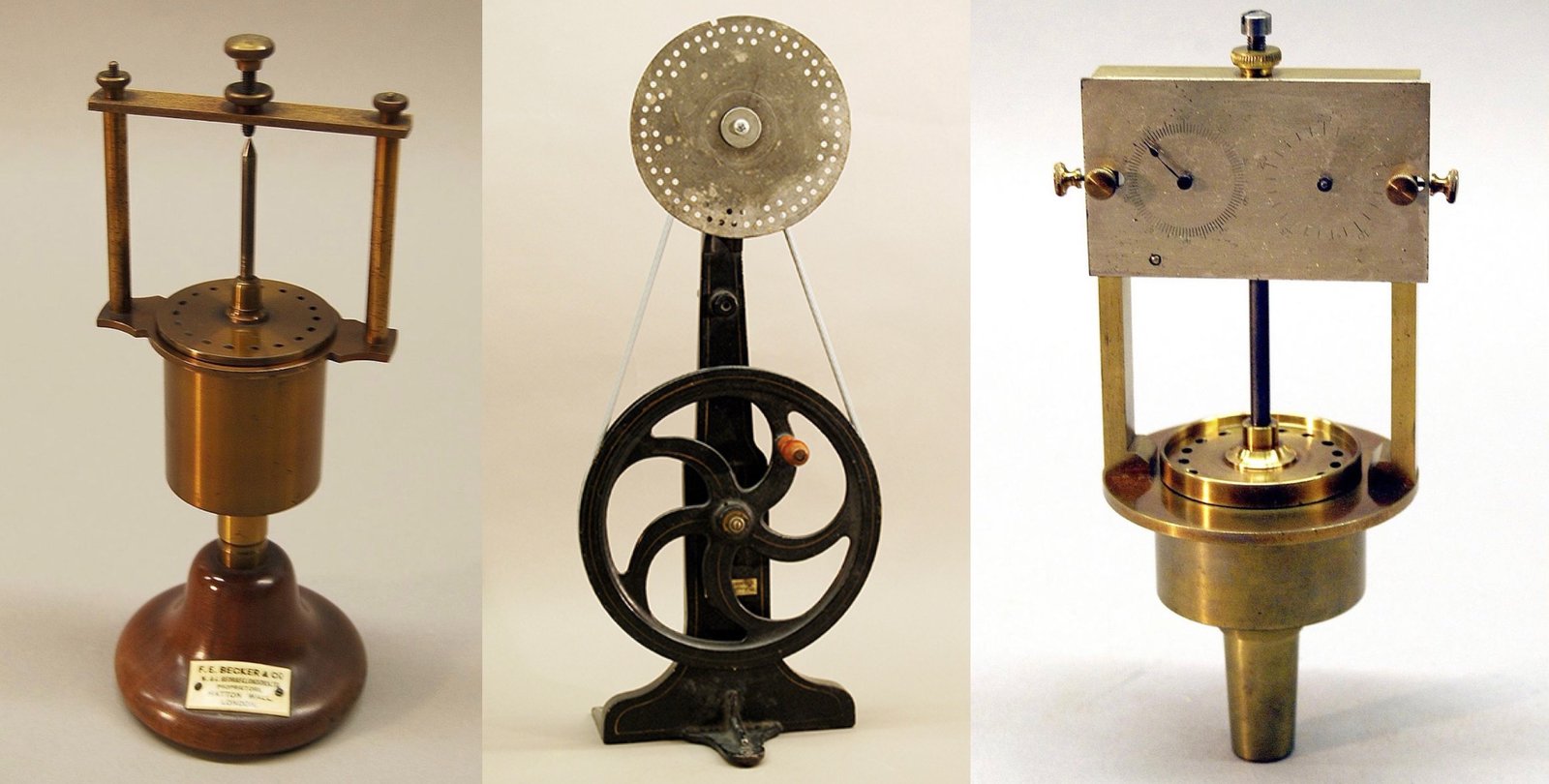
This instrument wasn’t intended as an emergency alarm. “The acoustic instrument that came to be known as the siren was first and foremost a device to produce a pitch and measure its frequency exactly,” writes Rehding. It would remain the most precise way to create any given tone until the advent of digital synthesis more than 150 years later, which made it a scientifically important tool in the 1800s.
As an emergency warning
But the siren was, over time, found to work well in emergency situations. The more air you pump through a siren, the louder the sound, meaning it’s easy for them to carry a long way.
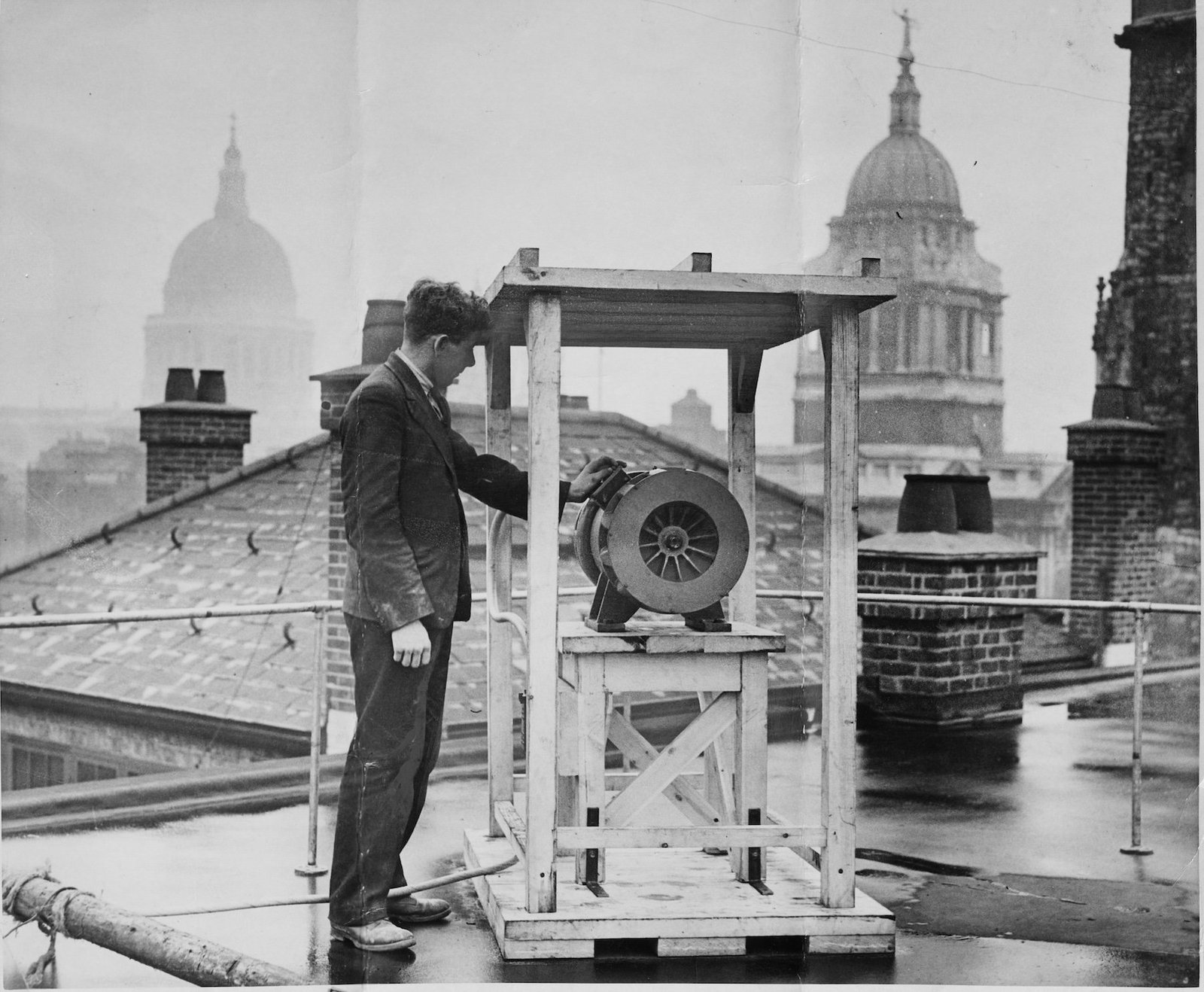
By 1867, a siren was experimentally used as a stand-in for a foghorn. According to the United States Lighthouse Society, a siren was permanently installed at the Sandy Hook East Beacon in 1868. By the 20th century sirens became vital warning systems. Perhaps no historic siren is better remembered than the air raid sirens all over the United Kingdom during World War II, to notify civilians of incoming German air raids. Some of these are still in use today.

1940s WWII SIREN ACTIVATING (Forth, Scotland)
1940s WWII SIREN ACTIVATING (Forth, Scotland)
These sirens use an electric motor to turn a rotor that forces air through holes in a way that makes a particular tone. Notice how the pitch increases as the fan speeds up, giving the iconic ramp-up sound that’s so good at capturing attention.
The 20th century, of course, also saw sirens mounted on emergency vehicles. These generally used a similar rotary design. By the 1960s, electronic sirens, which recreate the sounds produced by a mechanical siren, slowly started to become the norm. The goal with these electronic sirens is similar to the air raid sirens, though: to be impossible to ignore.
Different sirens around the world
Anyone who travels, or even just occasionally watches movies, knows that police sirens sound different around the world. This video really shows off some of the global variety.

Police Car Designs and Siren Sounds Around the World
Police Car Designs and Siren Sounds Around the World
Listening to these sirens you’ll notice different approaches to the same problem: designing a sound that cannot be ignored, even if you’re driving a vehicle with a loud engine or the stereo cranked.
Many of the sirens—including those in North America—feature a sound not dissimilar from the air raid siren. It’s a slowly rising, and then falling, tone on a loop, officially called a “wail.” American sirens follow a standard called SAE J1849, which specifies that sirens operate somewhere between 500 and 1800 Hz—the frequency range human ears are most sensitive to. Wail is the default, but American sirens typically can switch between multiple sounds. Here’s a police officer demonstrating the different options, which they can cycle through using a remote control:

Code3 H2 Covert – Cycling through siren tones
Code3 H2 Covert – Cycling through siren tones
You’ll notice a “yelp,” a faster version of the same rise-and-fall pattern. You might also notice a “hi-lo” sound, which alternates between two fixed pitches.
A similar hi-lo pattern is the standard siren sound in many European countries. Think of the “nee-naw” sounds from French and German vehicles—two fixed tones, alternating, rather than one tone sweeping up and down. In Germany, DIN 14610 specifies the exact frequencies, a high tone and a low tone a musical fourth apart, between 360 and 630 Hz. It’s a very noticeable change in tones, which is the point—the sound needs to be noticed.
The internet is full of arguments about which police siren sounds are the most effective, but I wasn’t really able to find much scientific research about this. And the origin of the different sounds, from what I can tell, has more to do with history than science. In America, for example, one of the most successful mechanical sirens to be mounted on firetrucks is the Federal Q, which you can still buy today. This is a sound you’ve certainly heard in movies, if not in person:

Federal Q Siren Test Walkerton, IN
Federal Q Siren Test Walkerton, Indiana
This was a single company selling a product to fire departments that, over time, became the defacto standard. This defacto standard was eventually made into a regulation, which is why today even electric firetruck sirens make the same sound.
In Germany, meanwhile, the precursor to the modern police car sound wasn’t technically a siren at all—it was a set of trumpet-like horns with air pushed through them, called the Martinshorn. This was made by a company called Max B. Martin, which worked directly with the German government in the 1930s to define the sound.

MARTIN HORN 2298 GM-Max B Martin(Made in Germany)
MARTIN HORN 2298 GM-Max B Martin (Made in Germany)
Almost a century later and even electric systems mimic this same sound. The mechanical horn became a convention, which still defines the sound used today.
I could go on. The history of the siren is different in every country, leading to different sounds for emergency services. It’s a legacy of different humans looking at the same problem—how do we cut through the noise of civilization during an emergency?—and arrived at different solutions. It’s fascinating, and extremely human.

2026 Popular Science Home of the Future Awards
Check back often for more exciting news!