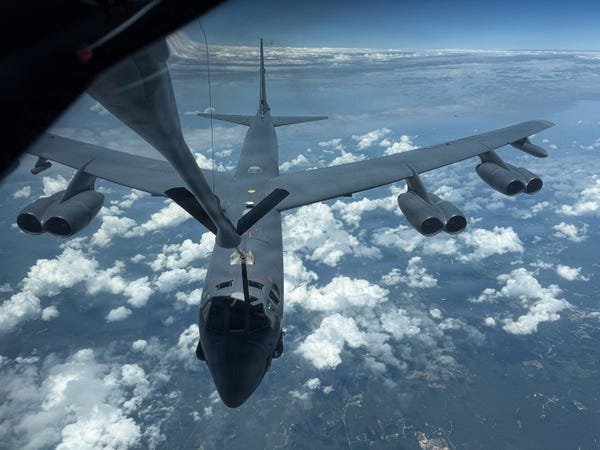
Cost and scheduling challenges have pushed the US Air Force’s B-52 Stratofortress modernization program billions over budget, according to a new report. The aging B-52 has long been a workhorse of the Air Force, which is replacing the bomber’s decades-old engines to keep the aircraft flying into the 2050s. But the upgrades have run into
Cost and scheduling challenges have pushed the US Air Force’s B-52 Stratofortress modernization program billions over budget, according to a new report.
The aging B-52 has long been a workhorse of the Air Force, which is replacing the bomber’s decades-old engines to keep the aircraft flying into the 2050s. But the upgrades have run into delays and rising costs.
Last week, the Government Accountability Office, a government watchdog agency, released a report on the current status of the B-52 modernization and sustainment efforts. Of the 13 upgrades that the bombers are getting, 10 are experiencing cost, schedule, or performance challenges.
The most expensive B-52 upgrade, the Commercial Engine Replacement Program, has seen a roughly $3 billion increase in cost since 2023, with the initial operational date pushed back more than 15 months. The GAO report said that the program “will likely continue to face significant challenges as the Air Force plans to begin production with little to no developmental flight testing.”
The other components being upgraded include new radars, communications systems, training devices, and advanced target pod displays. The B-52s are also being modified to carry the AGM-181 Long-Range Standoff weapon, a new nuclear-armed cruise missile under development.

US Air Force photo by Airman 1st Class Helen Ly
According to the GAO, there are challenges in the Air Force’s approach, which involves working on many of these upgrades at the same time. “Work on one program may involve moving hardware on the aircraft that relates to work to be completed by other modernization programs,” the report said.
Previous GAO reports have highlighted challenges in the modernization program. In its most recent report, the GAO made six recommendations for the Air Force, including delaying the engine production decision until the program office analyzes recent cost growth and schedule delays to understand risks and benefits.
Despite reported issues with the modernization program, officials have touted the significance of the B-52 modernization program. Last year, Vice. Admiral. Richard Correll, then the Trump administration’s nomination to head US Strategic Command, told Congress the upgrades were “essential” to ensuring the bombers can fulfill their intended role in strategic deterrence. The engine replacements, which will put Rolls-Royce engines inside the B-52s, would, alongside the radar technologies, essentially make the B-52 bomber “a new airplane.”
Earlier this year, the B-52 demonstrated its continued ability to support combat operations by flying overland bombing missions over Iran.
“Over the past 30 days, we’ve struck more than 11,000 targets,” Air Force Gen. Dan Caine, the chairman of the Joint Chiefs of Staff, said in March, one month into the Iran war. “Given the increase in air superiority, we’ve successfully started to conduct the first overland B-52 missions, which allow us to continue to get on top of the enemy.”
Conversations surrounding the modernization of the B-52s come as defense experts and lawmakers sound the alarm about broader problems facing America’s fleet of air assets, which is shrinking and aging at an accelerating pace.
Check back often for more exciting news!