Get the Popular Science daily newsletter💡 Breakthroughs, discoveries, and DIY tips sent six days a week. By signing up, you confirm you are 16+, will receive newsletters and promotional content and agree to our Terms of Use and acknowledge the data practices in our Privacy Policy. You may unsubscribe at any time. Raven Ridge Wildlife
Raven Ridge Wildlife Center in southern Pennsylvania is no stranger to broken limbs. Earlier this year, they took in a bobcat with two broken legs, who even got a custom kennel after undergoing surgery. But recently, the wildlife center received a completely different and much smaller patient: a ruby-throated hummingbird (Archilochus colubris).
These approximately sparrow-sized birds are a migratory species with small wings that beat over 50 times per second. As the name suggests, adult males have ruby-colored and iridescent throats, though their body actually looks black in most lighting conditions. Ruby-throated hummingbirds’ range stretches across parts of North and Central America.
“We get hummingbirds quite often for several reasons, from wind strikes, being clipped by cars, being stuck in fishing line, or cat attacks,” Raven Ridge Wildlife Center ‘s director Tracie Young tells Popular Science.
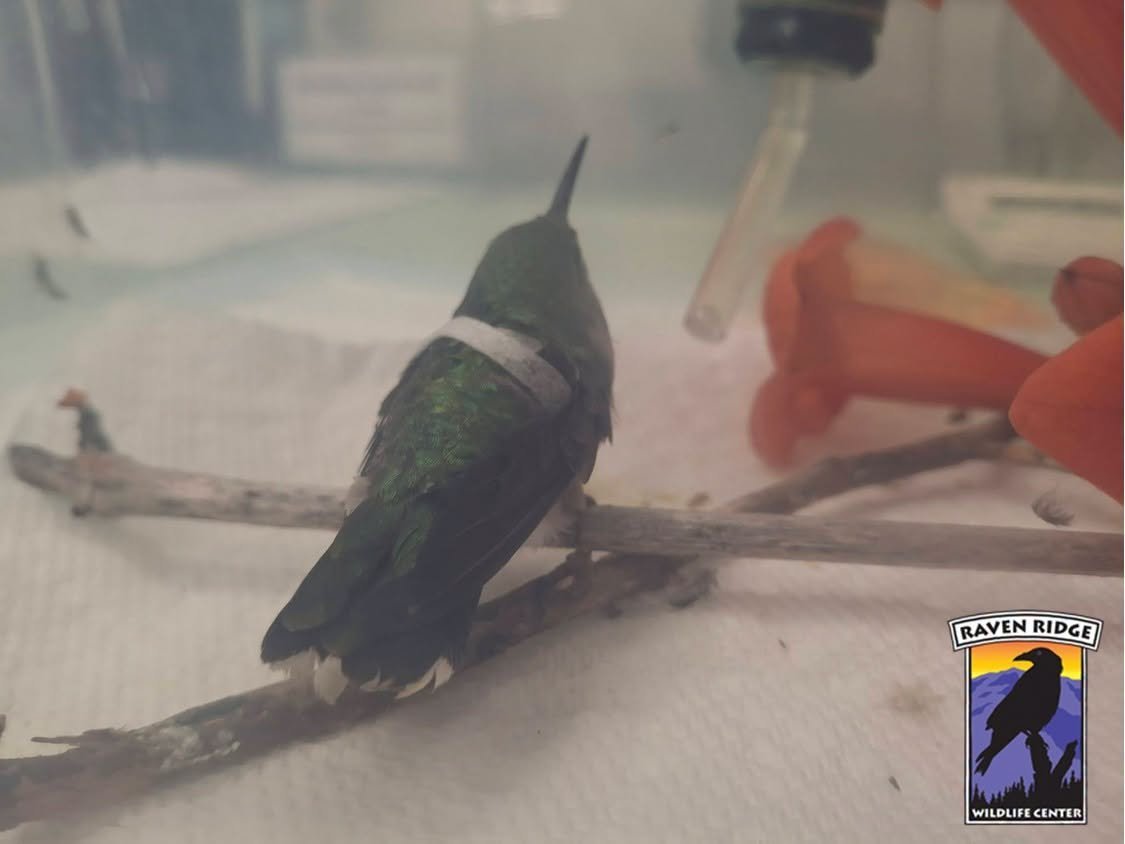
This particular patient came in with a broken wing. A rehabilitator realigned the injured limb with tweezers, before fixing it in place with medical tape. According to the team, this bird was lucky to be rescued before the wing could heal incorrectly.
However, Young explains that it is always a 50/50 chance that a bird as small as this will make a full recovery. Ruby-throated hummingbirds weigh 0.1 to 0.2 ounces.
“We are hopeful, as it is not as severe, but we will remove the tape that is holding the wing in place in about 7 to 10 days to evaluate it,” Young says.
After the team removes the tape, it will take the bird a few days to recognize that the limb is free and begin using it again. A full recovery will be uncertain until the team can observe the hummingbird truly flying in a flight cage.
Here’s to hoping this little bird makes a speedy recovery and can return to his humdrum life.

2026 Popular Science Home of the Future Awards
Keep following us for the latest insights.