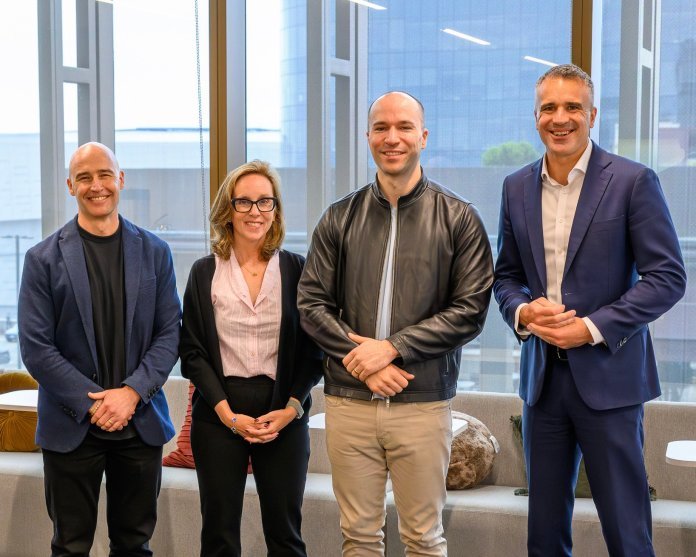
Visiting OpenAI headquarters, the Premier put pen to paper alongside OpenAI co-founder and president Greg Brockman, striking a historic agreement between a state government and one of the world’s leading generative AI entities. This marks the very first time an Australian state or territory government has entered into a formal Memorandum of Understanding directly with
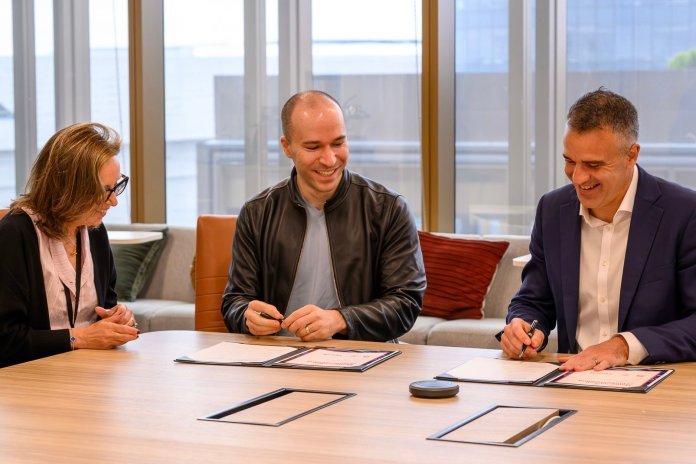
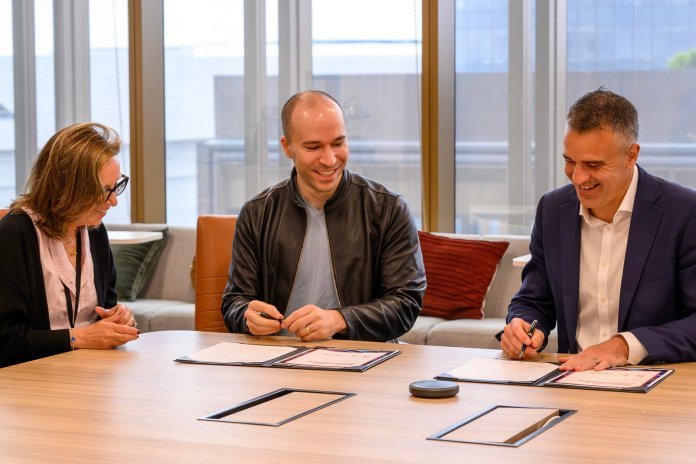
Visiting OpenAI headquarters, the Premier put pen to paper alongside OpenAI co-founder and president Greg Brockman, striking a historic agreement between a state government and one of the world’s leading generative AI entities.
This marks the very first time an Australian state or territory government has entered into a formal Memorandum of Understanding directly with the creators of ChatGPT.
The deal aims to accelerate artificial intelligence adoption, upskill local workers, lure global technology capital to Adelaide, and potentially rewire how state public services operate.
Whether you view this as a brilliant forward-thinking move or the start of a sci-fi thriller script, South Australia is making it clear that it wants to be the national benchmark for tech policy and digital transformation.
Breaking down the deal on the table
At its core, this Memorandum of Understanding lays out a practical roadmap for integrating advanced machine learning capabilities directly into South Australia’s technology sector and public service framework. The agreement focuses on several main pillars, including targeted training programs to build local AI literacy across universities and businesses, as well as joint research initiatives designed to solve complex state-level problems.
The alliance is also pitched as an economic magnet designed to draw private venture capital and global tech talent directly into Adelaide’s flourishing innovation ecosystem. Rather than waiting for Canberra to hand down overarching federal frameworks, South Australia is actively seeking direct access to OpenAI’s engineering expertise, technical tooling, and platform capabilities.
Beyond private enterprise growth, the state government plans to test generative AI tools inside its own departments to streamline bureaucratic workflows, automate administrative backlogs, and bolster state cybersecurity defences.
South Australia is rapidly becoming Australia’s tech playground
If you have been paying attention to the tech landscape over the past few years, South Australia’s sudden partnership with OpenAI should not come as a total surprise. The state has been quietly positioning itself as a premier destination for heavy tech infrastructure, underpinned by massive investments in renewable energy and purpose-built technology precincts like Lot Fourteen in Adelaide.
Just a few months ago, energy infrastructure developer IREN announced a staggering A$10 billion AI data centre campus project at Bundey in regional South Australia. That project alone is designed to deliver up to 800 megawatts of computing capacity, proving that global AI workloads require serious power and physical footprint that South Australia is eager to supply.
By pairing massive physical infrastructure like hyperscale data centres with high-level software partnerships like this OpenAI deal, the state is trying to complete the entire tech stack from power generation to large language model execution.
What generative AI in government actually looks like
Governments around the world are infamous for moving at a glacial pace, bound by endless paperwork, manual processing, and legacy IT systems that belong in a museum. Bringing large language models into public administration could fundamentally change how citizens interact with state departments.
Imagine automated permit applications, AI-assisted public health routing, real-time code analysis for planning submissions, or rapid document processing that cuts approval wait times from months down to hours. OpenAI’s technical stack could also be deployed to monitor state-wide network infrastructure, detecting cyber threats before human analysts even notice an anomaly.
However, replacing traditional administrative tasks with generative algorithms comes with an undeniable set of operational risks that Premier Malinauskas was quick to address during the signing.
Safeguards, ethics, and the fear of algorithmic governance
Handing the keys of public service operations to artificial intelligence immediately raises valid questions about data privacy, automated bias, and algorithmic hallucinations. Nobody wants an automated system hallucinating policy details or mismanaging sensitive personal health records across government databases.
To address these valid concerns, the Premier emphasised that any rollout will be bound by strict legal, privacy, and procurement guardrails. The state government has explicitly pledged that all automated workflows will remain strictly human-led, ensuring that final decisions always rest with human operators rather than automated scripts.
We want to lead with ambition and care. Any initiative taken forward will be human-led and subject to the legal, privacy, security and procurement safeguards South Australians expect.
Peter Malinauskas, Premier, Government of South Australia.
From under-16 social media bans to ChatGPT partnerships
This agreement with OpenAI is just one piece of a much larger, high-stakes US trade mission undertaken by the Premier across Washington DC, New York, Virginia, and California. Interestingly, Premier Malinauskas has built a reputation on the global stage as a tech regulator, having spearheaded Australia’s world-first move to restrict children under sixteen from social media platforms.
During the same American tour, the Premier met with Apple Chief Executive Tim Cook in California to discuss age-assurance technology and child online safety features inside iOS. He also met with prominent social psychologist Professor Jon Haidt to discuss digital wellness, alongside high-ranking US defence officials to talk about AUKUS Pillar II technology sharing.
This dual approach shows a fascinating balance where the state government is eager to clamp down on predatory social media algorithms on one hand, while aggressively courting frontier generative AI companies on the other.
Boosting local developers, startups, and universities
For South Australian startups, university researchers, and software engineers, this MoU could open doors that were previously locked behind massive corporate paywalls. Gaining structured access to OpenAI’s team, specialised developer resources, and early-stage incubation support gives local founders a distinct competitive edge over rivals in Sydney or Melbourne.
Adelaide’s universities are already heavily invested in machine learning research through institutions like the Australian Machine Learning Institute. Connecting local academic talent directly with OpenAI’s product teams means local researchers can work on real-world deployment challenges rather than remaining confined to theoretical testing environments.
If executed properly, local software engineers will not need to move to Silicon Valley to work with world-class AI models because Silicon Valley is coming straight to Adelaide.
While South Australia has taken the lead in signing a state-level agreement with OpenAI, the federal government and other states are watching very closely. Prime Minister Anthony Albanese recently flagged plans for unified national standards around AI data centres, computational infrastructure, and environmental impacts across state borders.
Queensland and the Northern Territory have been hesitant to sign on to uniform federal frameworks, but South Australia’s aggressive move to secure private sector tech giants might force other states to accelerate their own digital strategies. Competition between states for tech capital, high-skilled jobs, and clean energy infrastructure is rapidly heating up across the country.
Securing deals with global powerhouses like OpenAI gives South Australia a massive head start in defining how regional tech hubs can leverage global AI momentum.
We will be watching closely to see if other Australian states follow suit, or attempt to create similar agreements with competitors like Anthropic who make Claude, or SpaceXAI who make Grok.
For more information, head to OpenAI via X.
.
Check back often for more exciting news!