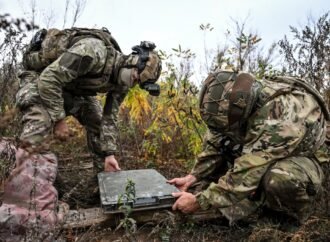
Speed of communication has been essential on the battlefield for as long as humans have waged war. From the legendary roughly 25-mile messenger’s run to announce an Athenian victory at Marathon, to war drums and carrier pigeons, to the telegraph, and right up to today’s militaries’ reliance on high-speed digital links, rapid information transmission is
It’s one of the most urgent problems of the AI age: How to tell if the person you’re chatting with on the Internet is real, or a clever bot pretending to be human. In recent years, the inability to distinguish bots from humans has led to billions of dollars of fraud as AI agents trick
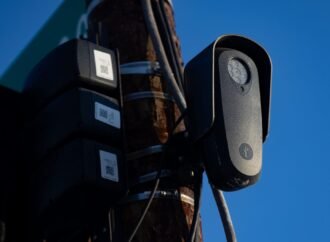
A police lieutenant in a Cincinnati suburb has been indicted on a felony charge for allegedly using his department’s Flock license plate reader cameras to track someone he knew. Walter Cordes, 48, a lieutenant with the Sharonville Police Department, searched the Flock system 29 times between Dec. 19, 2024, and April 20, 2026, to find
The U.S. Department of Justice is warning that hackers working for the North Korean regime are increasingly relying on Americans to facilitate the hacking of U.S. companies. In an announcement on Tuesday, prosecutors said they have indicted and arrested at least two people, and conducted searches across dozens of suspected “laptop farms” in Texas. The
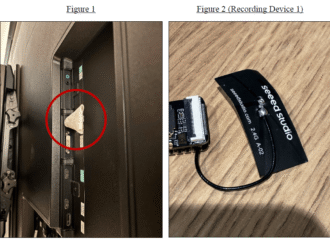
In a stunning disclosure, the Federal Bureau of Investigations (FBI) announced Tuesday that it has arrested an OpenAI employee who is a Saudi citizen, charging him with secretly recording conversations in a conference room at the company’s San Francisco offices. A specialized OpenAI security team—the technical surveillance countermeasures team—first found a recording device on Sept.
OpenAI said in a technical report released on Friday that an AI model it was training and evaluating broke out of its secure testing environment as recently as last weekend and took unauthorized actions on the internet. As a result, the company said that it is pausing the training of its most advanced AI models