The Los Angeles Police Department (LAPD) is reportedly ending its agreement with Flock Safety, a surveillance company that helps law enforcement track vehicles using thousands of its license plate cameras located across the United States. A senior LAPD official told media outlets, first reported by ABC7 and the Los Angeles Times, that the police department
The Los Angeles Police Department (LAPD) is reportedly ending its agreement with Flock Safety, a surveillance company that helps law enforcement track vehicles using thousands of its license plate cameras located across the United States.
A senior LAPD official told media outlets, first reported by ABC7 and the Los Angeles Times, that the police department would allow its three-year contract with Flock to expire when it ends Saturday. The department cited “serious concerns” around civil liberties and privacy. Flock’s cameras are operated by the Atlanta, Georgia-based company, and not by the Los Angeles police.
“This contract will not be renewed due to serious concerns around civil liberties and civil rights issues, particularly around privacy and the data that is collected from these cameras,” said LAPD Chief Information Officer Dean Gialamas. “The LAPD had to make a difficult decision, in this case suspending use of Flock’s services until we can resolve those data, privacy, security and sharing issues through a contractual relationship.”
An LAPD spokesperson did not respond to a request for comment from TechCrunch over the weekend, and it is unclear whether Flock’s cameras will continue to record in the absence of an active contract. According to ABC7, the police department is seeking new language in its contract that addresses privacy and data storage issues.
As the third-largest police department in the US, LAPD is one of Flock’s largest government clients to date. Several major U.S. cities also stopped working with Flock, including Mountain View, California, and South Portland, Maine, citing privacy concerns and concerns that federal immigration officials would use the cameras to track people in violation of local laws governing their sanctuary cities’ policies.
The contract expiration came as a “surprise” to the surveillance company, Flock spokesperson Holly Beilin said in an email to TechCrunch. Flock said he was confident the company could “clear up the current misconceptions” that led to the termination of the contract. Flock did not say what specific misconceptions he was referring to.
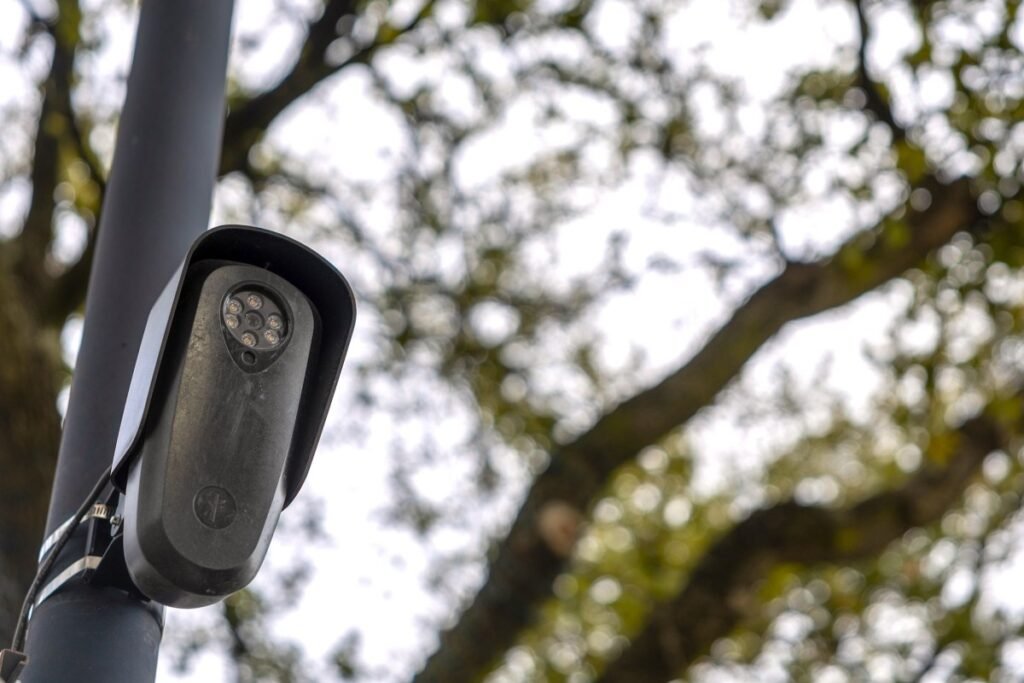
Flock has a network of at least 80,000 cameras across the United States that scan license plates and allow police and federal agencies to track vehicles.
The company has faced strong backlash from local communities that approved and then reneged on its agreements with Flock over concerns about privacy and surveillance. Some locals have taken matters into their own hands by dismantling Flock’s cameras and covering them with trash bags, even as some communities discovered that Flock reinstalled the cameras without permission from local authorities.
Researchers have identified an increase in documented cases of drivers being stopped, detained and held at gunpoint by police, or jailed, due to false positives and errors with license plate readers. Last week, a journalist for car news and review website The Drive detailed how he was tracked for days and then locked up by police after a Flock camera mistakenly flagged the license plate of the loaner review unit he was driving as stolen.
Flock has also faced scrutiny following several security breaches that exposed cameras and data, in one case allowing independent news outlet 404 Media to see themselves live via publicly exposed Flock cameras. Lawmakers have also urged federal consumer authorities to investigate Flock for failing to implement measures to prevent hackers and spies from gaining access to its security cameras, warning that many law enforcement user logins are not protected with multi-factor authentication.
404 Media also reported that the DEA used a local police officer’s password without his knowledge to search for a suspect accused of an immigration violation.
Do you know of security or privacy issues with Flock Safety or issues with Flock cameras in your community? We would love to hear from you. From a non-work device, you can securely communicate with Zack Whittaker on the Signal messaging app using the username zackwhittaker.1337.
When you buy through links in our articles, we may earn a small commission. This does not affect our editorial independence.
For more tech updates, stay tuned to our blog.