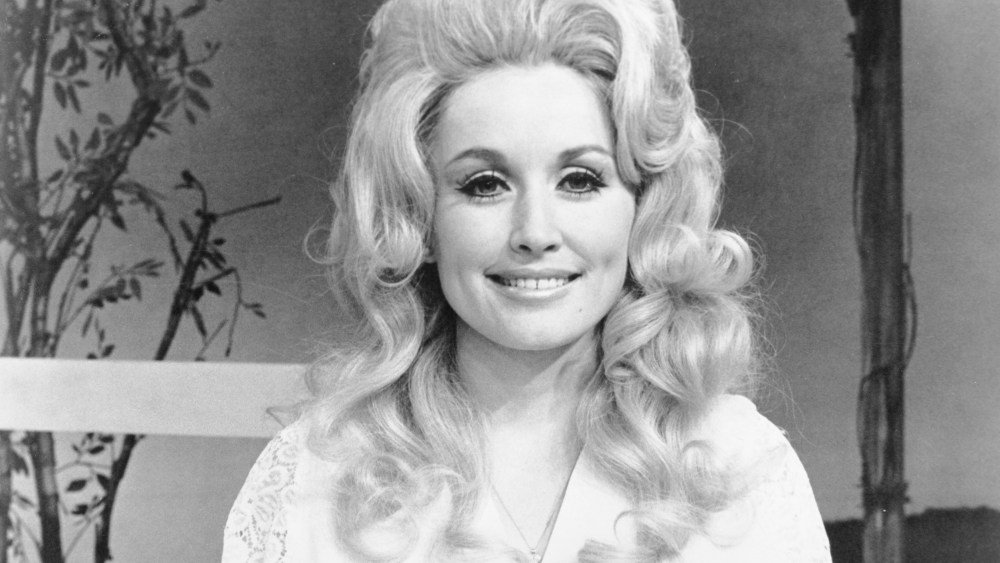
How do we count the ways in which we will always love her — do we go from 9 to 5,000? Here’s a compromise: We’ve selected 30 of Dolly Parton’s greatest songs, from among hundreds. This task is taken on knowing that among the omissions will be cuts that are most meaningful to different fans
How do we count the ways in which we will always love her — do we go from 9 to 5,000? Here’s a compromise: We’ve selected 30 of Dolly Parton’s greatest songs, from among hundreds. This task is taken on knowing that among the omissions will be cuts that are most meaningful to different fans because they were sung at a wedding, a funeral or sobbing in the car after signing divorce papers.
Parton was among the very best of American singer-songwriters, but know that we’re fully aware here that we’re including a handful of tracks she didn’t write (who’s going to leave out the Mann/Weil composition “Here You Come Again”?), and one she gave to someone else and never did a proper studio recording of herself (“To Daddy,” a big hit in the hands of Emmylou Harris). We also had to go one over 30 just to offer a goofy bonus track: “I’ll Oilwells Love You” — which, by the way, preceded “I Will Always Love You,” so yes, we like to think of the blockbuster ballad as a somber spinoff from her early novelty song.
Hits? Deep tracks? We’ve got ’em, and do go investigate the catalog yourself — there are so many more diamonds where these came from.
‘I Will Always Love You’
Imagine the most popular song of the ’90s as it was first conceived and released in the ’70s, without an octave change or any due or undue drama. It’s easy when you try, and easier when you actually listen to Dolly’s seminal take on the song, before it was turned into something very different — valid, but different — for a movie kicker. As most people know by now, Parton wrote it as a platonic farewell, not the romantic one it is nearly always taken as, when it was time to spread her wings and fly away from professional partner Porter Wagoner. It’s the goodbye that any of us who’ve been left behind by a lover, comrade or the dearly departed wish we could get from them, or the one we’ve been too ungracious to give when it was us heading for the exit. It’s one of the most beautiful folk songs ever and the breakup song we’ll never be able to quit.
‘9 to 5’
Just the insinuating opening riff is as good as a couple cups of coffee to get your day started. By the time Parton sings the proletariat-poetry line “Pour another cup of ambition,” we are well into the realm of another great American folk song, except of course that this is as pop as Parton ever got, and the world was all the better for her having brought country to town.
‘Just Because I’m a Woman’
One of Parton’s earliest singles, “Just Because I’m a Woman” was also one of her boldest. It’s sung from the perspective of a woman who has let down her boyfriend or prospective husband by letting him know that she is not a virgin, either. Implicit in the understanding of the song is that neither he nor society see any problem with him being likewise tarnished by the stain of having a previous lover or lovers, but for a young woman in the 1960s, that could still mark a deep strain of scarlet. She acknowledged that it was inspired by just such a discussion with her husband, Carl Dean. This would hardly be the last time Parton would write about male chauvinism or hypocrisy, but it may have been the most personal. And it helped set her on a course that everyone else would have described as profoundly feminist, even if she didn’t adopt the term herself.
‘The Bargain Store’
This ballad was in a similar vein to “Just Because I’m a Woman,” but with a more hopeful tinge, by far, and a sentiment that could be claimed by men as well as women: Used goods make for the most precious finds. If only “pre-loved” really took on as much value in everyone’s relationships as it does in this Parton classic.
‘Jolene’
The legend — which turns out to be a true one — is that Parton wrote this the same night she penned “I Will Always Love You”… which had to count as the most productive 24-hour period since D-day, or something. And the two songs had nothing in common, which speaks not just to her productivity but her ability to quickly switch gears. While the other song was inspired by a platonic relationship, this one stemmed from real feelings of jealousy in matters of love and lust. It’s kin to some of the most famous songs Loretta Lynn did about interruptions from a third party, except that Loretta was going to give the other woman a “Fist City,” whereas Parton sounds genuinely afraid Jolene is woman enough to take her man. It’s pretty apparent why this is Dolly’s most covered song; even when it’s a guy, like Jack White, doing the covering, its power and paranoia hold firm.
‘Coat of Many Colors’
What’s the best country song about poverty and pride? It has to be a tie between Loretta’s “Coal Miner’s Daughter” and this one. If Dolly’s gets a slight edge, it’s because of the power of imagery about that titular, cobbled-together clothing, something that seems like it ought to be a myth, or a spiritual fable, but in Parton’s colorful upbringing, was anything but.
‘Wildflowers’ (with Linda Ronstadt and Emmylou Harris)
Who has the better song titled “Wildflowers,” Tom Petty or Dolly? Another effective tie! But again, Parton may have an edge with her slightly lesser-remembered ode to the flowers that grow at the side of the road, and the happy-to-uproot humans they symbolize. Parton certainly wrote lots of songs celebrating her roots, but it turns out she was just as great at writing about being a completely free spirit. This was a highlight of “Trio,” the initial album she did with Linda and Emmylou, and the other gals take a back seat for a song that would surely be even more famous if it had come out as a Parton solo single. In the late ’80s, this was Dolly going full Appalachian again, after being seen as a crossover artist for so many years. True to the song’s theme, Dolly didn’t much which genre she grew in.
‘Here You Come Again’
Parton going pop never felt better justified than when she turned this Barry Mann/Cynthia Weil song into a cross-format smash. What a melody, one that teaches us as it goes exactly how it feels to have a crush, on a guy or on a tune… There we go, indeed.
‘In the Good Old Days (When Times Were Bad)’
Another one of the trademark songs about rural poverty that established Parton as one of country music’s and America’s most authentic songwriters, before she pushed her image in so many wonderfully contrary other ways. The title sounds comical, but Dolly isn’t playing it too much for laughs… and she’s not sugar-coating it for nostalgia, either, telling the audience that she wouldn’t give up the memories for anything but in no way would choose to go through it all again.
‘Love Is Like a Butterfly’
How do you write a song that not only has “butterfly” in the title but sounds and feels like a tiny creature in flight? Parton pulled it off.
‘Dumb Blonde’
This Curly Putnam-penned tune was the 1966 single that started it all for Parton as a major solo artist. It only peaked at No. 24 on the Billboard country chart, but it served as a statement of purpose for Dolly. You could almost look at it as her “Blank Space,” as a song that embraced and then upended expectations, delivering the message that Parton knew how she would be perceived, if she wasn’t already, and intended to have the last laugh. Which she then did for the next 60 years.
‘The Seeker’
From “dumb blonde” to divine wisdom.. that might’ve been a long journey for anyone else, but it was a very short trip for someone with the breadth of a Dolly Parton. This 1975 favorite teeters on being a gospel track, though she keeps things in ecumenical terms, throwing herself upon the mercy of a higher power in a way that feels as much 12-step meeting as church service: “I am a vessel that’s empty and useless / I am a bad seed that fell by the way / I am a loser that wants to be a winner / And you are my last hope, don’t turn me away.”
‘The Light of a Clear Blue Morning’
“I Will Always Love You” was not the only song prompted by the end of her professional relationship with Porter Wagoner. As she emerged from a period of estrangement that led to legal entanglements, she was driving home one day and had the song came to her as she figuratively or literally felt the clouds parting, anticipating finally being free in every way. It beautifully encapsulates what might really be the best feeling in the world: sudden hope.
‘Why’d You Come in Here Lookin’ Like That’
On one surface level, it’s about a topic Parton only occasionally addressed: actual lust (as emphasized in the ogling music video she made). Of course, strip the humor away, and it’s about a more common theme: regret. If it just happens to involve the mention of “a little behind,” so be it. (Looking up some Parton fans’ lists of favorites on Reddit, I was amused to find this song popping up in the all-time top 10 of one commenter who had left her most successful song out. “I guess I’m cutting ‘I Will Always Love You’ for the song about a guy with a flat ass,” this user admitted.) Look, Dolly can be a lot of fun in the shallow end, too.
You Can’t Make Old Friends (with Kenny Rogers)
Obviously, the preceding “Islands in the Stream” is the song most popularly associated with Dolly and Kenny as a duo. But if you’re a true sentimentalist, you’re probably going to favor this number… especially now, as they sing about what it’ll be like when they both are dead and go on to renew their friendship in the afterlife. Your tear ducts may or may not be ready for this at the moment.
‘Daddy’
Parton had two “Daddy” songs (see also the next entry), and they’re both killers. In the song titled simply “Daddy,” the narrator, who identifies herself as a 23-year-old daughter, begs her father not to walk out on her mother to go off with the new girlfriend who is even younger than she is: “She’s young, she’s pretty, her hands soft as dew / While Mama’s are withered from working for you.” Parton dealt with middle-aged divorce in several songs, too, but this might have been the most painful look at the subject.
‘To Daddy’
It’s wild that Parton was willing to let Emmylou Harris run with this and not record a studio version herself. But eventually her take became available, as she finally included a concert version on a live album, after having performed the song on the CMAs (see the video above). It’s the wife who has the upper hand in this dispirited tale of a much-overdue marital split, albeit after decades of neglect brought her to a breaking note where she takes off and leaves only a blunt note behind… as one does in the final verses of country songs.
‘Islands in the Stream’ (with Kenny Rogers)
That is what we are, so who’s to argue? This took Rogers and Parton to the top of the Hot 100 as well as the country and AC charts on their first pairing. For some of us, it still feels a little more like a thwarted Bee Gees tune (the brothers Gibb wrote it and eventually did record it themselves) than it does like true signature Kenny or Dolly. But undeniable is undeniable.
‘Touch Your Woman’
With Parton having been such a sex symbol, it might have seemed her wish would be most men’s command, when it comes to ordering someone to lay hands on her. But of course, attractiveness is no guarantor of sexual heat within a relationship, and ultimately Parton was singing for all the women who can’t count on their husbands to maintain a physical interest as the years progress. It’s not even clear whether the singer wants to renew sexual contact or could just use some hand-holding or a hug: There are so many deprivations that could fall under this call to get down or get tactile.
‘Here I Am’
Sometimes it falls to a woman to announce herself when she is the company of a fellow lonely soul who just is not taking the hint.
‘Hard Candy Christmas’
This is a song that well predates Dolly’s involvement, being a rueful ballad that was part of the song score for the Broadway musical “The Best Little Whorehouse in Texas.” Naturally, when the movie was made, Parton’s madame character got a bigger role in the sad group-sing, and she went on to re-record it as a solo number, which is what you hear when radio stations go all-Christmas for the holidays. Not everybody loves to hear something this melancholy as part of their annual Christmas mix, but for those who like their holiday streaming lists to reflect hard realities as much as the holly-jolliness of it all, “Hard Candy Christmas” stands alongside modern standards like “River” as a perennial.
‘You Are’
There must have been something in the water in 1977 when it came to songs of loving acceptance. Parton sang “I love you just as you are” in this song not long before Billy Joel had the breakout hit of his career singing “I love you just the way you are.” Great musical minds think alike, sometimes. One thing is for sure: Dolly essays the joy of true live just as easily as she elides desolation; she’s full service when it comes to the extremes of relationship-based emotions.
‘Just the Way I Am’
From “I love you just as you are” to wanting to be loved just the way she is… It is supposed to go both ways, right? But in this tentatively drawn number, Parton is not so sure the acceptance is going to be so reciprocal. She describes a pattern of self-behavior that might once have been called “kooky,” and now might be seem as slightly neurodivergent: “if you think I act a little strange / And you don’t understand when I do things / Like running through the fields while the rain is pouring down / I don’t know why, it’s just the way I am.” She says that “there are childish sides of me / My mind and spirit must be free.” As a take-it-or-leave-it proposition, Parton makes a pretty good case for putting up with a few idiosyncracies.
‘The Pain of Loving You’ (with Porter Wagoner, or with Linda Ronstadt and Emmylou Harris)
Love ain’t easy, even when it’s between parties less inclined to go adversarial than Parton and Wagoner. You might prefer the horns-filled 1970 original take by the duet partners, who do a good job with both harmony and a sense of strife. Or you might have a preference for the ladies doing tag-team with one another in the remake that was the leadoff number of the Parton/Ronstadt/Harris “Trio” album 17 years later.
‘Old Flames Can’t Hold a Candle to You’
Famous in part for having been co-written by Kesha’s mom, Pebe Sebert, when she was working as a Music Row writer. There’s some tension in this seemingly relaxed number, as Parton assures her man that, even though she exchanged some glances with a former lover downtown, it meant nothing to her. We suspect the woman doth protest too much, but we’ll take her at her faithful word for a song that’s this good and crafty.
‘My Tennessee Mountain Home’
This nostalgic classic is the up side to the relative downer that was the aforementioned “In the Good Old Days (When Times Were Bad).” Both appear on the 1973 album named after “My Tennessee Mountain Home,” which was something of a concept album, down to the cover photo that portrays Parton’s childhood shack. Neither the album nor song were a huge hit; country poverty songs were no longer so much in vogue in the era of Olivia Newton-John. Yet “My Tennessee Mountain Home” has endured because it offers one of the most transparent looks into what formed a young Dolly, and that’s a museum wing fans are enduringly eager to explore.
‘Down From Dover’
What would a thoughtful country song catalog like Dolly Parton’s be without a couple of unplanned pregnancies? They don’t end especially well, in Parton’s sympathetic but unsparing portrayals of how men fail to measure up to the task when they’ve left a young lady pregnant. In another song, “The Bridge,” the teen in question ends her pregnancy — and her own life — by jumping off the bridge where passions first ignited between her and the now-MIA boy. Things aren’t much more cheerful in “Down From Dover,” where the girl moves away from her embarrassed family while waiting in vain for the impregnator to return, before things end in a miscarriage. Dolly was too entrenched in the country tradition of truth-telling to walk the sunny side of the street in songs like these. And yet the dark “Dover,” against some odds, remained a favorite, with Parton re-recording the 1970 track on her 2001 bluegrass album “Little Sparrow,” and making it the basis of a “Heartstrings” TV episode. Is it any wonder this was the Parton song covered by Marianne Faithfull?
‘Not for Me’
Dolly could do uplift, God knows — she reveled in it so much in her catalog, and as the core part of her persona — but boy, could she emphasize with depression. For anyone who feels unfairly treated by life and fate, with the hope of anything good happening narrowing as the years roll by… for better or worse, Dolly Parton is singing your song, here. Who else at her level has had such a heart for less privileged souls whose hearts are growing cold?
‘Eagle When She Flies’
You may need to put this on directly following any playing of “Not for Me”… like, immediately, if you value your mental health at all. This is one of her more emotionally characteristic — that is, hopeful — songs about where the balance between life’s toils and its possibilities can pan out. As anyone who has taken even a semi-deep dive into Parton’s catalog knows, she is really, really, really into birds, with songs running the gamut from “Little Bird” to “Little Sparrow.” (OK, that doesn’t sound like a huge gamut, but it is.) In “Eagle When She Flies,” she brings two species of metaphor bird into the occasion, saying that, in a vulnerable state, we feel like sparrows, but when fortunes change for the better… well, you’ve seen the title.
‘If You Hadn’t Been There’
It feels apt to wrap up this 30-track best list with the last song Parton ever released in her lifetime — a song for Carl Dean, issued shortly after her husband’s March 2025 death. The lyrics, about how the world of possibilities that opened for her never could have existed without the man standing invisibly behind her, are simple but eloquent. The song may not have gotten as much attention as it might have, yet, but it feels possible that it could come to rival “Wind Beneath My Wings” as a funeral song.
‘I’ll Oilwells Love You’
By all rights, we should have properly ended this best-of list with the solemnity and touching beauty of “If You Hadn’t Been There,” her final (for now) release. But it also feels right to throw in a bonus track — and in doing so, add a bookend that echoes the No. 1 choice, “I Will Always Love You” — in the form of the silliest song she ever recorded, “I’ll Oilwells Love You.” Now, it’s probably a good thing that Dolly did not devote any more time to comic novelty songs than she did; the world already had a Little Jimmy Dickens. But she left a smile on our faces so often, I can justify going out with a case of the giggles. Surely she’d appreciate seeing us be amused by her, as we did hundreds of times, between her lighter songs, her movies and her TV appearances. We will always laugh with as well as love you, Dolly.
Check back often for more exciting news!