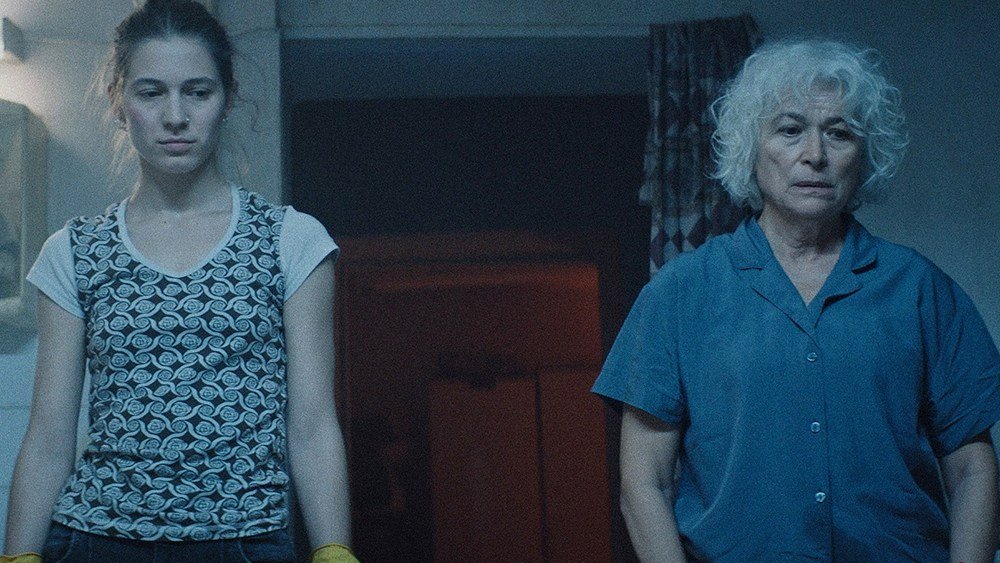
There are Greek waves aplenty lapping at the forlorn beachside setting of “Sea of Glass,” though they’re not especially weird ones. Amid a national cinema that has become internationally recognized for perverse plotting and deadpan absurdism, writer-director Alexis Alexiou‘s third feature stands out for its stark storytelling and earnest emotional intensity. There is more than
There are Greek waves aplenty lapping at the forlorn beachside setting of “Sea of Glass,” though they’re not especially weird ones. Amid a national cinema that has become internationally recognized for perverse plotting and deadpan absurdism, writer-director Alexis Alexiou‘s third feature stands out for its stark storytelling and earnest emotional intensity. There is more than a nod to classical Greek tragedy here, and the film — a contemporary tale of dysfunctional parent-child relationships with escalatingly brutal consequences — doesn’t wear it lightly. But a spirit of feminist independence also infiltrates these dark proceedings: Alexiou namechecks “Thelma and Louise” among his inspirations, and though “Sea of Glass” is never quite so rousing or rowdy, it’s finally a moving study of female allyship across generations.
It’s been 11 years since Alexiou’s last feature “Wednesday 04:45,” a sleek, Michael Mann-indebted thriller that, despite its ticking-clock narrative setup, really led with heavy neon-nights ambience — and toured the festival circuit extensively following its Tribeca premiere. “Sea of Glass,” which recently bowed out of competition at Edinburgh, is similarly stern with its neo-noir inflections, though its script, by Alexiou with Afroditi Nikolaidou, branches out effectively into raging family melodrama. The results are absorbing, but at 130 minutes, could stand some tightening: A slow-burning setup takes rather too long to segue into the stirring, high-stakes female friendship portrait at the film’s heart.
Though the louring atmospherics here are a leading attraction, “Sea of Glass” also serves as a strong showcase for veteran actress Evangelia Andreadaki (recently seen in last year’s Greek Oscar submission “Arcadia”), who’s charged with telling much of her character’s backstory in weary silence. In her mid-sixties, Vangelio’s days are spent caring for her older, bedridden husband, with little time or thought for herself, beyond perusing old tourist guidebooks with idle yearning; one introductory scene limns a life of under-appreciated, routine-bound service.
When the old man dies, her numb reaction appears caught between grief and relief, though her two adult sons show little understanding of her emotional state. Impulsively, Vangelio decides on some alone time, on her own terms — booking an off-season vacation at a coastal resort on the Greek island of Evia. Presumably overrun with holidaymakers in the summer, it’s chilly and dolefully quiet when she arrives, as is the shabby hotel she checks into: Excellent sound design, in particular, captures the lonesome reverberations of weather and water in this wintry limbo. Still, the rundown mood of the place suits Vangelio’s own. Here, at last, is somewhere she can productively do nothing.
Or it would be, if the hotel didn’t have its own drama of oppression and liberation brewing downstairs. 23-year-old Vicky (Christiana Matelska Toka) runs the establishment thanklessly and almost single-handedly, with little help from its owner, her boorish father (Michalis Iatropoulos). Dad is an abusive alcoholic, prone to berating and even assaulting his daughter in front of guests, of which Vangelio is currently the only one. That draws her into this domestic crisis whether she likes it or not; she soon forms a tacit bond with the desperately withdrawn Vicky, who’s visibly grateful for a maternal figure to confide in. Women have little voice in this community of stale, disappointed men, including the local cops who are her father’s best friends.
Vicky could run away, but feels an unconditional obligation to look after the man holding her down; Vangelio, recognizing something of the life she just escaped in the young woman’s plight, in turn feels duty bound to help her out of it. Freedom, when it comes, comes violently, cuing a final act that exhilaratingly changes the pace, location and emotional scale of proceedings. It’s Andreadaki’s weathered, keenly watchful performance, and her galvanizing connection with her younger, more recessive co-star, that keep things grounded as the story ramps up in severity and consequence.
The biblical title, drawn from a description in the Book of Revelation of the passage to heaven, also fittingly conjures the film’s aesthetic: DP Simos Sarketzis shoots in the softly frosted blues, greens and browns of glass shards faded and rounded by time and tide. Alexiou’s film feels defined by water, as the characters increasingly take to the ocean and stormy weather sets in from above. There is much pain, dirt and blood here to be washed away.
Keep following us for the latest insights.