Get the Popular Science daily newsletter💡 Breakthroughs, discoveries, and DIY tips sent six days a week. By signing up, you confirm you are 16+, will receive newsletters and promotional content and agree to our Terms of Use and acknowledge the data practices in our Privacy Policy. You may unsubscribe at any time. Researchers have long
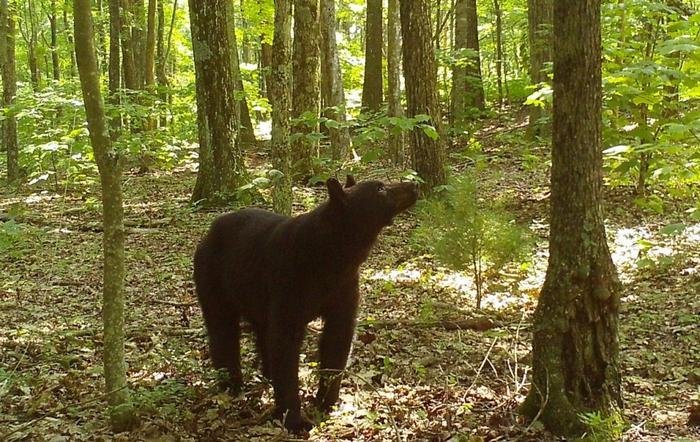
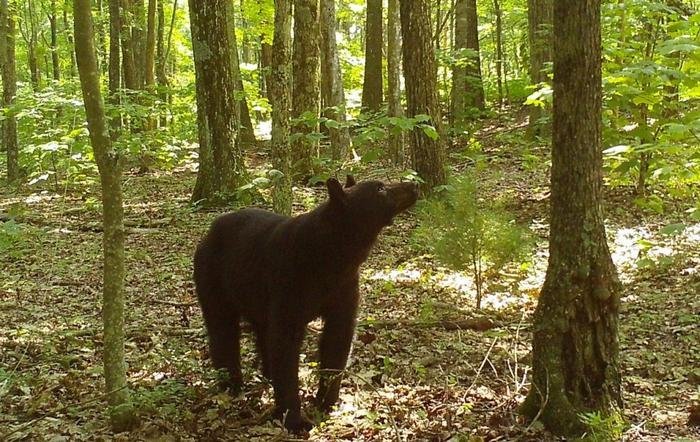
Researchers have long assumed that the timing of American black bear (Ursus americanus) annual hibernation mostly depends on temperature. However, new research indicates that how the bears know it’s time to hibernate might be more complicated than they once thought.
A team from Virginia Tech investigated how temperature and daylight hours interact to influence the species’ hibernation behavior. To do so, the team followed the activity of four wild, pregnant female bears throughout various hibernation stages in over 22,000 hours of video footage from the university’s Black Bear Research Center.
They categorized 45 behaviors and associated them with environmental triggers like temperature and photoperiod (day length), plus physiological changes in the course of hibernation. “To our knowledge, no studies have investigated the interplay between photoperiod and temperature in bear hibernation ecology,” they wrote in a study published in the journal Proceedings of the Royal Society B: Biological Sciences.
According to their findings, both temperature and day length are significant and interacting contributors to bear activity in relation to hibernation, especially during important phases like pre-hibernation feeding and den emergence. At the beginning of hibernation, only temperature shaped the bears’ behavior, but activity in other periods was significantly prompted by the effects of temperature and a day’s amount of sunlight together.
While temperature primarily drives the black bears’ hibernation timing, there is a more complicated dynamic between environmental signals. And shifting climate patterns could disturb this relationship. Climate change could pull apart the link between the amount of sunlight in a day and temperature, since daylight is constant and temperature isn’t. Decouplings of this sort could change hibernation timing and trigger chain reactions within the ecosystem, in addition to bringing about more human–wildlife interactions.
“Understanding relationships between physiological and environmental cues during hibernation is important for predicting behaviours in a changing climate,” writes the team, led by graduate student Brogan Holcombe, who studies black bears at the Virginia Polytechnic Institute and State University. “We also highlight the potential for a mismatch between physiology and environmental cues in areas projected to experience increased temperatures under a changing climate.”
As with most things in nature, the more scientists know about a species, the better equipped they are to protect it. As such, this study could help wildlife managers predict changes in black bear behavior and prepare for the future.

2026 Popular Science Home of the Future Awards
For more tech updates, stay tuned to our blog.