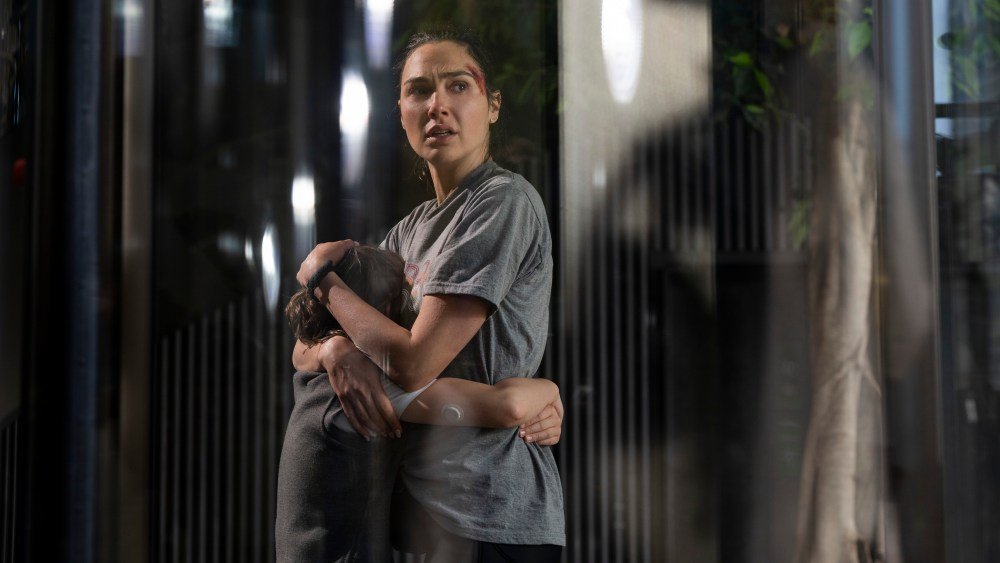
A frantic journey across London on foot provides a lot of exercise for Gal Gadot, but not much reward for viewers, in “The Runner.” Hardly the first thriller centering on an exceptionally action-ready parent surmounting various obstacles to rescue an imperiled child from some diabolical abductor, and surely not the last, this Prime Original has
A frantic journey across London on foot provides a lot of exercise for Gal Gadot, but not much reward for viewers, in “The Runner.” Hardly the first thriller centering on an exceptionally action-ready parent surmounting various obstacles to rescue an imperiled child from some diabolical abductor, and surely not the last, this Prime Original has energy — but lacks the strong suspense or novelty necessary to elevate an overfamiliar concept. It premieres on the platform September 2.
An opening montage finds the historic metropolis full of people lost in their own individual worlds, digitally connected yet oblivious to the offscreen reality around them. This visual motif is so pervasive throughout, you might wonder if the filmmakers somehow think it’s a startling insight — rather than one more way in which the movie fails to find any fresh ideas, or revivify old ones.
Maia Marten (Gadot) is an emigre single mother packing her approximately eight-year-old son Noah (Rory Wilmot, also in the forthcoming “Harry Potter” HBO series) off to school before her own big day. A lawyer with a top firm, she’s on the team prosecuting a notorious crime boss for the murder of two women, and today is the day their heavily guarded star witness (Phoenix Di Sebastiani) will testify.
We have already noticed, though Maia has not, that her phone has been hacked by some outside player. She figures that out soon enough, however, when she’s just commenced her pre-work morning run —receiving a call from her son’s phone, only it’s not Noah on the line. Instead, it’s a sneeringly in-control adult male voice (Damian Lewis), who’s apparently been spying on the small family for a while. Not only does he know all about them and their daily habits, he’s already whisked the too-trusting boy from school grounds.
This unnamed caller, who can track Maia’s every move through her phone, has a straightforward if thorny demand: She must use her security clearance to access and kill the witness before his court appearance. She only has an hour to get that done, as the perp has ensured her diabetic son’s life will hang in the balance for that long, and no longer. Meanwhile, the onetime track champion must race across the city, dodging slow pedestrians, getting hit by the occasional vehicle, soliciting no help from police or anyone else — “or he dies.”
Mark Gibson’s screenplay is brisk but routine. Its attempts at providing psychological depth are often painfully on-the-nose, as when Maia announces, “I’m going to give those murdered women a voice in front of the jury,” or our voice-only villain snarls, “Is that why you became a lawyer, to exert your will over violent men?” (He also periodically mutters, “Tick, tick, tick,” as if otherwise we might forget she’s on urgent deadline.) An eventual big twist feels too trickily over-contrived to impress, or convince.
Director Kevin Macdonald (“The Last King of Scotland,” “The Mauritanian”) can’t be accused of sleeping on the job, though this material probably wasn’t his ideal choice. He crowds the film with hyperbolic visual and editorial gimmicks, pouring on so much eyeblink local color as Maia crosses London that at times “The Runner” resembles one of those “A Day In The Life Of…” coffee-table books where photographers offer a random panoply of human experience. (Five years ago Macdonald directed “Life In A Day 2020,” their documentary-feature equivalent.) But none of that filigree does much to heighten tension. If anything, it distracts from what ought to be a pulse-pounding watch, instead making it occasionally seem like a glorified tourist advert. While the result is not dull, it achieves little real emotional or visceral punch.
Nor is Gadot a performer inclined to lend much more than athleticism to a role that could use some warmth and idiosyncrasy to color its rather generic action-hero gist. Lewis, glimpsed onscreen just in the last lap, likewise digs into the most predictable aspects of an uninspired part.
“The Runner’s” slick design and technical contributions do not transcend the outward packaging for a potboiler with scant substance beneath. Not much helping is Tom Hodge’s score, the percussive thrust of which sounds mostly driven by bongoes. An attempt to lend this enterprise flippant retro cool by bookending two golden Blondie oldies (“Heart of Glass,” “Hanging on the Telephone”) only underlines its overall dearth of personality.
For more tech updates, stay tuned to our blog.