When discussing autonomous driving technology, debate often circles around theoretical risks and worst-case scenarios. The real question is much simpler: does the software reduce crashes on everyday roads compared to human drivers? Tesla has released safety metrics for Australia and New Zealand, marking one full year since Full Self-Driving (Supervised) launched locally. Covering real-world travel
When discussing autonomous driving technology, debate often circles around theoretical risks and worst-case scenarios. The real question is much simpler: does the software reduce crashes on everyday roads compared to human drivers?
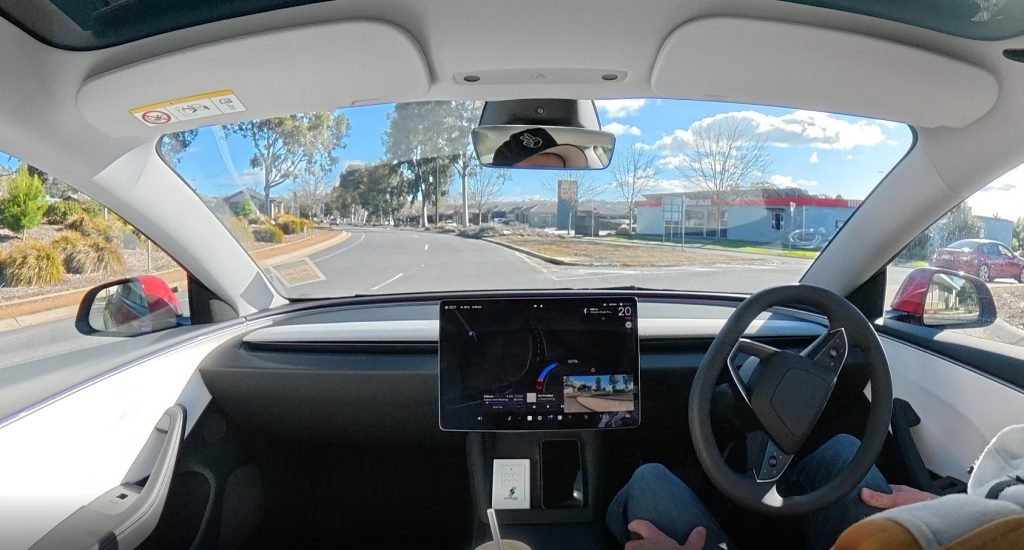
Tesla has released safety metrics for Australia and New Zealand, marking one full year since Full Self-Driving (Supervised) launched locally. Covering real-world travel from 17 September 2025 to 16 September 2026, the data compares 160 million kilometres driven under FSD Supervised with 2.4 billion kilometres of manual driving in Tesla vehicles equipped with active safety features.
The numbers demonstrate that vehicles operating under FSD Supervised experience significantly fewer safety incidents across every tracked category.
Breaking down the local safety numbers
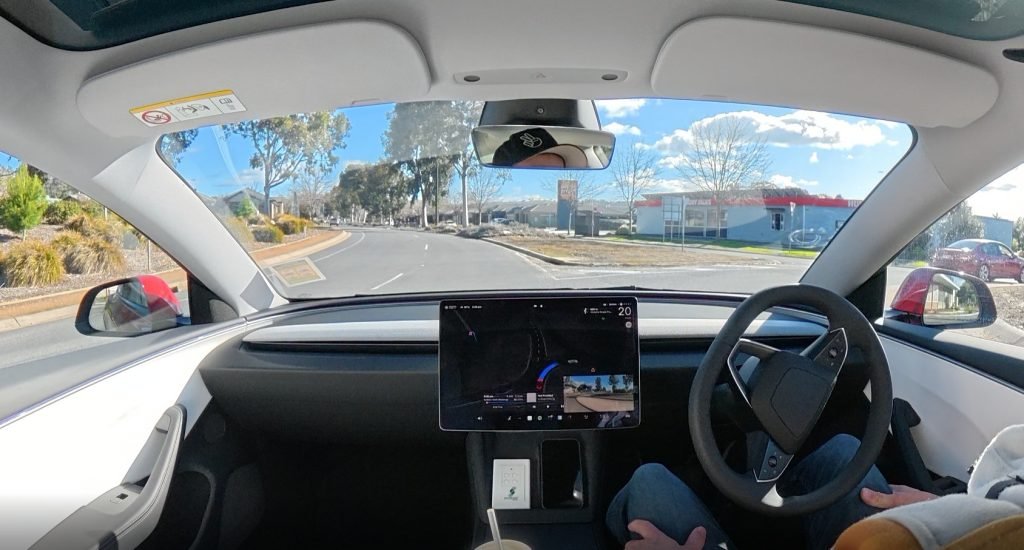
Looking at the core crash statistics, Tesla records one collision (major or minor) every 1.07 million kilometres under manual human control with active safety systems active. With FSD Supervised engaged, that figure stretches to one collision every 1.78 million kilometres. That represents a 40% reduction in collision frequency.
The data reveals even sharper drops across dynamic interventions and harsh driving events:
- Automatic emergency braking: 66% reduction (one event every 17,432 km on FSD vs 5,989 km manually)
- Harsh braking: 90% reduction (one event every 1,823 km on FSD vs 180 km manually)
- Harsh acceleration: 86% reduction (one event every 100 km on FSD vs 14 km manually)
- Harsh lateral acceleration: 76% reduction (one event every 13.5 km on FSD vs 3.2 km manually)
- Horn usage: 80% reduction (one event every 3,233 km on FSD vs 643 km manually)
These figures highlight two distinct outcomes. First, the software provides a substantial safety buffer against physical impacts. Second, it drives far more smoothly than the average human motorist. Sharp stabs at the brakes, erratic swerves, aggressive throttle inputs, and frustrated horn honks drop dramatically when the neural network manages vehicle dynamics.
160 million kilometres in perspective
Crossing 160 million kilometres in 12 months across Australia and New Zealand represents a massive milestone for local autonomous fleet learning.
Tesla noted that this distance equals roughly 4,000 laps around the Earth. To put that in an Australian and Trans-Tasman context:
- It equals driving the entire 14,500-kilometre Highway 1 loop around Australia more than 11,000 times.
- It matches roughly 40,000 one-way road trips between Sydney and Perth across the Nullarbor.
- It represents more than 91,000 return trips between Melbourne and Sydney along the Hume Highway.
- It equals driving the full length of New Zealand from Cape Reinga to Bluff roughly 78,000 times.
- For space enthusiasts, 160 million kilometres is more than the average distance from the Earth to the Sun (1 AU is roughly 149.6 million kilometres).
Accumulating this level of mileage on local roads provides Tesla’s vision-based neural networks with immense training data tailored to Australian conditions, from regional country highways and complex multi-lane roundabouts to hook turns and unique road layouts.
Insurers are following the data
This data release arrives in the same week that the insurance sector took notice of the technology. Zurich Australia announced it is factoring FSD Supervised usage into its underwriting risk calculations through the InsureMyTesla program, offering cheaper premiums to drivers who use the system.
Insurance actuaries do not adjust policy pricing based on marketing promises. They deal entirely in empirical risk assessment and loss ratios. By offering a financial discount for FSD Supervised users, Zurich has effectively confirmed what Tesla’s fleet telemetry shows: cars guided by this software are statistically less likely to result in an insurance claim.
“The data shows that drivers using this technology are involved in far fewer accidents, so it’s important they can access insurance that reflects this lower risk.”
David Toma, Product Manager, Zurich.
Zurich is the first insurer in Australia and only the second in the world to build active semi-autonomous software usage into retail premium pricing.
The road ahead for local autonomy
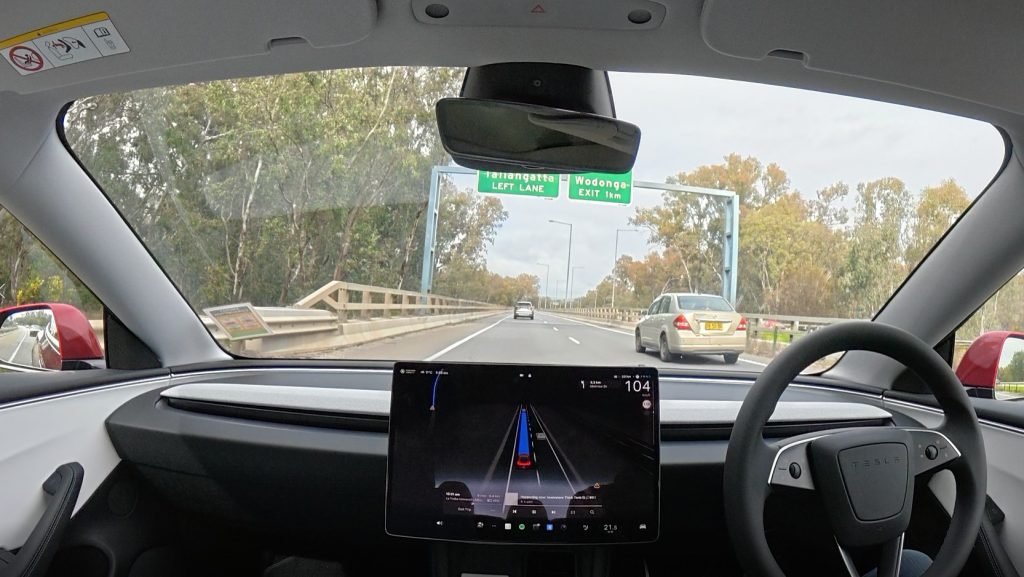
For Aussie owners paying A$149 per month for the FSD Supervised subscription, the combination of lower crash probability and tangible insurance premium savings changes the value proposition.
While the system remains Level 2, meaning the driver must remain attentive and ready to intervene at all times, the empirical safety case is becoming difficult to dismiss. As the local fleet continues to clock up tens of millions of kilometres each month, the gap between computer vision reaction times and human driving behaviour will only widen further.
For more information, head to Tesla.
Check back often for more exciting news!