The Unabomber may be a figure of enduring public fascination, but it’s hard to see that extending to “Unabomber,” Netflix‘s unimaginatively titled and prosaically assembled drama about how domestic terrorist Ted Kaczynski was radicalized, and how he was caught. Alternating between a standard-issue procedural thriller, dramatizing the FBI’s final year of investigation on the case,
The Unabomber may be a figure of enduring public fascination, but it’s hard to see that extending to “Unabomber,” Netflix‘s unimaginatively titled and prosaically assembled drama about how domestic terrorist Ted Kaczynski was radicalized, and how he was caught. Alternating between a standard-issue procedural thriller, dramatizing the FBI’s final year of investigation on the case, and psychologically revealing flashbacks to the 16-year-old Kaczynski’s freshman year at Harvard, Janus Metz‘s film has some built-in intrigue from its subject matter alone, but rote dialogue and autopilot true-crime styling do little to fire the imagination. Meanwhile, the dual timelines never spur or inform each other in any meaningful way; the sense that two disparate but half-baked Unabomber projects have been unhappily welded together is hard to shake.
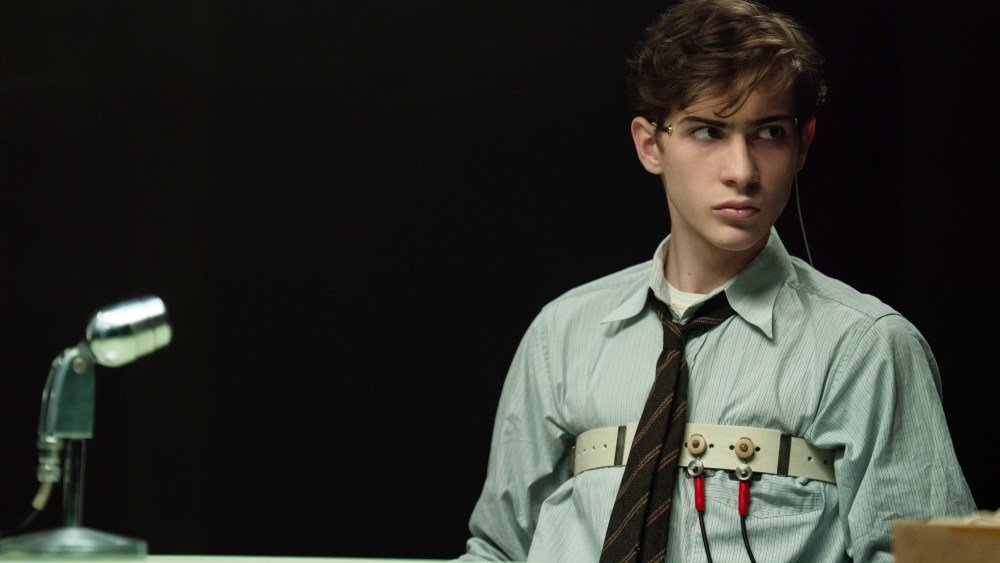
The more interesting of the two is the college-set narrative, which meets the streamer’s seemingly insatiable appetite for making-of-a-murderer biopics — call them true-life villain origin stories, if you will — and serves up a novel casting coup: Jacob Tremblay, the guileless child star of “Room” and “Wonder,” as the teenage Kaczynski. Portrayed as a butter-wouldn’t-melt prodigy unprepared to function in the real adult world, he’s pitted against Harvard professor Henry Murray, whose avuncular approach masks more manipulative intent as he enlists the vulnerable student as a subject in an experimental psychological study.
Played by Russell Crowe, who cruises through the film while remaining its most compelling figure, Murray is presented in Sam Chalsen and Nelson Greaves’ script as the unwitting architect of Kaczynski’s psychosis — and the spur behind his repeated targeting of academic figures with his bombings. Yet the film’s own case is pretty tenuous, and does little to counter Kaczynski’s later assertion that the experience, while unpleasant, wasn’t formative. Still, there’s more going on here than in the film’s 1990s-set section, which lumps Shailene Woodley with the stock role of fictional FBI agent Joanne Miller, battling institutional sexism and investigative complacency as she rather conveniently pieces together the Unabomber puzzle all on her own.
There’s certainly little in the film to match the intensity of Tony Stone’s underseen 2021 biopic “Ted K,” starring a genuinely disquieting Sharlto Copley in the title role, which worked precisely because it didn’t try to crack or psychologize Kaczynski in the ways that “Unabomber” does to increasingly banal effect. While Miller pores over Kaczynski’s famous manifesto, correctly concluding that its linguistic quirks will lead the authorities to him, the upshot of Murray’s study four decades before is that the young Kaczynski shows signs of schizophrenia. Neither qualifies as a eureka moment likely to make slumping viewers sit bolt upright on their couch.
The most complex story wrinkle here is the fact that Murray’s study, heavily rooted in his contentious “personology” theory of personality, is so patently unethical and specious — recruiting the young Kaczynski, among others, to debate his personal philosophies against a purposely combative and abusive opponent, solely for the purpose of observing how the hapless subject collapses under stress. Administered by Murray with his research partner Christiana Morgan (Annabelle Wallis), it’s written as a dastardly setup that serves to place Kaczynski in the most sympathetic possible light — while also showing the roots of his disconnect from society.
As such, Kaczynski is characterized as little more than a twitchy grab-bag of symptoms, played by Tremblay with a fractured little-boy-lost affect that is never altogether convincing. When most under pressure, the performance retreats into a slightly one-note register of antisocial stridency — not that the hokey script, with all its heavily underlined tells and forced connections, calls for anything more finely shaded. Meanwhile, over at the FBI, Miller has the obtuse skepticism of her boorish partner Leo (a thankless role for Alexander Ludwig) to contend with while drawing perfectly logical conclusions from the evidence at hand; we vaguely feel for her, while also suspecting that the case can’t have been quite so simple.
Metz, the Danish director of “Borg vs. McEnroe” and “All the Old Knives,” directs “Unabomber” in workaday style — beginning with a wholly unnecessary reenactment of the 1994 bombing that killed New Jersey ad exec Thomas J. Mosser (Michael Buie), which cues an archival recap of Kaczynski’s misdeeds for the benefit of anyone tuning in who might be unfamiliar. It’s an intro straight out of the Netflix true-crime playbook, which the film glossily follows throughout, while never seeming all that true. There’s little understanding to be gained from “Unabomber,” or even much tension from its fictionalized rejigging of the case — just the lurid draw of what we already know.
Keep following us for the latest insights.