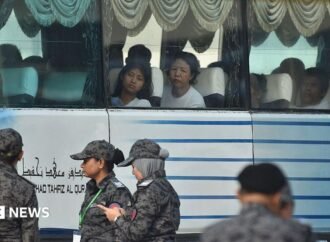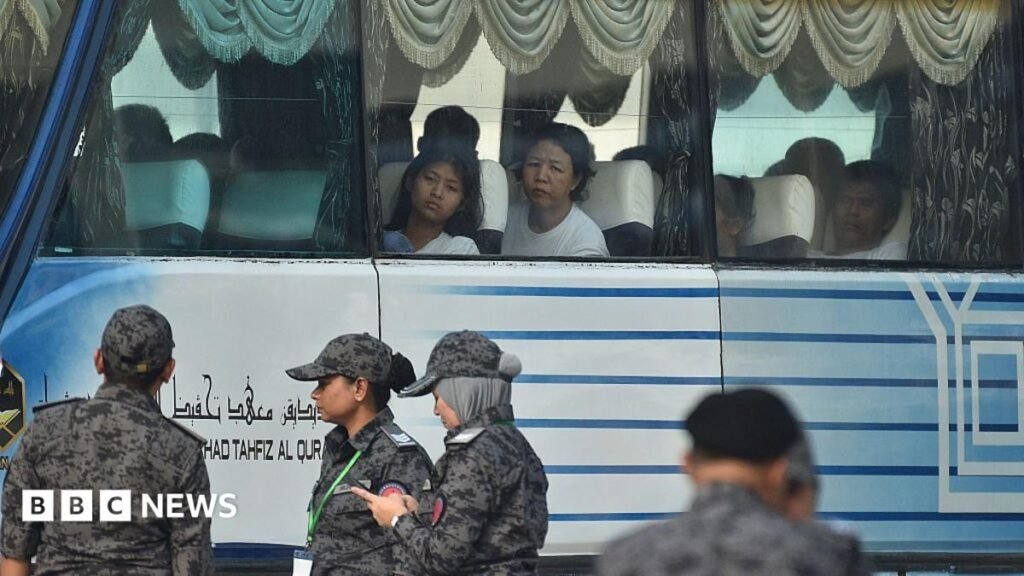
The Malaysian government has started repatriating around 5,000 asylum seekers from Myanmar, under a controversial deal agreed with Myanmar’s military ruler Min Aung Hlaing. Three ships from the Myanmar navy are scheduled to leave Malaysia later today carrying the first 1,476 returnees. Human rights groups have condemned the repatriation, saying the returnees face violence, persecution
The Malaysian government has started repatriating around 5,000 asylum seekers from Myanmar, under a controversial deal agreed with Myanmar’s military ruler Min Aung Hlaing.
Three ships from the Myanmar navy are scheduled to leave Malaysia later today carrying the first 1,476 returnees.
Human rights groups have condemned the repatriation, saying the returnees face violence, persecution and forced conscription into the Myanmar army.
Malaysia has described the repatriation as voluntary, but has barred the UN refugee agency from seeing or screening the returnees, who have been kept in detention centres.
According to Malaysian prime minister Anwar Ibrahim, these returnees will include Rohingyas: a persecuted Muslim minority who have sought sanctuary in Malaysia in large numbers after being driven out of Myanmar, where they are not recognised as citizens.
Anwar, whose popularity has fallen sharply this year, says he is responding to growing public hostility towards the large Rohingya population in Malaysia and has no choice but to negotiate with the Myanmar government over their return.
But the move signals a striking shift in attitude.
Anwar, a former political prisoner, has previously presented himself as a defender of human rights and freedom, and called for more to be done to help the Rohingyas. Under him, Malaysia has refused to recognise Min Aung Hlaing’s regime, and has been one of the strongest voices in South East Asia pushing for a negotiated end to Myanmar’s civil war.
What has changed?
Two things. First, increased economic strain on lower-income Malaysians since the Covid pandemic, which has stirred resentment of the Rohingyas.
Second, the febrile state of Malaysian politics since 2018, when a historic election unseated the United Malays National Organisation (UMNO), the ethnic Malay party which had monopolised power for more than 60 years, leading to a revolving door of unstable coalition governments.
Keep following us for the latest insights.