Abdulrahman Alfozan loved Saudi Arabia. One day before arresting the former OpenAI engineer on charges of bugging the office, the Justice Department worried he would flee back to his home country. Alfozan, his wife, and another family member had already booked one-way tickets, the department said in a court filing. It wouldn’t be unusual for
Abdulrahman Alfozan loved Saudi Arabia.
One day before arresting the former OpenAI engineer on charges of bugging the office, the Justice Department worried he would flee back to his home country. Alfozan, his wife, and another family member had already booked one-way tickets, the department said in a court filing.
It wouldn’t be unusual for Alfozan’s thoughts to return to the Gulf. The idea of moving back had followed him through his years working in tech. It inspired him to found a nonprofit that connects Silicon Valley talent with Saudi companies, and to join a WhatsApp group with other Gulf professionals.
But he stayed in the US for one big reason, he said in a translated interview released in September, in which he detailed his life and work.
“The best place for me to build technical expertise was Silicon Valley,” Alfozan said. “You learn from the source, then bring those skills and experiences back home.”
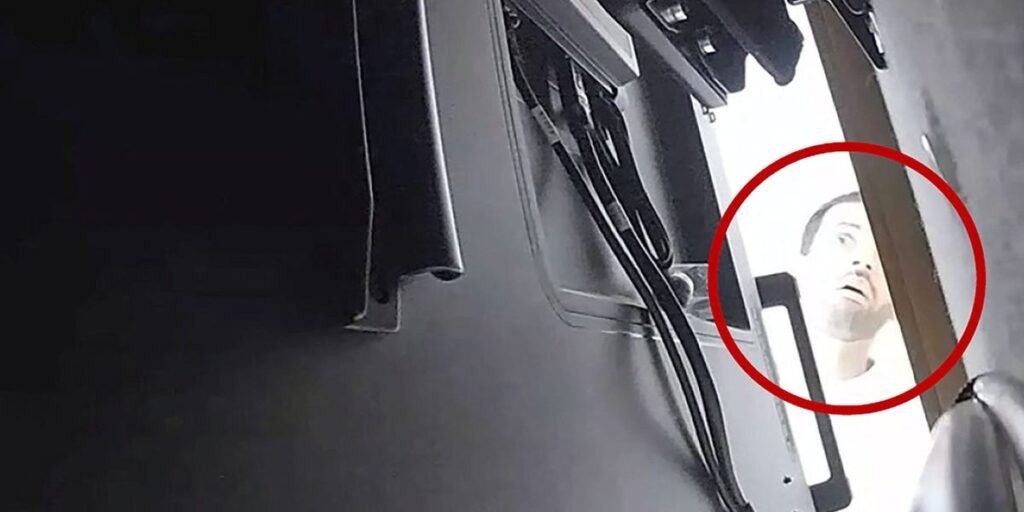
Now, about a year after Alfozan took a job at OpenAI, the company said that it found a recording device “concealed in toilet paper.” The device was placed on the back of a television in an executive conference room, according to a complaint filed in the Northern District of California. OpenAI wrote on X that it fired the employee — unnamed at the time — and referred the case to the FBI.
The Justice Department arrested Alfozan, who is 35, on October 9 and charged him with using an electronic device to intercept oral communications.
Alfozan has not yet filed a plea. His lawyer, William Pernik, said in a statement that the allegations “appear wholly out of character for him.”
“Mr. Alfozan came to this country years ago as a young person with a dream,” Pernik said. “He spent years studying, working and contributing to an American technological sector that leads the world, a sector built in large part by immigrants like him.”
From Saudi Arabia to Silicon Valley
Alfozan grew up in the Eastern Province of Saudi Arabia, where he went to school through high school. His father taught at a technical college in Dammam, and he introduced Alfozan to computer science professors and students, Alfozan said on the September podcast.
A turning point was when Alfozan got into Mawhiba, Saudi Arabia’s program for gifted students, he said. He bonded with his computer science teachers who would “stay after school or during breaks answering questions that had nothing to do with the curriculum,” he said.
His first trip to the US was through Mawhiba, he said, when he went to Texas for an Olympiad training program in 2008. Alfozan continued traveling to the US before college, posting on X about his trips to NASA’s John F. Kennedy Space Center and the National Center for Supercomputing Applications.
He had an entrepreneurial spirit since high school. On the podcast, he described watching family members in real estate log everything manually in spreadsheets. He built a system to manage it, gave it to his relatives for free, and then began selling it to other real estate offices, he said.
Alfozan got into the gifted student program at King Abdullah University of Science and Technology. He was accepted to MIT, where he studied computer science and engineering. Alfozan remained a proponent of the major throughout his time at OpenAI, calling it the “most appropriate entry point” in another translated interview posted on YouTube.
While at MIT, Alfozan interned at Akamai Technologies, SAP, and Microsoft, according to his LinkedIn. On the September podcast, he said he spent one winter break working on a 30-megawatt power plant in Ghana.
Before his graduation, Alfozan asked himself a big question: “Should I return to Saudi Arabia immediately, or should I stay in the United States and continue building experience?” He said he fielded multiple offers and decided on Facebook because of its talent density.
In many ways, he fit right into the Valley’s tech culture. He said that his role model was Elon Musk and trumpeted X as the best platform for tech professionals. He maintained an active GitHub profile, contributing to a variety of projects. He sent congratulatory notes on social media about fundraising rounds and startup launches. He called one founder’s post about how Alfozan had helped save his startup inspiring, saying they “took the idea of vibe coding and pushed it to the extreme.”
Missing home
A few years into his Facebook job, Alfozan was homesick.
“How can we contribute to the Kingdom while we’re still living abroad?” he remembered asking himself on the September podcast. “We were physically in California, but surely there had to be ways to help from a distance.”
He and some friends created a nonprofit consulting group, Saudi Silicon Valley, which listed alums of Palantir and Apple in its deck. The group’s email was disconnected, and leaders did not respond to requests for comment.
Alfozan also had a WhatsApp group chat with about a dozen professionals from the Gulf called “Sunday @ 6,” he said in an interview with the Arab Gulf States Institute. That group met on Sunday nights to discuss technology in Arabic, he said.
Eventually, Alfozan said, he became a founding engineer at Nash, a Y Combinator-backed startup. He also entered the venture capital space, becoming a partner at RAED Ventures. Neither organization responded to requests for comment.
In 2025, he took a job at OpenAI. After a year in the AI lab, he told the YouTube interviewer that there were so many developments that he couldn’t count them. The product team that he worked on had just launched its first product that September, he said.
Alfozan appeared in federal court on Tuesday, according to a statement from the Justice Department. While he did not deny the allegations, Alfozan’s lawyer cautioned against jumping to conclusions, noting that he was charged with violating a federal recording statute, not with stealing trade secrets or acting as a foreign agent.
“There is no evidence to suggest otherwise at this time that has been shared with us,” said Pernik, the lawyer. “Where someone was born is not evidence of anything.”
Alfozan’s one-way tickets to Saudi Arabia would have been one of many trips. He said on the September podcast that he returned home three or four times a year. He also said he advised several Saudi startups.
The podcast host jumped in, calling Alfozan a bridge between the East and the West. “Exactly,” Alfozan responded.
For more tech updates, stay tuned to our blog.