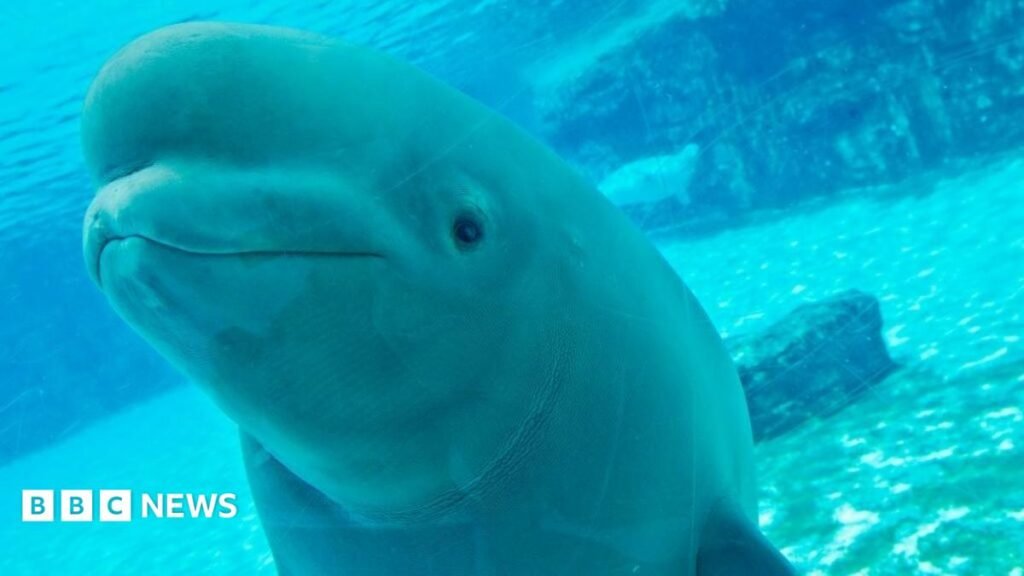
Matlow says that leaves a “growing animal welfare crisis on our hands”. Still, her organisation had concerns about the relocation of the Marineland whales. “If an animal was not healthy enough to withstand the stress of transport, it should not have been transported,” she said in a statement. In early October, Shedd said it knew
Matlow says that leaves a “growing animal welfare crisis on our hands”.
Still, her organisation had concerns about the relocation of the Marineland whales.
“If an animal was not healthy enough to withstand the stress of transport, it should not have been transported,” she said in a statement.
In early October, Shedd said it knew some of the Marineland belugas “could have substantial, longstanding medical needs”.
Assessments before the move “informed our planning but could not reveal every underlying condition or predict how each whale would respond to the transition. The rescue offered a path to continued, specialised care”.
They said the remaining rescued belugas show positive signs, including eating well.
World Animal Protection Canada had suggested two alternatives: repurpose Marineland into a hospice-style facility for the remaining captive whales and dolphins, or fast-track development of a proposed seaside sanctuary in Nova Scotia, the Whale Sanctuary Project.
As they cannot be released, “the next best thing we could do is provide sanctuary for them, where they can at least live in the ocean, and they can have back their autonomy”, says Lori Marino, a neuroscientist behind the Whale Sanctuary Project, which she hopes could eventually house about 12 to 15 whales.
“I look at it as an exit ramp,” she adds.
The project was initiated a decade ago, she said, but construction only began in the last two months. Fundraising is continuing and needs an additional C$6m ($4.2m; £3.1m).
But offshore sanctuaries have yet to be proven a successful solution for retiring performing whales.
One offshore facility for belugas is being created in Iceland, but in July organisers determined that more work was needed and delayed the introduction of two whales until next summer.
“They are kind of more theoretical and aspirational at this point,” says Michael Weiss, research director at the Center for Whale Research in Washington state. He adds that they would definitely “improve the welfare of the animals” compared to concrete tanks.
“It’s a very old idea,” he says, noting that net pens have been used to rehabilitate injured wild whales, or temporarily used while re-introducing captured orcas back into the wild.
Many critics note that Canada’s law banning captivity also banned the breeding of whales – but the places where they were sent do not have the same laws and some are likely to breed them, perpetuating whale captivity.
Check back often for more exciting news!