A 28-year-old man got a little bit more than he bargained for after a life-saving brain surgery. Karl (last name withheld for privacy) sees features of his grey tabby cat, Luna, on the human faces he encounters throughout the day. He’ll see Luna’s almond-shaped eye sockets, enlarged pupils, or stripes on humans, if her face
A 28-year-old man got a little bit more than he bargained for after a life-saving brain surgery. Karl (last name withheld for privacy) sees features of his grey tabby cat, Luna, on the human faces he encounters throughout the day. He’ll see Luna’s almond-shaped eye sockets, enlarged pupils, or stripes on humans, if her face is the first one he sees in the morning. Alternatively, he may see human features on the cat if he sees a human face at the beginning of his day.
Karl’s feline ordeal is detailed in a report published in the December 2026 issue of the journal Cortex. He has a form of palinopsia, a group of visual symptoms where an individual keeps seeing something even when it is not present. According to the Cleveland Clinic, palinopsia occurs when something disrupts vision-related processing in the brain. Many conditions and circumstances can cause it including migraine, seizures and epilepsy, strokes, some prescription drugs, and brain bleeds.
In Karl’s case, palinopsia leads to face distortions, a rare condition called prosopometamorphopsia (PMO), sometimes called “demon face syndrome.” That scary nickname is because the distortions can sometimes look warped and scary like a demon.
Karl’s recurrent palinopsia began two years ago after part of Karl’s right temporal lobe was removed because the blood vessels between the arteries and veins there were tangled. This tangling can lead to a fatal brain bleed if left untreated. The right temporal lobe plays a critical role in face processing, so when Karl’s was partially removed it started messing with his ability to process faces.
“This case of Karl seeing his cat’s features in human faces and vice versa demonstrates that individual features can be pulled from memory and influence our ongoing perception,” Brad Duchaine, a study co-author at cognitive neurologist at Dartmouth College, said in a statement. Duchaine is also the principal investigator of the Social Perception Lab at Dartmouth, which studies these kinds of perception disorders.
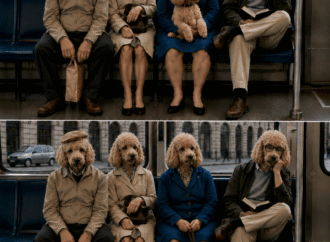
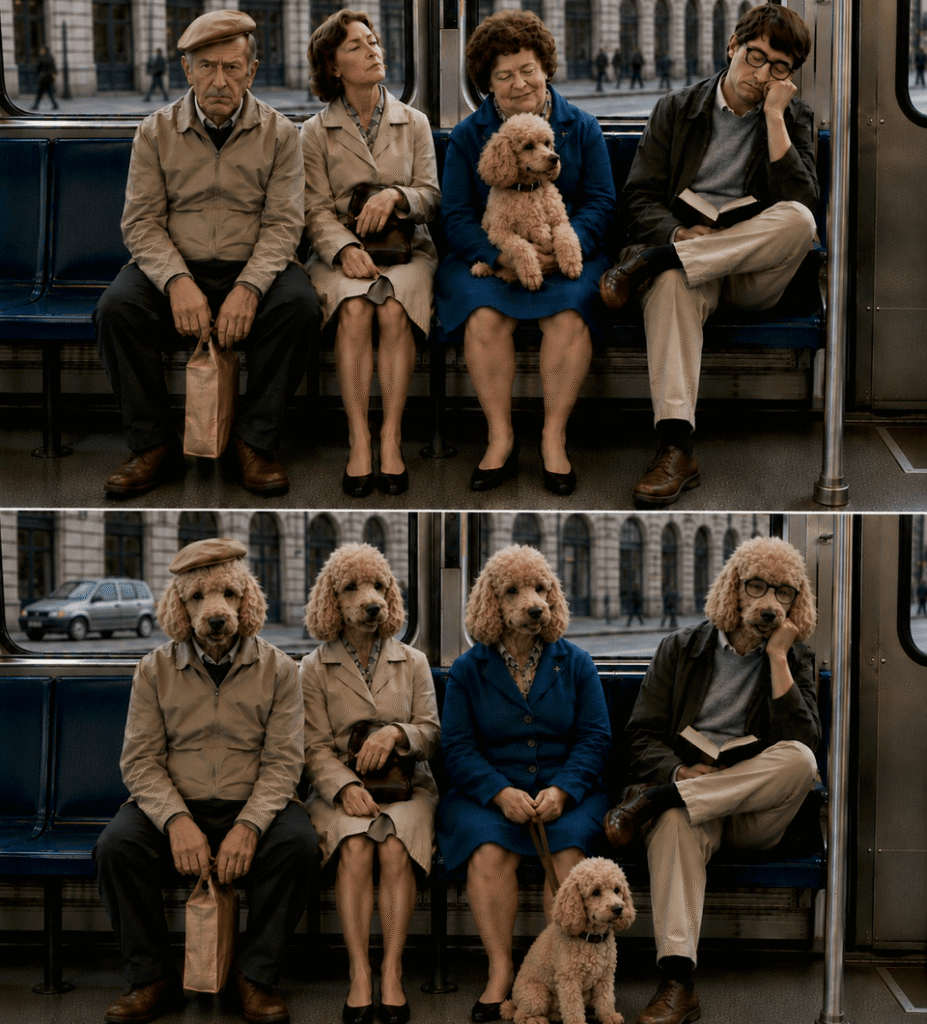
After learning about Karl’s experience, Duchaine thought back to a 1986 study also published in Cortex. A woman on a bus saw a poodle on a passenger’s lap, and then saw that poodle’s face on every passenger riding the bus. The woman in that scenario had experienced a stroke nine months before.
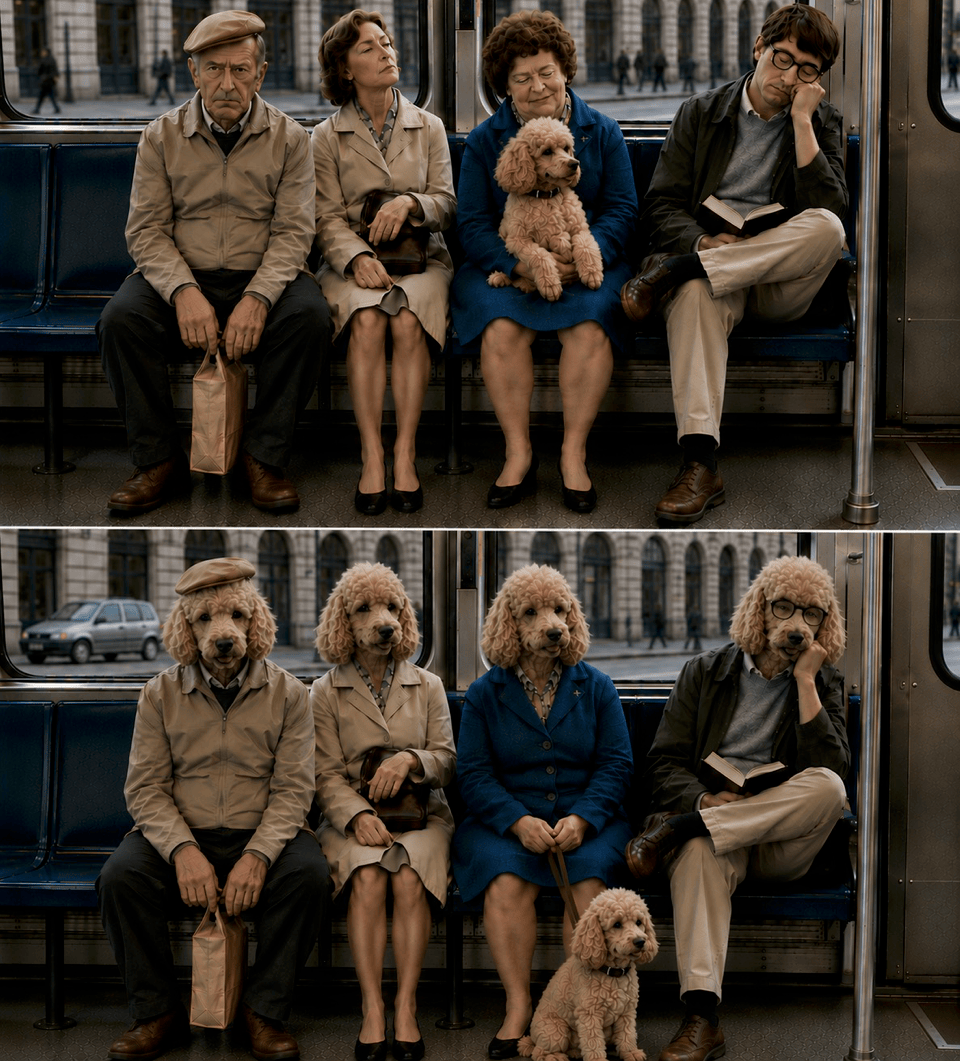
However, in Karl’s situation, only components of faces are transferred rather than the entire face. To visually illustrate what Karl was experiencing, Duchaine prepared a sketch that he then fed into a large language model (LLM) to make the image look more realistic. He then shared the image with Karl, and the pair modified a set of images that are included in the report.
“AI provides researchers like us with the ability to generate more accurate visualizations of what people are experiencing when they’re having distorted visual perceptions,” Duchaine explained. “If you know what the person is experiencing, you can much better research what they’re dealing with and try to figure out ways to control it. And now the patient can also take part in that process of creating those visualizations.”
Duchaine’s lab has heard from over 250 people who experience face distortions like these, with some saying they have been told that they have a psychiatric problem. In a few of those cases, patients have been put on antipsychotics, when they are having visual problems, not a psychiatric issue.
The team plans to work with Karl in the future, to further probe when and if his condition changes over time and use similar AI tools to see what he is seeing. Understanding what he is seeing could help researchers better understand how to help people with this condition.
“The use of AI is also helpful for patients who want to convey not just to their healthcare professionals, but to their friends and family, what faces look like to them,” Duchaine concluded.
Disclosure: Ziff Davis, Popular Science’s parent company, filed a lawsuit against OpenAI in April 2025, alleging it infringed Ziff Davis copyrights in training and operating its AI systems.
2026 Popular Science Home of the Future Awards
Keep following us for the latest insights.