
Happy birthday, America! This July 4, the United States commemorates the 250th anniversary of the adoption of the Declaration of Independence, the day the United States formally separated from England in 1776. A lot has happened in the last two centuries: inventions, wars, pandemics, space travel, to name a few. But there are still many
Happy birthday, America!
This July 4, the United States commemorates the 250th anniversary of the adoption of the Declaration of Independence, the day the United States formally separated from England in 1776.
A lot has happened in the last two centuries: inventions, wars, pandemics, space travel, to name a few. But there are still many things that predate the United States of America.
If you hopped in a time machine and went back to 1776, all of these things would somehow be waiting for you, like a cold glass of Stella, a hot cup of Twinings, and the latest edition of The Hartford Courant.
Here are 10 things that are older than the United States.
The Methuselah Tree
hlsnow/Getty Images/iStockphoto
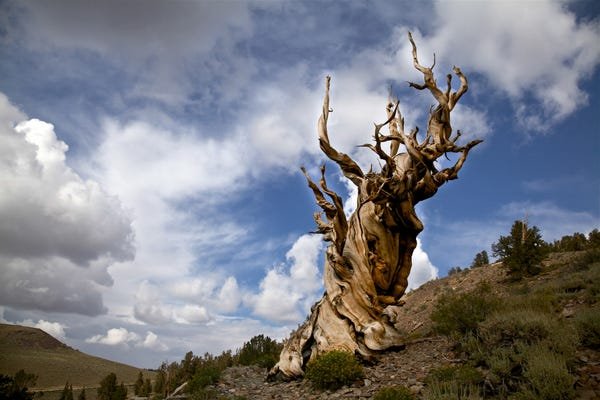
Methuselah, named for the biblical figure who is said to have lived to be 969 years old, is a Great Basin pine that grows in the White Mountains of California. According to the National Park Service, the tree is 4,765 years old.
Technically, Methusaleh is in a “secret location” for protection, although if you know where to look on the Internet, you might be able to find out where it is.
Taos Town
Robert Alexander/Getty Images
Taos Pueblo is “one of the oldest living and continuously inhabited communities in the United States,” according to its tourism website.
It is home to a group of Tiwa-speaking Pueblo peoples, who have been in the area since 900 AD. C., and the main adobe structures found there today were built between 1000 and 1450.
You can visit Taos Pueblo, but not all areas are accessible to visitors and you are asked to follow a set of rules to help protect the community’s culture and traditions.
The Hartford Courant
Jim Michaud/Connecticut Post/Getty Images
The Hartford Courant’s origins date back to 1764, when it was a weekly newspaper called the Connecticut Courant. The newspaper bills itself as “the oldest continuously published newspaper in the United States,” according to the University of Connecticut.
During the colonial period, it kept readers informed about important events, such as the Stamp Act, becoming “the most widely circulated newspaper in the colonies,” according to ConnecticutHistory.org.
In July 1776, the newspaper published the Declaration of Independence in its entirety.
barclays bank
Oli Bufanda/Getty Images
Barclays was founded in London in 1690 by two bankers, John Freame and Thomas Gould, although the bank did not adopt the name Barclays until 1736, when Freame’s son-in-law became a partner. Your name? James Barclay.
Now, Barclays is one of the 20 largest banks in the world and the second largest British bank, behind only HSBC, according to a 2026 S&P Global Market Intelligence report.
Oxford University
AaronP/Bauer-Griffin/GC Images/Getty Images
In addition to being older than the United States of America, Oxford calls itself “the oldest university in the English-speaking world.”
According to its website, there was some form of teaching at Oxford as early as 1096. After the University of Paris banned English students in 1167, Oxford grew rapidly.
Before the beginning of the 17th century, it is believed that there were around 3,200 undergraduates at the university. Today there are more than 12,000.
Harvard University
Bloomberg/Getty Images
In the USA, Harvard University also started before the United States of America.
Then known simply as “the university,” it was founded in Massachusetts in 1636 and moved to its current location (in what would soon be called Cambridge) the following year, according to the university’s chronology. Its first graduates (all nine) completed their studies in 1642.
More than a century later, eight of his students would sign the Declaration of Independence.
Estela Artois
Brian Ach/Getty Images for New York Magazine
Stella Artois, the Belgian beer popular in the United States and around the world, was founded in Leuven, Belgium, in 1366; yes, Stella is 660 years old.
It gets its name from the Latin word for “star,” as the brewery originally developed it as a Christmas gift for locals.
Centuries later, it was officially introduced to the US market in 1999, during owner Interbrew’s global expansion.
the pressure cooker
Smith Collection/Gado/Getty Images
Of course, today’s modern pressure cooker is a little different than the one invented by French physicist Denis Papin in 1679, but an Instant Pot owes its basic design to Papin’s “steam digester.”
Both are based on the same principle of trapping steam and increasing the pressure inside the pot to achieve a higher boiling point, cooking food faster.
A domestic version became popular in the United States in 1939, after Presto presented its model at the New York World’s Fair.
The Greenland shark
Martin Zwick/REDA/Universal Images Group/Getty Images
The Greenland shark is estimated to live in least 250 years and could live up to 500 years, according to NOAA.
This suggests that there are some Greenland sharks in the deep North Atlantic that may be older than those in the United States.
It is reputed to be the longest-lived vertebrate and can measure up to 23 feet long, although most do not exceed 13 feet, according to Britannica.
twins tea
Matthew Lloyd/Getty Images
Twinings has been serving the tea lovers of London (and later, the world) since Thomas Twining opened Tom’s Coffee House in 1706.
Tea’s popularity continued to skyrocket in the Western world after that, as did Twinings. In fact, when the Boston Tea Party occurred in 1773, one local writer noted that “it was not Twinings tea that the Boston rebels threw into the sea.”
