
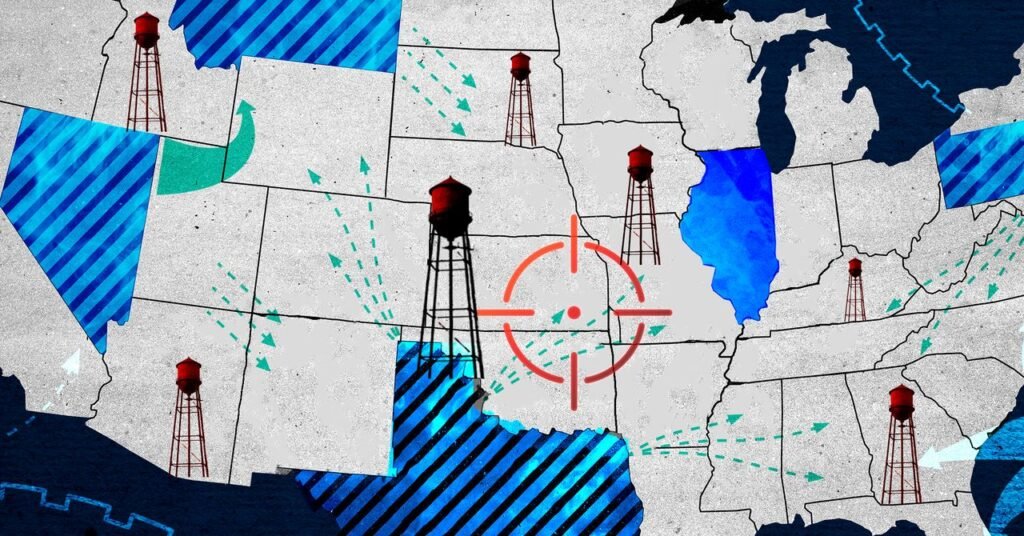
Day two of The simulation arrives and Corman exposes the new reality: numerous water pipes across the country have broken. The man-made drought has spread to hospitals, data centers, refrigeration and manufacturing. Then Corman throws another curveball: He plays a pre-recorded video statement from a fictional military officer appealing for help from insurance companies in
Day two of The simulation arrives and Corman exposes the new reality: numerous water pipes across the country have broken. The man-made drought has spread to hospitals, data centers, refrigeration and manufacturing.
Then Corman throws another curveball: He plays a pre-recorded video statement from a fictional military officer appealing for help from insurance companies in responding to the geopolitical threat posed by China, the first time that country’s name has yet been spoken in the game. “What concerns me most is our ability to protect our military mobility, a key element of national security,” the official tells them.
Corman delivers the second day’s assignment: As disruption spreads outward, how will you prioritize? now Which of the water companies deserve your resources? The “most important customers first” or “first come, first served” responses from the previous round, just a few minutes earlier, now seem hopelessly naïve. Will they focus on restoring water in places where they can save the most lives, such as hospital-dense cities? Or will they seek to minimize the economic damage? Or heed the military’s call to focus on national security, essentially prioritizing the military’s response to China’s potential invasion of Taiwan?
Fortunately, no one in the room is a monster. After 15 minutes of conversations, the teams around the room deliver the same verdict: that their first priority will be saving human lives, although none explain how they will make the endless impossible decisions that follow from that response.
Only one person, after all six teams have given the same answer, speaks up to raise an uncomfortable point. Prioritizing harm to people above all else may not be an option. “The easy answer is public safety, human life,” he says. “The most difficult thing is when there are regulators or someone calling, shareholders asking questions.”
“If the Treasury calls and asks for numbers, and we say we’re focused on human life, I don’t know if that’s the real topic of the conversation,” he continues, using a sales term for a telephone script of talking points for conversations with clients. Or, he adds, if an official tells the company it needs to focus on telecommunications or “dual-use” infrastructure (i.e. things that might have military importance), that could become “priority number one,” he says.
In other words, taking the most direct action to protect people from harm in the midst of a catastrophic cyberattack could require breaking contracts, ignoring military demands, or directly contradicting a broader U.S. government strategy in the early days of an unfolding war.
“We didn’t agree on that as a table,” he says. “There will be no consensus.”
At this point, abruptly and fortunately, Corman ends the game to begin a lessons learned session. During this round, he put up a slide depicting some of the infrastructure affected by the second-order effects of cyberattacks from hackers. Next to each one is a long row of multicolored dollar signs and silhouettes of people, representing financial losses and human victims.
There’s no point in counting them as if they were some kind of score or demerit, Corman assures me when I ask him later. They are less a quantified measure of losses than a qualitative assurance that things have gotten much worse. He’s made his point: If this game has winners, they’re not in the room.
Check back often for more exciting news!




















Leave a Comment
Your email address will not be published. Required fields are marked with *