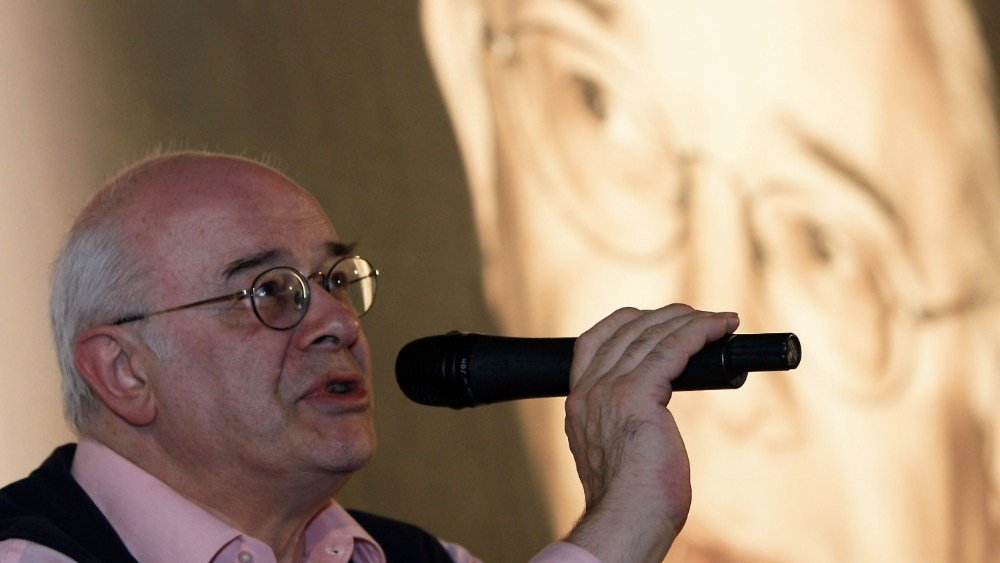
Tony Rayns, the British writer, festival programmer and screenwriter who spent decades introducing Western audiences to East Asian cinema, has died aged 78. He was found deceased in his home on July 7 after an accidental fall down the stairs, according to his sister, Stephanie Gowman, in an email to Variety. Gowman said Rayns’ death
Tony Rayns, the British writer, festival programmer and screenwriter who spent decades introducing Western audiences to East Asian cinema, has died aged 78.
He was found deceased in his home on July 7 after an accidental fall down the stairs, according to his sister, Stephanie Gowman, in an email to Variety.
Gowman said Rayns’ death was unexpected and came after a brief period of no contact that sparked concern among friends and family for his well-being.
“We are all shocked and deeply saddened by his sudden death and the loss of a dedicated, lifelong cinephile and passionate promoter of East Asian film talent,” Gowman said. Variety in the email. “Many of us will miss him deeply.”
The family plans to hold an event to celebrate Rayns’ life and accomplishments at a later date.
Chinese director Jia Zhangke, who relied on Rayns for subtitles and guidance throughout nearly three decades of filmmaking, posted a tribute on social media, translated from Mandarin: “Dear Tony, I didn’t have the chance to say ‘thank you’ or say ‘I’m sorry’ before you left. In the 28 years we knew each other, I was always the one who turned to you for help, whether it was subtitles for my films or questions about the that I needed your guidance. My work “It couldn’t have happened without you and yet I often neglected you. You traveled alone, you watched movies alone, you lived everywhere, you smoked alone, you worried alone. I think I should have called you more, not to talk business, just to ask how you were. You were a free citizen of the kingdom of cinema, but in 1999 you told me that I should stay and work in my own country. Tributes also circulated among colleagues and admirers on film forums, including Criterionforum.org.
Born in 1948, Rayns began writing for the underground publication Cinema Rising, then moved to Monthly Film Bulletin in December 1970 and continued there until it merged with Sight & Sound in 1991. He had already been contributing to the British Film Institute’s Sight & Sound since the 1970s, and also wrote for Time Out, Melody Maker in the late 1970s, Cahiers du Cinéma and Film Comment.
For nearly two decades, from 1988 to 2006, Rayns directed the Dragons and Tigers competition, highlighting Asian films at the Vancouver International Film Festival, and served on festival juries in Cannes, Sapporo, San Sebastian, San Francisco, Vladivostok and Beijing. In the 1980s, he hosted “New Chinese Cinema,” a British television series spotlighting Chinese directors, and translated English subtitles for films from Hong Kong, Japan, Korea, Taiwan and Thailand, including the 1990s work of Taiwanese director Huang Ming-chuan.
He wrote the screenplay for “Away with Words,” a feature film directed by cinematographer Christopher Doyle and starring Asano Tadanobu. Rayns is also the author of books on Seijun Suzuki, Wong Kar-wai, Jang Sunwoo, and Rainer Werner Fassbinder, as well as Chinese, Japanese, and Korean cinema in general.
Rayns recorded audio commentary tracks for numerous Criterion Collection and Masters of Cinema releases, including “Chungking Express,” “In the Realm of the Senses,” “Ugetsu,” “Seven Samurai,” and “Memories of Murder.” He also recorded commentary for Bong Joon Ho’s “Parasite” with the director, for Edward Yang’s “Yi Yi” with Yang himself, and for Criterion’s release of “Manila in the Claws of Light.” His liner notes and commentary work extended to labels such as Arrow, Indicator, Second Run, BFI Video, Disk Kino and Imprint.
His contributions to Japanese cinema earned him the Kawakita Prize in 2004 and a citation from the Japanese Ministry of Foreign Affairs in 2008.
Keep following us for the latest insights.