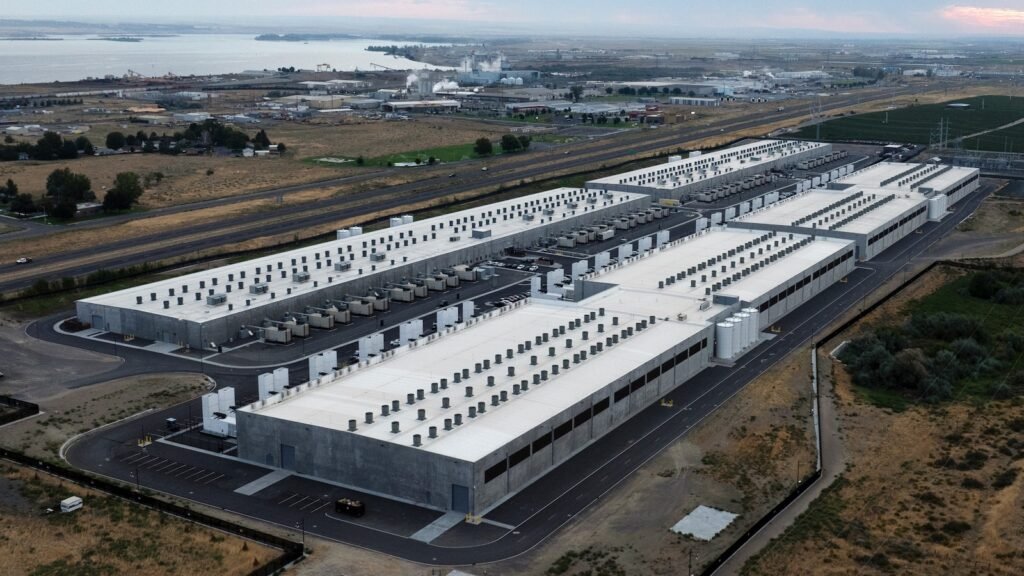
HARRISBURG, Pa. — As explosive energy demand from artificial intelligence spurs a fossil fuel renaissance, renewable energy allies are trying to ensure huge data centers are also powered by climate-friendly sources. Lawmakers in states with stricter climate policies don’t want data centers to hinder their goal of reducing planet-warming greenhouse gas emissions. In other states,
HARRISBURG, Pa. — As explosive energy demand from artificial intelligence spurs a fossil fuel renaissance, renewable energy allies are trying to ensure huge data centers are also powered by climate-friendly sources.
Lawmakers in states with stricter climate policies don’t want data centers to hinder their goal of reducing planet-warming greenhouse gas emissions.
In other states, environmental advocates and corporations with clean energy goals are using regulatory levers to boost monopolistic utilities that historically control power supply and grid access.
The problem clean energy advocates face is that tech giants demand power at such speed and scale (some data centers consume more energy than a mid-sized city) that wind and solar construction simply can’t keep pace.
As a result, the rise of AI has set in motion the largest natural gas-fired power plant construction boom to date, not to mention the measures taken by utilities, power plant owners, and the federal government to keep aging coal-fired power plants operating beyond their previously scheduled retirement dates.
Legislation on New York Gov. Kathy Hochul’s desk would require data centers of a certain size to meet renewable energy benchmarks starting in 2030 and, by 2040, get at least 90% of their power from renewables. The bill’s author, state Sen. Kristen Gonzalez, a Democrat, said the goals are realistic.
“We’re literally talking about the richest companies in the world looking to build in New York state, and if they have the resources to invest billions of dollars in developing data centers, then they certainly should have the resources to build renewable energy sources to power them,” González told The Associated Press.
Michigan, Oregon and Minnesota led the way, enacting laws in the past 18 months designed to protect their pre-existing requirements that electric companies use only emissions-free energy sources by 2040.
“It’s a challenge to achieve this with data centers,” said Bob Jenks, executive director of the Oregon Citizens Utility Board, a nonprofit that advocates for lower utility bills and cleaner energy. “It was a challenge to do it without data centers.”
Minnesota and Oregon ordered regulators to ensure the power they supply to data centers was in line with their emissions reduction goals, while Michigan required hyperscale data centers to meet a clean energy requirement (90% over six years) to access its lucrative sales tax exemption.
Bills with similar provisions have emerged in more than a half-dozen states, including California, Illinois, New Jersey, Pennsylvania and Virginia.
“We simply cannot do business as usual with demand of this scale and facilities of this scale because the impacts are massive,” California state Sen. John Padilla, who sponsored a bill in his state, told the AP.
In addition to gas projects, technology giants like Google are investing billions in their own zero-emissions projects, such as solar, wind, geothermal, nuclear or battery storage.
Tech giants often face utility companies that cannot quickly supply the type of power they need. That’s why they (along with environmental groups, energy entrepreneurs and business associations) are trying to persuade regulators to expand grid access, even in states where lawmakers are resistant to clean energy mandates.
Greg Robinson, whose Raleigh, North Carolina-based firm Aston Power helps procure power for data centers and other big energy users, compared it to the growth of FedEx when the business world decided the U.S. Postal Service was too slow.
“Then companies said, ‘Hey, we’re doing more things now, the postal service isn’t up to par, so maybe there’s an opportunity for a new service,’” Robinson said.
Part of the exercise has been convincing utilities — which profit from building power plants and transmission infrastructure — that this won’t threaten their bottom lines, clean energy advocates say.
For one thing, utility companies will be able to plug in a power source that they won’t have to charge customers for, especially at a time when electricity bills are rising rapidly in many utility territories.
Utilities also get a large, long-term power customer that pays them to expand the grid, rather than seeing large customers build independent power sources.
Last year, clean energy advocates persuaded Colorado regulators to order the state’s largest electric utility, Xcel Energy, to create a program allowing large energy users to build clean energy projects that could connect to the grid.
In an April regulatory filing, Xcel Energy said it agreed that a program could benefit customers and cited two Google projects (one in Nevada to connect 115 megawatts of geothermal energy and another in Minnesota to connect 1,900 megawatts of wind, solar and battery storage) that were approved through similar programs.
Still, a fight looms over how Xcel Energy wants to design the program with clean energy advocates facing state regulators.
Google’s deal with NV Energy, Nevada’s largest for-profit utility, received approval from regulators last year and is widely considered the first of its kind. Google says it now has similar concepts approved or under consideration in eight other states, including Indiana, Kansas, Missouri and South Carolina.
The Corporate Power Buyers Association, whose members include tech giants and large corporations, reached an agreement with Georgia Power, approved by state regulators earlier this year, to allow its members to build clean energy sources and connect them to the grid.
Now they are looking for something similar in North Carolina.
“These innovations are actually some of the most incredible and low-key innovations we will see in energy regulation and procurement,” Nidhi Thaker, senior vice president of policy at CEBA, told the AP. “And I think the actions that are being taken now are going to set the energy policy for the next two or three decades.”
___
Follow Marc Levy on http://twitter.com/timelywriter
Keep following us for the latest insights.