MADISON, Wisconsin.- A chaotic Democratic primary for Wisconsin governor, in which numerous candidates dropped out and re-entered the race, threatened to leave thousands of voters who already returned their ballots with worthless votes for the state’s highest office. That possibility led the state Democratic Party on Tuesday to appeal to the state elections commission, urging
MADISON, Wisconsin.- A chaotic Democratic primary for Wisconsin governor, in which numerous candidates dropped out and re-entered the race, threatened to leave thousands of voters who already returned their ballots with worthless votes for the state’s highest office.
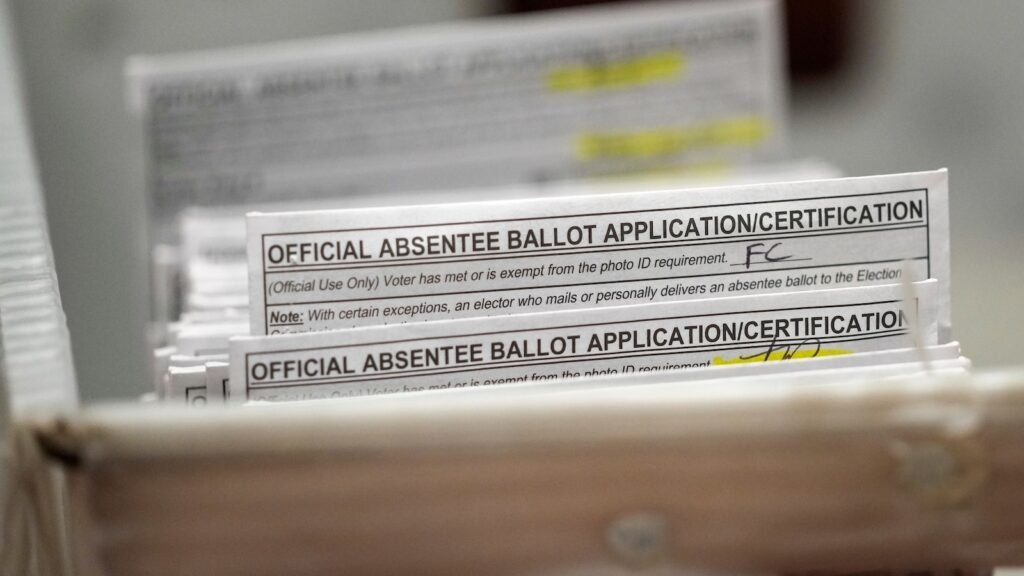
That possibility led the state Democratic Party on Tuesday to appeal to the state elections commission, urging it to allow voters who already voted absentee to vote again. More than 80,000 ballots have already been returned.
The request will almost certainly result in a lawsuit with the primaries just three weeks away.
Democrats want to allow voters to cast new ballots after Lt. Gov. Sara Rodriguez, a Democrat, ended her gubernatorial campaign on Friday and another candidate, Milwaukee County Executive David Crowley, reentered the race with the backing of incumbent Gov. Tony Evers. There are now five Democratic candidates actively campaigning for governor ahead of the August 11 primary.
Any voter who has already returned an absentee ballot cast for Rodriguez will not be able to obtain a new ballot, according to guidance approved by the bipartisan Wisconsin Elections Commission earlier this month. The guidance was adopted after another Democratic gubernatorial candidate, Missy Hughes, dropped her bid in June. Both Rodriguez and Hughes remain on the ballot even though their campaigns have ended.
The winner of the Democratic gubernatorial primary will likely face Republican Rep. Tom Tiffany, who has only token opposition. The seat is open after Evers decided not to seek a third term. Democrats hope to retain office and flip both chambers of the Legislature to gain full control of state government for the first time since 2010.
The Democratic Party maintains that the commission’s guidelines should be rescinded because it overturned its own rule in place four years ago and is inconsistent with a 2006 U.S. Supreme Court ruling. That ruling said voting rules should not be changed close to an election.
If the election commission does not back down and allow new absentee ballots to be cast, “some voters will not be able to truly participate in our Democratic primary process,” Democratic Party Chairman Devin Remiker said in a statement.
He said the party requested the repeal after consulting with the five candidates actively campaigning for the Democratic nomination for governor.
Rodríguez ended his campaign after discovering that he had much less money available than he thought. He blamed his campaign manager for double-counting donations and not reporting expenses. One day after dropping out of the race, Crowley rejoined the race. He came out on July 8 and endorsed Rodríguez.
Both Crowley and Hughes were at the bottom of the list in public opinion polls before retiring. Hughes ended his campaign on June 22, saying Democrats needed to unite around a candidate who could win in November. She endorsed Rodríguez, who dropped out less than a month later.
Absentee voting by mail has been running since late June and early in-person voting begins July 28.
The little-used practice known as vote nullification was the subject of a lawsuit in 2022. A Waukesha County judge sided with a Republican group that brought the lawsuit and ruled in October 2022 that the election commission must rescind its guidance allowing vote nullification. But a state appeals court stayed that decision just weeks before that year’s midterm elections.
And then in February, a state appeals court overturned the ruling, saying the lawsuit was not properly served. The appeals court did not address the merits of the case.
Despite that ruling, the election commission voted 4-2 to prohibit voters who already turned in their absentee ballot from getting a new one. A Democratic commissioner joined three Republicans in voting in favor of the ban. Two Democrats voted against.
There is no way to know how many of the voided ballots were from Democrats or Republicans because voters in Wisconsin are not registered by party. Voters who obtained an absentee ballot, but have not yet voted and wish to obtain a new one, can still do so.
Previously in Wisconsin, voters who had submitted an absentee ballot could void it and cast a new vote up to three times for any reason. But this happened very rarely.
From the 2018 midterms through the 2022 primaries, less than 1% of all votes cast were cast by people who cast a new absentee ballot after voiding an old one, data from the Wisconsin Elections Commission showed.
Keep following us for the latest insights.