The war with Iran has cost the United States about $37.5 billion (£28 billion) so far, an increase of almost $8 billion since the last estimate in May, Defense Secretary Pete Hegseth said. In his first appearance before the Senate Appropriations Committee since the conflict resumed, Hegseth said it would be necessary to reduce military
The war with Iran has cost the United States about $37.5 billion (£28 billion) so far, an increase of almost $8 billion since the last estimate in May, Defense Secretary Pete Hegseth said.
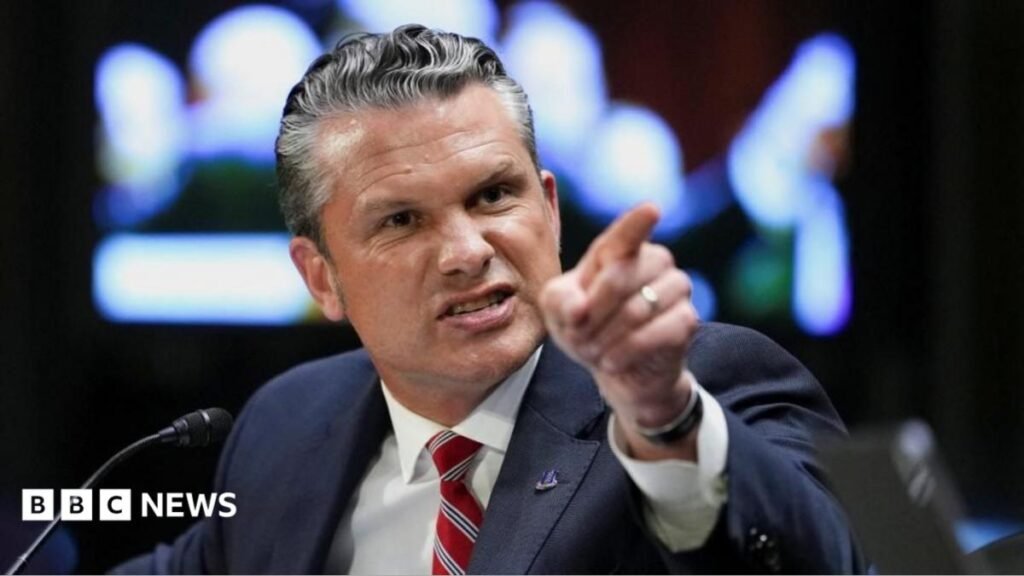
In his first appearance before the Senate Appropriations Committee since the conflict resumed, Hegseth said it would be necessary to reduce military training without an urgent increase in funding.
He said he was seeking $87 billion in Congressional funding for his department, of which $67 billion would go to operations in the Middle East.
The hearing was interrupted several times by anti-war protesters, some of whom shouted “stop bombing our children in Iran and Palestine.”
Hegseth’s appearance before the committee came at a crucial time in the war, after three American soldiers were killed in the Middle East.
The White House asked Congress in April for $1.5 trillion for the Pentagon over the next fiscal year, which would raise US military spending to an all-time high in the modern era.
The United States launched its 10th consecutive day of attacks on Monday and Iran responded with its own attacks against the United States and its allies in the Middle East.
The Secretary of Defense began his Tuesday testimony by saying that “we live in a dangerous world” and that bold and swift action is required.
After being interrupted by protesters, Hegseth went on to say that his funding request came at an urgent time, as “we have to prepare for war” to keep the peace.
Critical investments are needed to prevent adversaries from overtaking the United States, he continued.
“Without these funds, we face critical shortfalls that threaten our ability to simply pay our service members, quickly replenish equipment and ammunition, and sustain vital operations without interruption,” Hegseth said.
Every dollar allocated, he added, would be used to increase the “lethality” of US military forces and “enforce peace through strength.”
Senate Appropriations Committee Chair Susan Collins, a Republican, questioned Hegseth about what the impact would be if budget needs were not met.
Hegseth said current and future training of military members should be reduced without funding, as he repeatedly blamed the Biden administration for what he said was a lack of funding for the military.
The committee’s ranking Democrat, Patty Murray, rejected the funding request, saying it “doesn’t make much sense” and accusing the Trump administration of trying to “circumvent the normal appropriations process.”
When asked by Democratic Senator Dick Durbin if he had an estimate of how much the war in Iran has cost so far, Hegseth revealed the figure of $37.5 billion.
He argued that, if approved, the funding would be a “generational investment” that would ensure the United States avoids “catch-up” and keeps the U.S. military ahead of others.
There had been no official government estimate of the financial cost of the war since May 12, when a senior Pentagon official put the figure at $29 billion.
The Pentagon had previously told lawmakers that the war cost the United States about $11.3 billion in the first week.
Iran and the United States observed brief ceasefires, but hostilities resumed and the United States launched a new round of strikes last week.
At Tuesday’s hearing, New York Democratic Sen. Kirsten Gillibrand accused the Trump administration of seeking “unlimited bomb money” from Congress while American citizens cannot afford to “feed their families.”
He asked why Hegseth was asking for tens of billions of dollars for a war the president said had already been won.
Hegseth responded by saying the administration is not looking for “unlimited bombs.”
“I’m ordering the right bombs at the right time,” he added.
Hegseth is also asking for another $87 billion for his department, including $67 billion for operations in the Middle East.
Most Democrats oppose the request for supplemental funding and there is also discontent in Republican ranks.
Some of the GOP’s fiscal hawks want spending cuts elsewhere to offset the budget.
Either way, the House of Representatives will leave town on Thursday and the two houses of Congress will not meet together again until September.
Even if Republicans manage to muster the votes, it will be a couple of months before the Pentagon can get the funds.
The Pentagon on Tuesday announced the death of Sergeant Michael Emmanuel Swinton, a 30-year-old active duty soldier supporting foreign operations in Iraq.
A day earlier, the Army identified two U.S. service members killed in combat in Jordan as Private Isabella Gonzales, 19, and 1st Lt. Tyler Feehan, 25.
During the hearing, Trump – who was not present – posted a list of American wars on social media, including how long they took to end and how many American soldiers died. He wrote that 18 had died in the US war against Iran, which began on February 28.
For more tech updates, stay tuned to our blog.