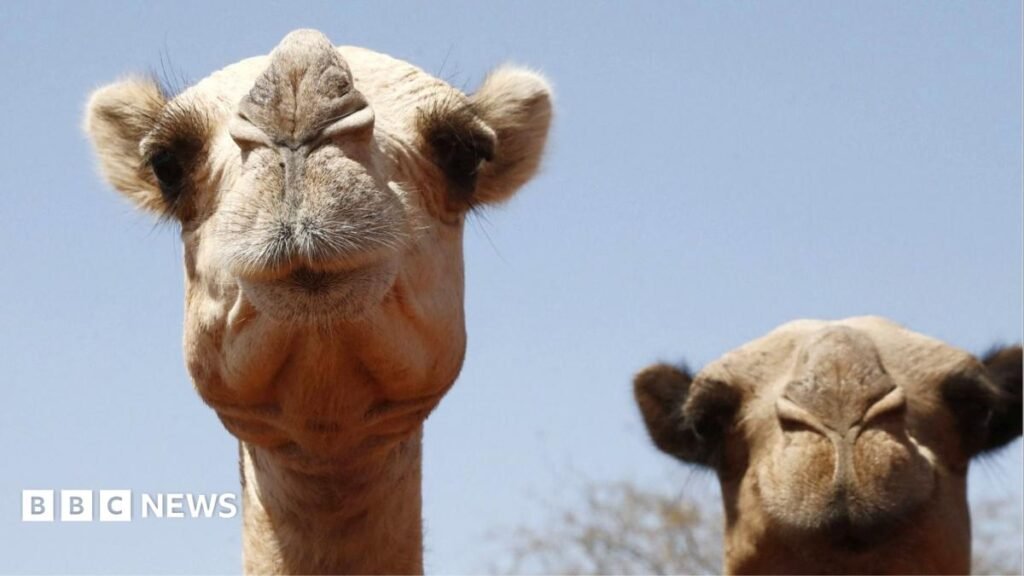
Camels are famous as the ships of the desert, but even these hardy animals are not immune to the extreme rise in temperatures in Africa. The Afar region of northeastern Ethiopia is one of the hottest and driest places on Earth, where nomads often lead camel caravans carrying salt across the desert. “I can see
Camels are famous as the ships of the desert, but even these hardy animals are not immune to the extreme rise in temperatures in Africa.
The Afar region of northeastern Ethiopia is one of the hottest and driest places on Earth, where nomads often lead camel caravans carrying salt across the desert.
“I can see my camels suffering from the extreme heat,” Ali Umer, a camel herder from Semera in Afar, told the BBC.
“They get blisters on their feet, their eyes water, and the hot sand burns their skin and eats their hair when they sit,” says the 40-year-old man, owner of about 500 camels.
“In the last month I lost eight camel calves due to the extreme heat, which has become much more intense and difficult.
“Even the wind, which used to bring cool air, now brings heat,” he said, adding that he had noticed these drastic changes in temperature in recent years.
You’re not alone in your observations: scientists, animal welfare workers, and various studies cite stress, fatigue, dehydration, and disease prevalence as direct impacts of extreme heat.
Higher temperatures also indirectly make camels suffer by causing serious loss of water, vegetation and reduction in shade areas.
Keep following us for the latest insights.