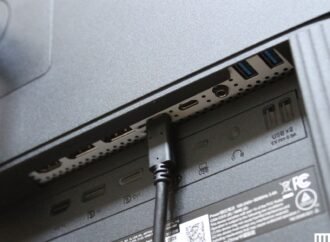
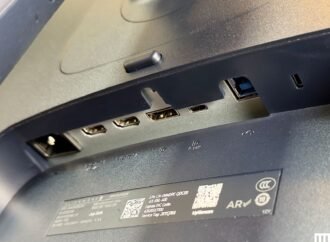
As far as the Asus’ appearance goes, the side bezels are a bit large, and the top and bottom bezels aren’t the same size, which I find visually off-putting. Nicely, though, the amount of adjustability is impressive. This stand can swivel, tilt, rotate into portrait mode, and the height can shift 5 inches. The stand
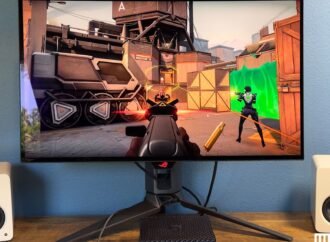
The AW3926QW has an RGB stripe tandem OLED panel produced by LG. At the moment, it’s one of just two ultrawide monitors to offer the panel, which is also available from LG’s UltraGear Evo GX9. I recently tested the 27-inch Asus PG27UCWM, another RGB Strip OLED that I was impressed by, but it’s a standard
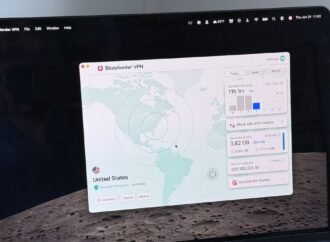
Bitdefender VPN was reliable in my time using it, as well. I didn’t experience any connection drop-outs or periods of unusually slow performance. These are solid results, though not the best. For example, I saw slightly better speeds (up to 540 Mbps, the same as when not connected to the VPN) while using IVPN with
I also feel it comes across in how colors present. Technically, the monitor’s results are modest for an OLED monitor: It has a color gamut that spanned 94 percent of DCI-P3 and 89 percent of AdobeRGB. That’s a tad more narrow than top QD-OLED monitors, which can hit up to 98 percent and 95 percent,
I tested the Premium plan extensively in the UK and briefly in Europe. It was quick and easy to set up in the Saily app and kept me connected as I roamed, offering decent speeds up to around 300 Mbps on 5G networks in city center locations, inevitably dropping off to 4G and around 15
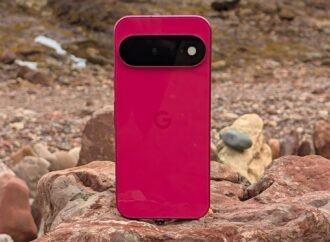
I was delighted to get Hibiscus (otherwise known as hot pink), but there’s also a more subtle Pistachio (warm green), and the usual Frost (white) and Obsidian (black). I’m sad they cut Indigo (surely everyone’s favorite from last year). Like Apple, Google seems to save the fun colors for the regular Pixel, and the Pros