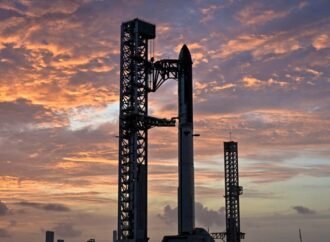
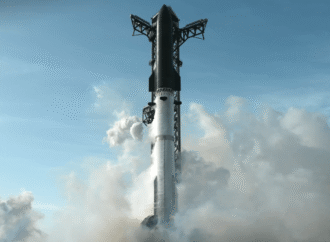
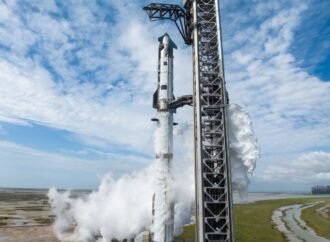
SpaceX canceled its first Starship launch since its massive initial public offering in June. On Thursday, SpaceX withdrew from a launch attempt of its upgraded Starship rocket after an engine problem caused an automatic shutdown before liftoff at the company’s Starbase facility in South Texas. CEO Elon Musk said in a post on X that
SpaceX abruptly aborted the second launch attempt of its upgraded Starship rocket system on Thursday, moments after the booster ignited at the company’s complex in South Texas. The company was attempting to return to flight just weeks after the first Starship V3 launch in May. CEO Elon Musk said in a post on X that
SpaceX shares fell to just over $135 on Wednesday, the price CEO Elon Musk and his company chose ahead of their blockbuster June 12 initial public offering (IPO) that raised nearly $86 billion. The company’s shares spent much of the day below the IPO price, at one point falling below $133 per share, before rising