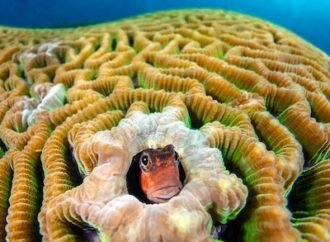
The super El Niño is cooking coral reefs — can lullabies and probiotics save them? Nearly half of coral species are at risk of extinction and the currently developing super El Niño will further warm an ocean already heated by continuing climate change. So researchers are turning to unorthodox ideas to help new corals to
One in five reptile species and two in five amphibian species are threatened with extinction1,2, according to the International Union for Conservation of Nature (IUCN). In Central America, for instance, numbers of variable harlequin frogs (Atelopus varius) have fallen by more than 80% since the 1980s. In the Seychelles, the population of giant bronze geckos
Scientific Panel for the Amazon. The Amazon Assessment Report 2025 (Scientific Panel for the Amazon, 2025). Bromham, L. et al. Nature ecology. Evolution. 6163-173 (2021). Article PubMed Google Scholar Cámara-Leret, R., Roehrdanz, PR and Bascompte, J. Nature https://doi.org/10.1038/s41586-026-10741-y (2026). Google Scholar article Fernández-Llamazares, Á. et al. J. Etnobiol. 41144-169 (2021). Google Scholar article Krause, T.
Ando Rabearisoa worked with local fishers to establish locally managed marine conservation areas that protect fisheries and local incomes in Madagascar. Credit: Johnson Rakotoniaina Three years into an ecological economics PhD in France, Ando Rabearisoa made a decision that would change both her life and Madagascar’s coastal ecosystems. In 2009, she abandoned her PhD studies