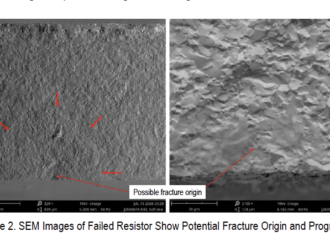
For more information, contact Joel W. Sills, Langley Research Center, joel.w.sills@nasa.gov. Download PDF here Chip resistors are widely used in NASA projects, yet cases of alumina substrate cracking during environmental testing are rare. Two instances of thick-film chip resistor cracking were observed during thermal cycling after vibration, with fractures occurring across the short axis due
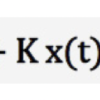
For more information, contact Joel W. Sills, Langley Research Center, joel.w.sills@nasa.gov. Download the PDF version An instrumented hammer test does not require an idealized single half-sine waveform. When the complete force and response are measured accurately, crest ripples and separated contacts remain known inputs. Force shape changes excitation, but does not inherently invalidate the record.
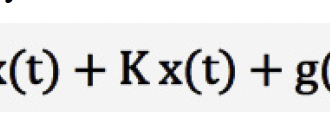
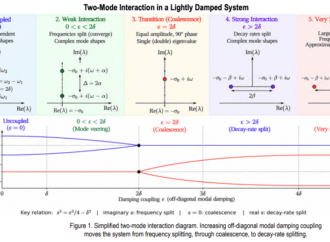
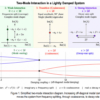
For more information, contact Joel W. Sills, Langley Research Center, joel.w.sills@nasa.gov Download the PDF version Complex mode shapes can emerge in a linear structure even when overall damping is low. This behavior can occur when two structural modes are closely spaced in frequency and are coupled through nonproportional damping. As the damping interaction increases, the
For more information, contact Donald S. Parker, Kennedy Space Center, donald.s.parker@nasa.gov Download the PDF version Improper casting and forging processes in the manufacture of aluminum alloy 2219 can lead to microstructural defects that result in a sub-optimal response to anodic surface treatments and an increase in corrosion susceptibility. This Technical Bulletin communicates the risks of
For more information, contact Mark K. Leader, Glenn Research Center, mark.leader@nasa.gov Download the PDF version NASA’s Chemical Equilibrium with Applications (CEA) code is a foundational tool for propulsion system analysis. It provides equilibrium chemistry, rocket performance, shock, and detonation calculations used across NASA and the broader aerospace community. NASA Engineering and Safety Center (NESC) Activity
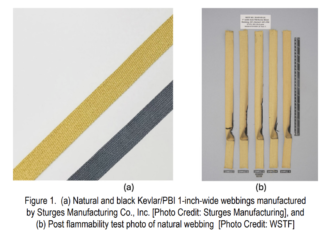
Flammability test results for commercial-off-the-shelf webbings that meet NASA flammability requirements are reported for use in elevated oxygen environments anticipated for future lunar and Martian missions. Testing demonstrated that a webbing composed of 60% Kevlar®/40% polybenzimidazole (PBI) from Sturges Manufacturing Company, Inc., specifically the natural version, passed flammability testing per NASA-STD-6001B Test 1 using a