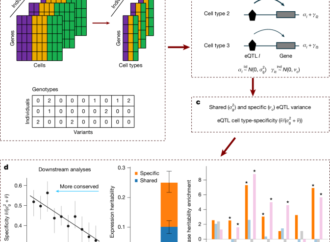
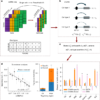
CIGMA We developed CIGMA to unbiasedly quantify cell-type-shared and cell-type-specific eQTLs in scRNA-seq data. CIGMA avoids bias from eQTL detection power by using a linear mixed model, similar to the GREML model of complex trait heritability12. CIGMA models cell-type-specific pseudobulk data, which is computed by averaging across all cells in predefined cell types, one gene
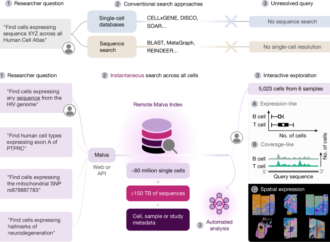
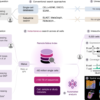
The Malva platform Malva provides a unified interface to search millions of cells by any RNA sequence. Malva integrates five modular components that operate independently but communicate through a central orchestrator (Extended Data Fig. 1b). When a user submits a query via the public RESTful API—a gene symbol, DNA sequence, or natural language request such
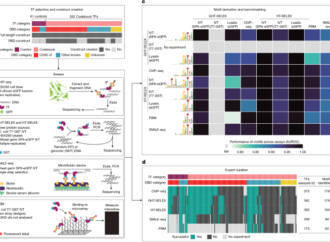
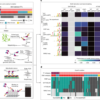
Plasmids and inserts Sequences and accompanying information are given in Supplementary Tables 2–4. In brief, we selected Codebook TFs (and their DBDs) from information published in a previous study1 and posted at https://humantfs.ccbr.utoronto.ca. Inserts named with a ‘-FL’ suffix correspond to the full-length ORF of a representative isoform of the protein. Those with a ‘-DBD’
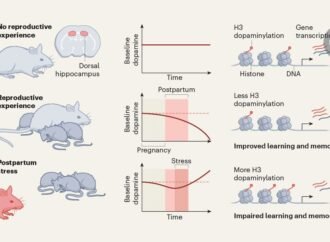
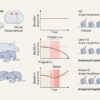
Nature, Published online: 20 May 2026; doi:10.1038/d41586-026-01327-9 In mice, motherhood induces transcriptional changes in the brain that endure beyond short-term hormonal shifts. Postpartum stress disrupts these patterns.