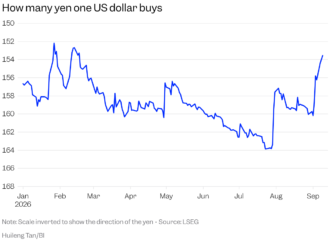
The Japanese yen is surging, reviving an uncomfortable memory for investors: the carry-trade turmoil of the summer of 2024. Early on Wednesday, a dollar bought about 153 yen, about 4% fewer than at the start of the month and 2% fewer than at the start of the year as the Japanese currency strengthened. The currency
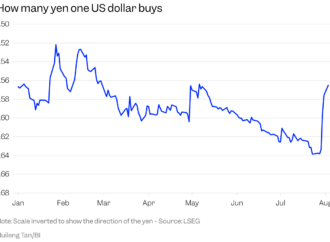
The first U.S.-Japan joint intervention in three decades aimed at boosting the yen has come and gone without doing much to ease anxiety in currency markets. Treasury Secretary Scott Bessent’s notepad suggested the U.S. bought $5 billion-$10 billion worth of yen, while Japan’s move topped $50 billion. The exchange rate initially strengthened to about 157 yen per
Washington and Tokyo’s unprecedented step to bolster the yen already appears to be unraveling. On July 30, Japan’s finance ministry reportedly sold as much as $59 billion to buy the Japanese currency, then at 40-year-lows. Tokyo and Washington later confirmed they had acted together to bolster a weak yen. It was the first time they
Last week’s attempt to boost the sagging yen wasn’t the first time the U.S. and Japan took such joint action, but the way they did it revealed weakness in the dollar’s global status, according to a top currency expert. In a Financial Times op-ed on Tuesday, University of California at Berkeley economist Barry Eichengreen pointed
Washington and Tokyo’s rare joint intervention to support the yen has put renewed focus on Japan, the largest foreign holder of US Treasurys. Early on Tuesday, the dollar-yen pair traded at around 157 against the dollar after rebounding from a nearly four-decade low of around 164, following intervention by US and Japanese authorities on Friday.
The U.S. is stepping in to help boost Japan’s yen for the first time in nearly three decades after the currency hit a 40-year low, but the intervention has an unusual feature: instead of selling dollars to buy yen, the New York Fed reportedly sold euros to fund the purchase. The coordinated move on Friday