
Tesla has been shooting for level 4 autonomy for a very long time and it feels closer than ever with a new video. The official Tesla account shared a 27 second video of a 2-seater Cybercab with no steering wheel, no accelerator, and no brake pedal. There’s something beautiful about the simplicity of a symetrical
Tesla has been shooting for level 4 autonomy for a very long time and it feels closer than ever with a new video. The official Tesla account shared a 27 second video of a 2-seater Cybercab with no steering wheel, no accelerator, and no brake pedal.
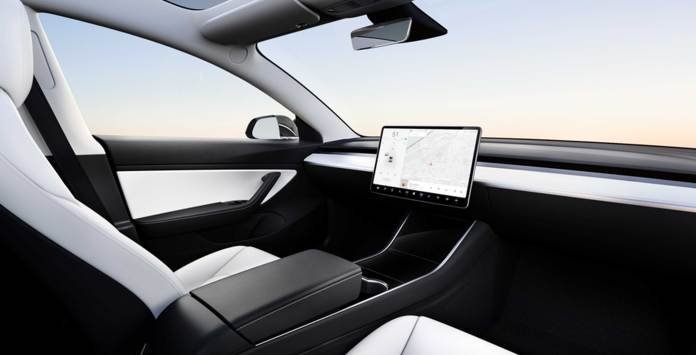
There’s something beautiful about the simplicity of a symetrical dash in the Cybercab, with a massive center display, and given every car you’ve ever been in has had the equipment for humans to drive, this is visually shocking to look at.
The first Cybercabs started rolling off the production line in small volumes earlier in the year, but without the software to drive it, they’ve mostly been engineering tests. This week, we’ve see drone shots of the carparks at Gigatexas showing an increasing number of the gold robotaxis getting ready.
We’ve also seen other important pre-launch steps being ticked off, like the emergency responder’s manual, official registration as a vehicle approved for ride share by the Californian Department of Transport. The signals suggest the scale rollout of Tesla’s level 4, driverless robotaxi is immenent. The National Highway Traffic Safety Administration (NHTSA) also proposed ending the requirement for manual brake pedals in AVs, aligning vehicle safety standards that could make it easier to deploy purpose-built AVs.
Today’s video further strengthens that case, getting potential customers excited about riding in vehicles withough the issues associated with sharing a small space with other people, drivers or other.
As you watch the video, it’s hard not to think of the image shown on stage all those years ago, of a Tesla Model 3 without a steering wheel back in April, 2019. At the time, this was a preview of the future, one that’s about to arrive on US streets, but now 7 years later, it looks like that is about to be a reality. While many will be heavily critical about Tesla being late to deliver their promises, those who take advantage of low-cost, readily available mobility, won’t care the least about that history and simply enjoy the benefits.

Many years ago I had a ride in an Autonomous Shuttle Bus in Paris at a tech conference, this 11 seater was designed to get people around campus, from point to point rides, but this lacked the real benefits afforded by autonomy, the flexibility to effectively go anywhere you want, just get in, tell the car where you want to go and be driven there in luxury.
While other automakers continue to chase solutions more like public transport, Tesla’s approach is an ultra-efficient, low-cost front-wheel drive, 2 seater vehicel. Their explanation is that the majority of drives/rides occur with 1-2 people in the car, adding additonal weight and cost doesn’t maximise efficiency and ultimately returns.
In the video we see a Tesla employee, a safety monitor, and a disclaimer that this is an engineering vehicle. There did appear to be a fair bit of movement on what appears to be fairly smooth roads. The cybercab’s seats are flat, like a couch, and not at all bolstered like a traditional car seat. I’m going to predict that feedback on the rider experience drives Tela to refine the seats in the future to address these latitudinal forces.
The software running in the engineering sample is likely to be a version of FSD V14 that is unreleased to the public. If you look closely the center of the screen features 3 buttons, which would easily allow riders to stop the vehicle in the event they felt uncomfortable or needed to get out urgently. While you won’t be able to physically take over, this is also the practical reality of ride share services like Waymo. While they feature a wheel and pedals, the software is controlling the vehicle.
Of course the other big difference with Tesla’s approach is the dramatically simpler hardware approach to use cameras and AI to drive the car, rather than adding lidar, radar and other sensors which add to the vehicle costs and ultimate return on investment.


















Leave a Comment
Your email address will not be published. Required fields are marked with *