Chinese EV maker XPENG has switched on a dedicated humanoid robot production line in Guangzhou, and the first IRON unit to finish assembly walked off it under its own power. Walking off a commissioned line is not the same as filling showrooms, but it is the first time XPENG has shown IRON leaving a factory
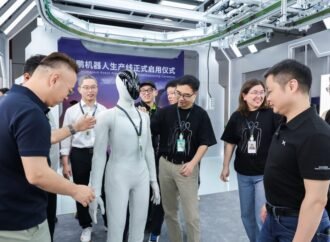
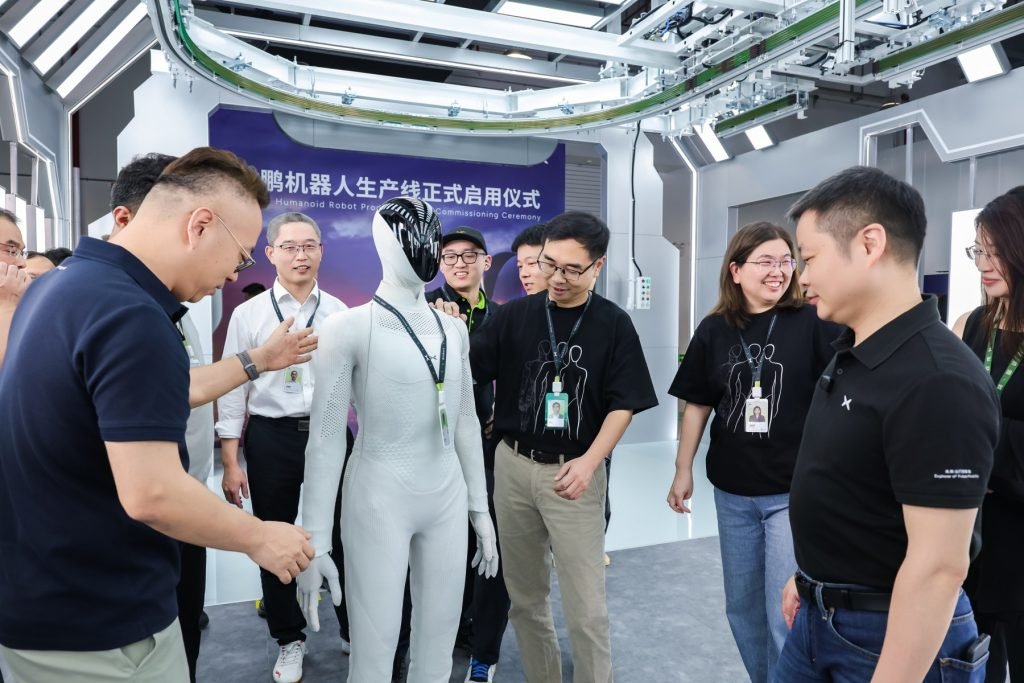
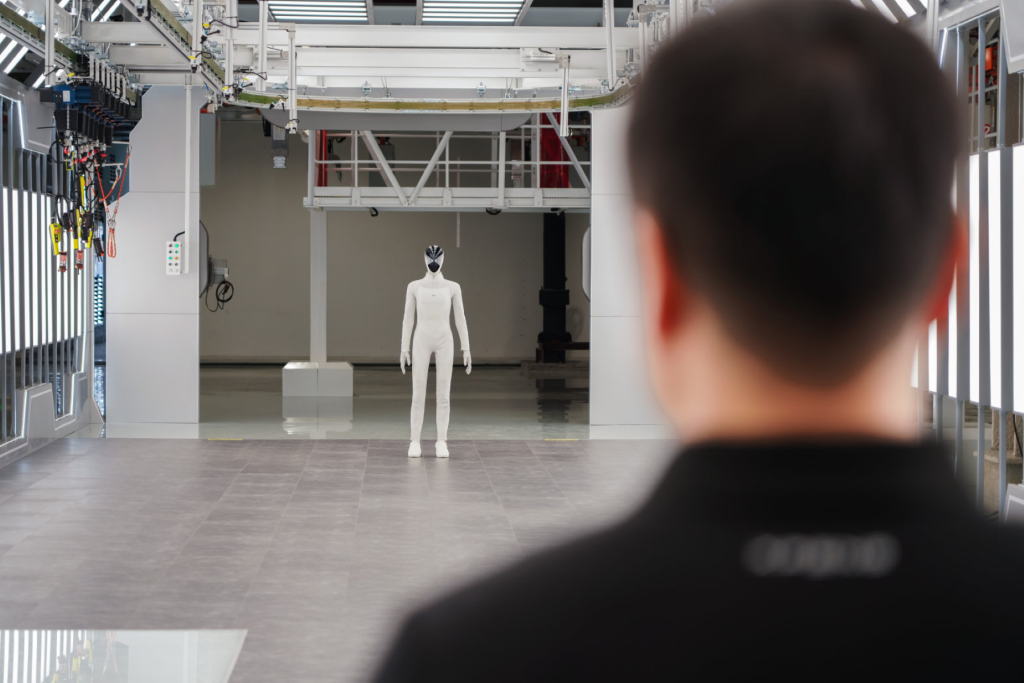
Chinese EV maker XPENG has switched on a dedicated humanoid robot production line in Guangzhou, and the first IRON unit to finish assembly walked off it under its own power.
Walking off a commissioned line is not the same as filling showrooms, but it is the first time XPENG has shown IRON leaving a factory process rather than a prototype lab.
The Guangzhou ceremony on 8 September also included a staff badge clipped onto the robot. It is a piece of theatre, yet it matches the commercial plan: IRON is being built first for XPENG’s own stores and campuses, not as a home appliance you can order tomorrow.
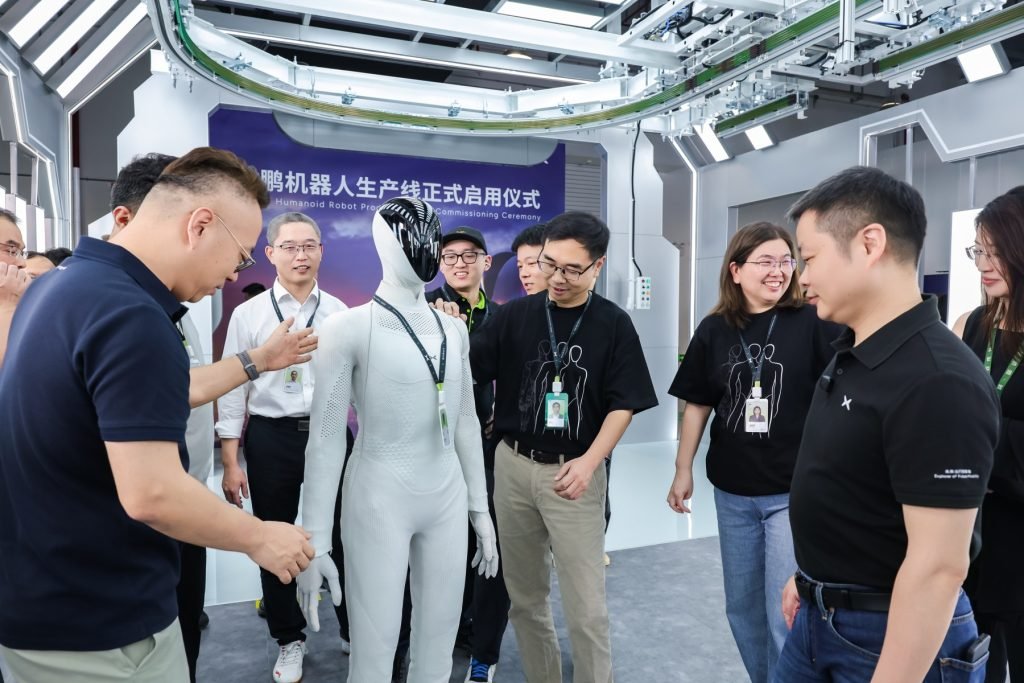
From prototype to a real line
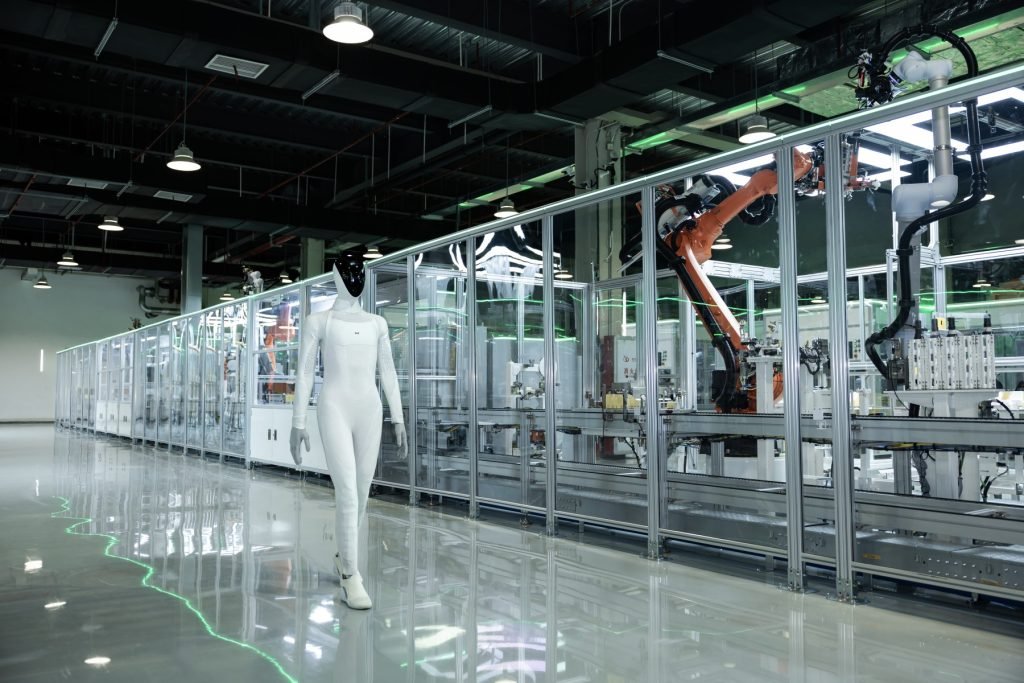
XPENG says the new line is the world’s first automated production line for advanced general-purpose humanoid robots. The race is clearly on with several companies are now racing to industrialise bipedal machines.
More than 80% of core steps are automated, and the quality system is borrowed from its electric vehicle plants rather than invented as a one-off robotics workshop. Humanoids could fail in the real world when joints, harnesses and covers are inconsistent from unit to unit. Car factories already live and die on that kind of repeatability.
Chairman and CEO He Xiaopeng framed the day as the start of a new product category rather than a finished factory.
“The robot production lines were created from scratch with no precedent to follow. Today’s step is small, but XPENG is building the production lines for an entirely new product category. Looking ahead, XPENG will continue to explore faster production rhythms and greater scale in robot manufacturing, charting a new path toward a leading robot manufacturing industry in China and globally.”
He Xiaopeng, Chairman and CEO, XPENG.
Commissioning still leaves the hard part ahead. Volume, yield, service parts and software that does not freeze when a customer walks in sideways are what separate a line that can build one robot from a line that can build a thousand.
What IRON actually is
The next-generation IRON is XPENG’s attempt at a general-purpose humanoid rather than a single-task warehouse arm on legs. The company says it combines a highly human-like form with on-device AI, and that it is being developed as a platform that can keep learning in the real world.
IRON has 76 degrees of freedom across the body and 21 in each hand, which is the part worth watching if the robot is ever asked to hold a brochure, open a car door or pass a bottle of water without looking clumsy.
XPENG also points to a proprietary fully enclosed flexible lattice structure. The outer body is finished in a way that is relatively safe to stand next to, rather than exposing the usual skeleton of motors and cable runs.
On the compute side, IRON carries three in-house Turing AI chips that XPENG rates at up to 2,250 TOPS of effective computing power. That is less than the 3,000 TOPS stack the company put in its first mass-produced Level 4 Robotaxi earlier this year, but it is still a serious on-board brain for a machine that is supposed to work without a remote operator.
The company says that compute is enough to run its Physical AI foundation model directly on the robot. If that holds up outside a controlled hall, it is the difference between a puppet and a colleague that can keep operating when the network drops.
Earlier coverage put IRON at about 173 centimetres tall and around 65 kilograms, which is roughly adult human scale. Those figures were not restated in this week’s production announcement, but it’s a strong bet these are close to the final numbers.
He Xiaopeng’s second quote is the long-range ambition, and it is broader than handing out water in a dealership.
“We aim to build a new type of robot with full generalization capabilities that can truly become part of everyday life, create a better life for people, and ultimately become a companion in their lives.”
He Xiaopeng, Chairman and CEO, XPENG.
Timeline, money and the second growth curve
XPENG is still aiming for mass production by the end of 2026. First commercial rollouts are planned inside its own stores and campuses, with an official market launch and deliveries in China and overseas markets scheduled for 2027.
That sequence is important for Australian readers. The robot that walked off the line this week is a factory proof point. It is not a retail SKU with an A$ price, a local warranty or a confirmed number of units heading to Sydney or Melbourne.
The company also argues that advanced general-purpose humanoids sit in a tighter supply market than electric cars, so gross margin per unit should be “significantly higher” than for new energy vehicles. That is an investor line, not a audited result. Humanoid service costs, spare parts and software support could just as easily eat that margin if the machines need constant human babysitting.
On 24 August, XPENG said its robotics business signed share purchase agreements raising more than US$900 million at a post-money valuation of more than US$6.3 billion. The company called it the largest single-round private raise so far in China’s embodied AI sector.
What this means in Australia
IRON is not a science-fair extra for the local brand. XPENG’s Australian site already has a dedicated IRON page, and the July Australia strategy announcement said the same foundation model that will underpin local NGP in 2027 also runs on the robot.
The stated retail job is straightforward. IRON is meant to greet customers, talk through a vehicle, walk the floor, open a door and handle simple hospitality tasks for hours at a time. XPENG has previously said Chinese stores come first in early 2027, with overseas rollout later that year.
Australia has already been named as a market where the company wants that experiment to happen. That does not mean a robot will be standing in every local showroom the moment the Guangzhou line hits its stride. Import rules, workplace safety, public-liability cover and how a dealership handles a 65 kilogram machine around kids and prams are all unresolved here.
There is also a practical question that every humanoid pitch eventually hits. If the robot can only do a scripted loop, a tablet on a stand is cheaper. The value appears only if IRON can deal with messy language, odd shopper behaviour and a floor layout that changes every time a demonstrator car is moved.
XPENG’s answer is that the model improves through real-world use, the same flywheel argument the company uses for its cars and Robotaxi program. That only works if enough units are actually deployed and the data is good. A single robot walking off a new line does not prove the flywheel yet.
Keep the hype in proportion
Humanoid robots have a long history of looking finished on a keynote stage and then disappearing into research labs. XPENG itself had to cut open an earlier IRON’s leg on stage last November after viewers accused the company of hiding a person inside the suit.
Tesla’s Optimus program sits in the same conversation, and it is the obvious comparison customers will make. XPENG is trying to look like the carmaker that industrialised first. Tesla is trying to look like the company with the better general-purpose brain. Neither has a consumer product you can buy in Australia today.
The safer reading is narrower. XPENG has taken IRON from a 2025 show robot and a 2026 funding round into a commissioned line, and it has not slipped the end-2026 mass production target in public. First jobs will be on XPENG’s own property. Paid deliveries, including any Australian showroom trial, are a 2027 story.
For more information, head to XPENG.
For more tech updates, stay tuned to our blog.