India’s paid music streaming subscriber base could grow to between 28 million and 30 million by 2028, up from an estimated 14 million in December 2025, according to the EY and Indian Music Industry (IMI) report “How You Listen, Stream and Pay for Music in India,” released in Mumbai on Friday. The report is based
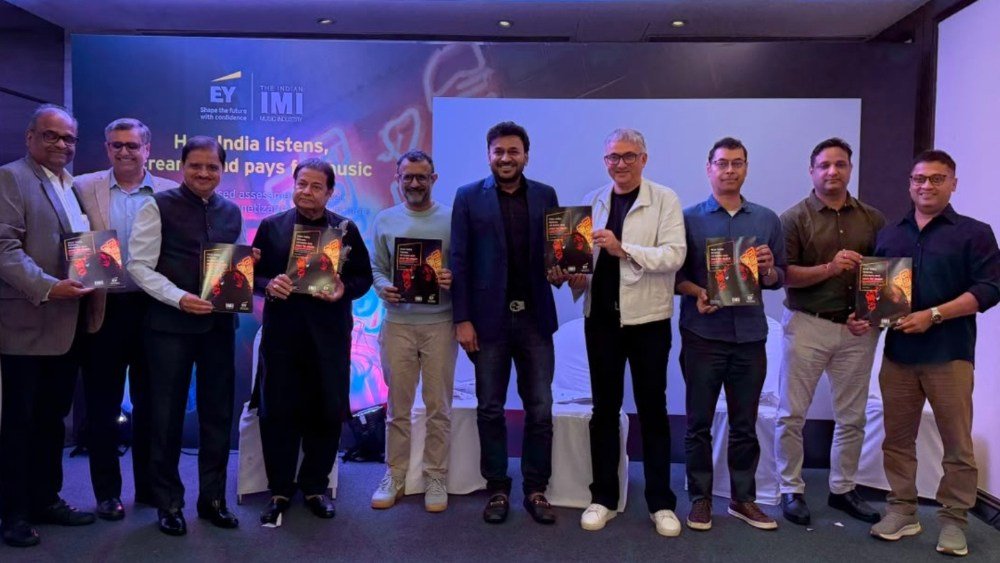
India’s paid music streaming subscriber base could grow to between 28 million and 30 million by 2028, up from an estimated 14 million in December 2025, according to the EY and Indian Music Industry (IMI) report “How You Listen, Stream and Pay for Music in India,” released in Mumbai on Friday.
The report is based on a survey of more than 15,000 smartphone owners conducted in March and April, complemented by psychometric research covering more than 2,200 consumers and conversations with industry executives.
The figures underscore a familiar paradox for the Indian music business. About 96% of smartphone owners consume music and 80% of them listen to it for more than an hour a day. However, only 38% have ever handed over money for music streaming, including bundled subscriptions, compared to 86% who have paid for video streaming services at some point. Dedicated digital service providers (DSPs) remain the preferred destination for structured listening, used by 60% of respondents, while 32% listen to music on YouTube, although YouTube remains the largest platform for music discovery, driven largely by short-form videos.
The report frames the shortfall as a legacy of India’s jump from physical formats directly to free ad-supported streaming. In his foreword to the report, Blaise Fernandes, CEO of IMI, wrote that a “non-paying music ecosystem eventually negatively impacts creators and copyright owners,” arguing that record labels, DSPs and creators must work together toward a tiered payment model. The report notes that India’s 14 million paid subscribers trail Brazil’s more than 30 million and the United States’ 106 million, and that China – whose music industry trailed India in 2015 – has built a paid subscriber base of more than 171 million, propelling it to second place globally in streaming revenue.
Commenting on the report in a statement, Fernandes said, “Art requires more than inspiration; it requires economic oxygen. To take Indian music global and discover our next generation of talent, we must move from being a passive consumer market to an active patron market. Paying for a digital audio subscription is a direct investment by the fan to show their support for their favorite artists and also helps preserve and export our rich cultural heritage.”
Vikram Mehra, president of IMI, pointed to the survey as a validation of a shift already underway among consumers. “The EY-IMI consumer study validates our belief that the Indian consumer is willing to pay for quality,” Mehra said. “We look forward to working with our partners, the DSPs, to expand the ecosystem of paid audio services in India. The ultimate goal is to place India among the top five music markets in the world.”
Ashish Pherwani, partner and media and entertainment sector leader at EY India, described the findings as an opening rather than a setback. “Music remains one of the most consumed forms of digital entertainment in India,” Pherwani said. “The report highlights an opportunity for the industry to further strengthen subscription adoption through greater consumer awareness, differentiated offerings and innovation that responds to evolving listener preferences.”
Composer, singer and performer Badshah, who also contributed a foreword, laid out what was at stake in cultural terms, writing that “the future of music will depend not only on how widely it is heard, but on how deeply it is valued.”
The report’s psychometric research, conducted by MindLink, divides smartphone owners into three cohorts: payers, who have active paid subscriptions; The undecided, who use free versions but would pay if they had no other option; and those who never pay, who rely on YouTube and do not use paid music apps. Among those who never pay, 49% said it’s not worth paying for music streaming and 36% said it feels bad to pay for digital products when free options exist, a sentiment also shared by 29% of sticklers and 9% of payers. Undecideds emerged as the most likely conversion target: 27% said it’s worth paying for once they use a service regularly, and 34% cited reliability as something worth paying for. Across all three cohorts, just 7% said bundling alone would be enough to get them to value and adopt a new paid product, and 38% of sticklers and 33% of never-payers said they would rather own a collection of songs outright than subscribe to one.
Several structural factors underpin the industry’s optimism about future growth. India’s smartphone base, from 584 million in 2025, could reach 735 million in 2030, according to the report, while the country’s real GDP grew by 6.5% in 2025 and is projected to make India the world’s third-largest economy by 2030. The report also notes the expansion of India’s vehicle base: more than 400 million vehicles registered by 2025, up from 326 million in 2020 – and its young population, with 65% Indians under the age of 35, as lasting drivers of music consumption. Paid subscriptions grew 37% in 2025 alone, the report said, as streamers pushed premium features and introduced more friction into free products; Subscription revenue is expected to rise from about 10 billion rupees (about $111 million) in 2025 to 22 billion rupees (about $244 million) in 2028. Industry CEOs interviewed for the report put the market’s long-term ceiling at between 50 million and 75 million paid subscriptions.
Among those who do pay, avoiding ads was the most cited reason (44%), followed by the ability to play songs in any order (38%) and higher audio quality (36%). Among those who don’t, 42% said YouTube already gives them all the music they need for free, while 33% cited price and 30% said they simply don’t need premium features. The report’s recommendations to close the gap include creating context-sensitive listening features linked to activity or mood, deepening linkages with telecommunications, banking and e-commerce platforms, and developing multipurpose applications that connect music with live events, karaoke and creator content, along with continued action against piracy.
Keep following us for the latest insights.