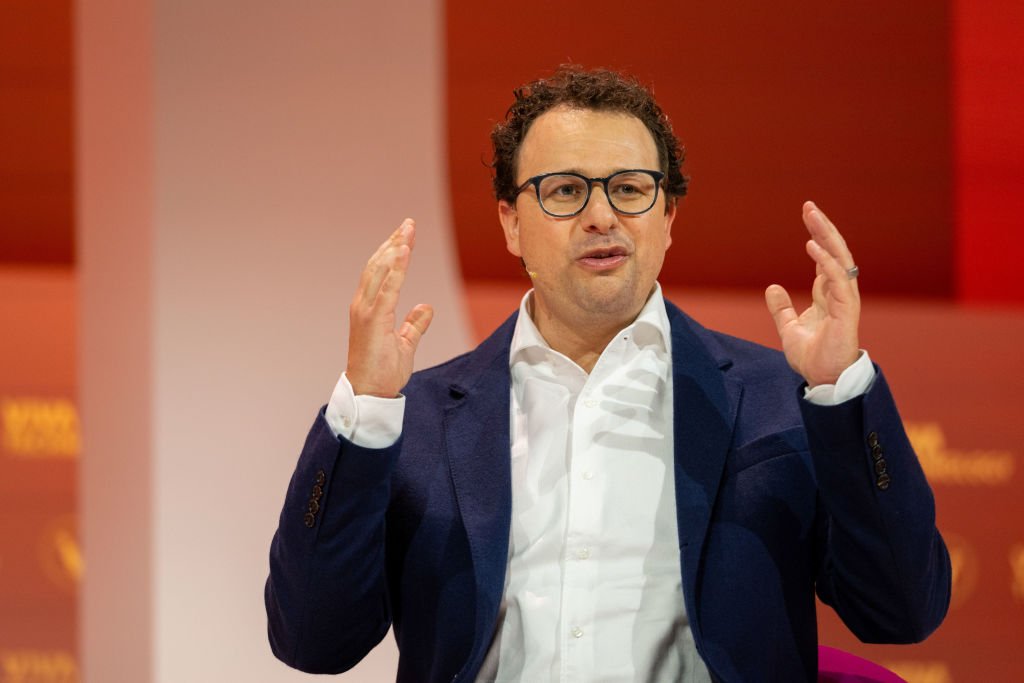
Anthropic founder and CEO Dario Amodei responded Monday afternoon to murmurs in the industry that his company somehow supports the U.S. government’s efforts to ban Chinese open-weight models, or possibly open-weight models in general. “Anyone who has read my previous writings should know that I do not consider such bans to be a useful measure,
Anthropic founder and CEO Dario Amodei responded Monday afternoon to murmurs in the industry that his company somehow supports the U.S. government’s efforts to ban Chinese open-weight models, or possibly open-weight models in general.
“Anyone who has read my previous writings should know that I do not consider such bans to be a useful measure, but let me say it clearly so that there is no doubt: Anthropic has never advocated banning models with open weights”he wrote, underlining his.
His response came after Nvidia founder and CEO Jensen Huang took to
While that letter does not specifically mention China, debate in the industry has focused on accusations that Chinese AI labs are ramping up their capacity, often stealing intellectual property from their American counterparts. One method is distillation, in which an AI bombards another model with cues to learn how it works.
Amodei said in the blog post published Monday that he considers open weight models to fall into a different group than the threat posed by China. “Open weight models that do not have dangerous capabilities are a public good: they cost nothing more than the compute needed to run them and provide value to companies, developers, and researchers.”
Amodei said in his post that he has long had fears about AI, but that companies using open-weight models, even those in China, are not among them.
Their fear is that “authoritarian governments” will build models that are more powerful than the United States to achieve “permanent military superiority” and/or use AI to repress their own people. He said that the Chinese Communist Party (CCP) is not the only authoritarian government that worries him, but it is the “most capable.”
Amodei also said he fears that AI will enable “biological attacks,” not just cybersecurity ones. And, in his opinion, open weight models are more dangerous in those scenarios because it is difficult to apply safety barriers to them or monitor their use. He also noted, citing a report from the UK AI Safety Institute, that once open weights are released, they cannot be removed.
This goes against what open source advocates argue: that access to powerful open models not controlled by a single entity helps advocates protect themselves.
Amodei listed actions he believes would frustrate China, including restricting its access to powerful chips (which has been a long-standing US policy) and calling for a formal crackdown on distillation. The United States has threatened sanctions against China if it determines that there was intellectual property theft involving American models.
Interestingly, Amodei also said he supports growing efforts, some led by the United States, to create a model security testing organization, especially if the entire world, including China, agreed to submit to it.
“I think this idea is really close to a consensus: I have been encouraged that the Trump administration has moved in this direction in recent months,” Amodei wrote. “Note that to be effective, testing would have to be global, meaning even the CCP would have to be on board. I think this may actually be possible… limited cooperation around AI bioweapon prevention may be possible because it is also in China’s interest.”
When you buy through links in our articles, we may earn a small commission. This does not affect our editorial independence.
For more tech updates, stay tuned to our blog.