Of all the great cinematic narrative arcs, there’s something special about the return. Think “Rocky,” “The Shawshank Redemption,” “The Natural.” A much maligned or dubious hero rises and triumphs against all odds. Goosebumps, all the time. The comeback saga rings very true for those in the film industry and those millions of movie buffs who
Of all the great cinematic narrative arcs, there’s something special about the return. Think “Rocky,” “The Shawshank Redemption,” “The Natural.” A much maligned or dubious hero rises and triumphs against all odds. Goosebumps, all the time.
The comeback saga rings very true for those in the film industry and those millions of movie buffs who love to watch dazzling visuals on the huge silver screens of cinemas. Six seemingly long and sometimes brutal years ago, COVID hit the theatrical distribution business with what many predicted would be a fatal blow. Conventional wisdom cruelly said that audiences might never return, especially after the 2020 pandemic was quickly followed in 2023 by two prolonged industry-wide strikes. The result of both was a very reduced film release schedule that for several years affected
to cinema operators.
AMC Cinemas in the US and our Odeon Cinemas in Europe are together the largest movie theater operator in the world. We never believed that going to the movies was an anachronistic relic of a bygone era. Despite an admittedly painful lull at the box office, our confidence in our future and our determination to overcome the crisis were never in doubt. As our friend and champion Nicole Kidman has been telling everyone: “We come here for the magic” and at AMC we know above all that magic never goes out of style.
However, comebacks require hard work. AMC did our part, making our business more efficient, finding new revenue streams, and since 2020 investing more than $1 billion to maintain and improve our fleet of movie theaters. Our reinvestments within our world included AMC providing our guests with more premium screens, brighter laser projections, more comfortable and spacious seating, greater commitment to booming sound systems, and more ambitious food and beverage offerings.
But the world’s most comfortable recliners aren’t worth the material they’re made of if there aren’t incredible, worthwhile movies to project on our giant screens. And that is where in 2026 the true comeback has begun to take place. Universal and Illumination lit up the screen with “Super Mario.” Lionsgate was on display for everyone to see the genius and eccentricity of “Michael.” Disney’s 20th Century label dates back to a beloved story in which the devil wears Prada. Directed by a 20-year-old filmmaker, “Backrooms” became the highest-grossing film in A24 history. In Amazon’s largest project yet after acquiring MGM, “Project Hail Mary” instantly established itself as a global phenomenon. As I write this, “The
“Odyssey” races toward $1 billion worldwide: a box office hit based on a 2,700-year-old poem. And probably the biggest movie of the year so far, Sony’s “Spider-Man: Brand New Day” is set to attract and delight audiences in huge numbers.
Fortunately, this comeback story is being demonstrated before our very eyes. In the second quarter of 2026, AMC Entertainment just reported our highest revenue and largest Adjusted EBITDA in our company’s 106-year history. I repeat for comeback fans, this was the most successful quarter in AMC history.
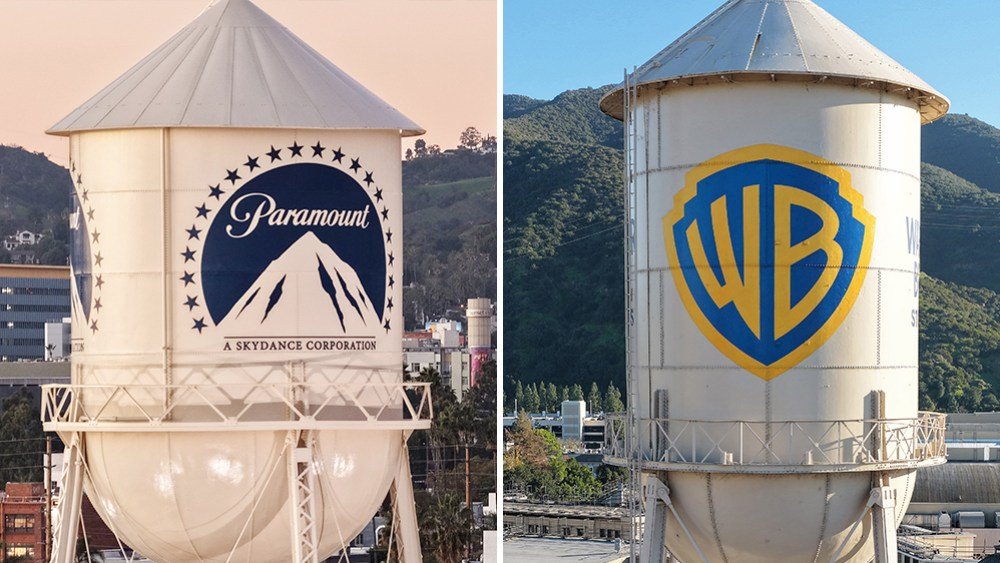
Looking ahead, there is another milestone that suggests better times are ahead for those who love “the movies.” The proposed Paramount-Warner Bros Discovery merger is set to create a powerful combined company, one that will have the scale and passion to bring even more such films to movie screens around the world. It is a move that some fear, but in our firmly held view, it is a step forward that should be welcomed and celebrated. Perhaps that’s why Paramount’s move to strengthen itself has already been approved by competition authorities and regulators in the United States, Europe and around the world, at the time of writing in some 65 countries.
worldwide now.
It is critical for the future of the industry that this transaction is completed as soon as possible, so that we can all build on the momentum that has finally, after six difficult years, recently been established. For that to happen, however, a legal challenge from a group of possibly well-intentioned state attorneys general must be overcome.
The domestic box office just had its strongest quarter in seven years, growing a satisfying 11% over the previous year. In fact, guests of all ages flocked to the movie theaters. Perhaps most encouraging is who is leading the way. About 87% of Generation Z saw a movie in the theater in the past year, the highest percentage of any generation. It turns out that young people who were supposed to be lost forever on TikTok have now turned going to the movies into a social event. History repeats itself, they are doing exactly the same thing that their parents, grandparents and great-grandparents have done continuously for over a century.
But this resurgence can only continue if we have a steady supply of great films, well marketed and given enough time in theaters to become cultural events. That’s not a given, and it won’t happen just because there have been some strong quarters along the way. By our sadly accurate estimate, the number of theatrically released movies from major Hollywood studios has declined in recent years since COVID and the strikes. Simply put, movie theater operators have needed more movies to enter our ecosystem.
Just as important as the film count itself is also the length of time that films remain exclusively in theaters. Since COVID hit, studio after studio has experimented with rushing to bring movies home. Ironically, in what several key movie legends have denounced and lamented as a self-destructive move, Hollywood has been training audiences not to go to theaters but to wait patiently at home. In doing so, they deprived us all of a valuable community vision. As has always been the case,
Seemingly forever, when you watch a movie with other people, the laughs get louder, the action seems more intense, the tears flow faster. To quote the best synopsis AMC has ever written: “Sometimes heartbreak feels good in a place like this.” Taken together, this is why the future of movie-making companies matters so much to us.
Traditional movie studios and independent filmmakers are no longer competing just with each other, but also with huge technology companies, which can treat filmed entertainment as a product line within a much larger subscription, advertising, hardware or e-commerce machine. Those tech companies can and often do produce great movies, and some of them have demonstrated a willingness to support theatrical releases, something we at AMC greatly appreciate and enthusiastically embrace. In fact, we intend to sell more tickets for them in theaters than anyone else in the world! But their commitment to theatrical release is likely to endure and increase only if they feel real competitive pressure, not only on their streaming platforms, but also from the film companies that pressure them to fight for cultural and commercial relevance in multiplexes.
That kind of intense competition won’t happen if companies like Paramount and Warner Bros. Discovery are forced to fight as subscale competitors, which is exactly what will happen, in our view, if their merger is blocked.
The AG’s lawsuit argues, in part, that it is necessary to prevent this merger to protect companies like mine. Well thanks, but no thanks. Your complaint simply sets back the economics of our business.
AMC licenses movies one by one and theater by theater. Every week we decide what to show, on how many screens and for how long. We negotiate revenue splits and other terms with all major distributors. We are not naïve about bargaining power and we do not give it away. Time and time again, AMC has chosen not to show a film if we are unable to negotiate terms for the film that we believe are fair and reasonable to both the filmmaker and his studio distributors, as well as to ourselves as exhibitors. We have complete confidence in our own ability to stand up and defend our trade policy.
interests.
But even with that said, a weak list is a much bigger threat to us than a strong study. More movies mean more ticket sales. The commitment to observing a respectable theatrical window attracts larger audiences to theaters. And the best movies that market well are the icing on the cake. All of this leads to more moviegoers, which in turn means more delicious popcorn is consumed and more energy is evident throughout the movie theater. In stark contrast, a sparse film slate leaves empty seats, regardless of the percentage share of the box office that can be negotiated among the relevant players.
parties.
David Ellison and several executives on his team have said publicly, and have committed to me personally, that Paramount and Warner Bros. combined will release at least 30 films theatrically each year, each with a minimum of 45 days of premium video on demand and a minimum of 90 days of theatrical-only video on demand subscription. These are specific, measurable commitments that address the two things movie theater operators need most: more movies and enough time to turn them into events. If the AGs are really concerned about the future of cinemas, they should focus on celebrating the new
responsible for fulfilling these promises. At AMC we surely intend to do so.
The good news is that we don’t need to simply take David Ellison’s word for it. There is some real history here. Paramount released only eight films last year. After Ellison’s Skydance took over, he put the studio on track to release 15 films this year in 2026, and similarly increased the number of films greenlit for future release. I should add that not just any old movie either. David Ellison has already proven himself to be an accomplished film executive, having made commercially successful films that have entertained the entire world. “Top Gun: Maverick,” several films in the “Mission: Impossible” franchise and “Air” are just a few of his recent titles.
What’s more, Paramount has already put into practice its promise to honor longer showcases. He could have waited to create a future bargaining chip with regulators, but to his eternal credit, he didn’t play. Paramount has already given movie theater operators exactly what we need on this very important front, and they did it right now.
Competition should be measured not only by the number of logos on studio doors, but also by what actually reaches American screens and theaters around the world. Movie theater audiences tell us exactly what they want: more movies, movies shown exclusively in theaters, and better movies. That is the basis of the nascent return of the theater ecosystem. We all need to nourish it, not starve it.
Approving this deal with Paramount Warner – allowing a combined company to get into the business of producing large quantities of big movies – is a big step in the right direction. This is precisely why AMC Entertainment, the largest movie theater chain on the planet, is a strong supporter of doing so.
Keep following us for the latest insights.