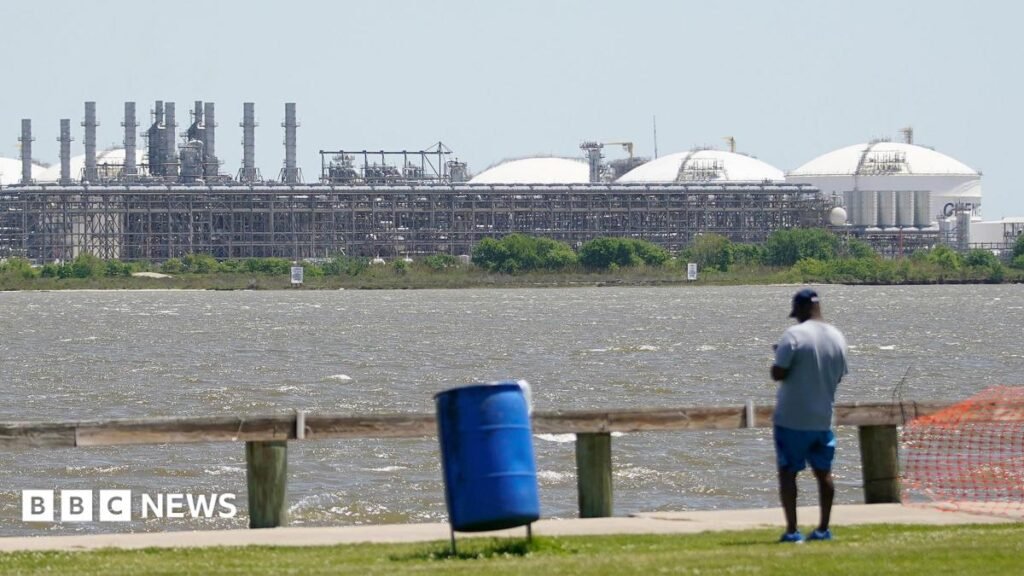
Nowhere is that exposure more acutely felt than in Germany, the EU’s largest manufacturer, producing more than a quarter of the bloc’s industrial output. At InfraLeuna, a vast chemicals and plastics industrial park in central Germany, boss Christof Guenther has seen his site’s annual gas bill rise from €60m ($68m; £51m) before the war in
Nowhere is that exposure more acutely felt than in Germany, the EU’s largest manufacturer, producing more than a quarter of the bloc’s industrial output.
At InfraLeuna, a vast chemicals and plastics industrial park in central Germany, boss Christof Guenther has seen his site’s annual gas bill rise from €60m ($68m; £51m) before the war in Ukraine, to an expected €200m this year amid the Iran crisis.
American gas is not the answer, he says. “[Domestic] Natural gas prices in the US are about 20 to 25% of the prices we pay here.” After being converted into LPG and shipped across the Atlantic, the price skyrockets.
Since natural gas accounts for 12% of German energy generation and half of German homes are equipped with gas boilers, German households are also affected.
The average household now pays 31% more for its electricity than before the Ukraine war, according to Clean Energy Wire, a Berlin-based news outlet that covers Germany’s energy transition. Gas prices for German households also increased during that period, by more than 74%, according to the same source.
This is repeated across the European Union, where household electricity bills have increased by 30% since 2021, according to official Eurostat figures.
Meanwhile, UK electricity prices are now around 38% higher than in mid-2021, while gas prices have risen by 120%, according to data from regulator Ofgem.
For more tech updates, stay tuned to our blog.