
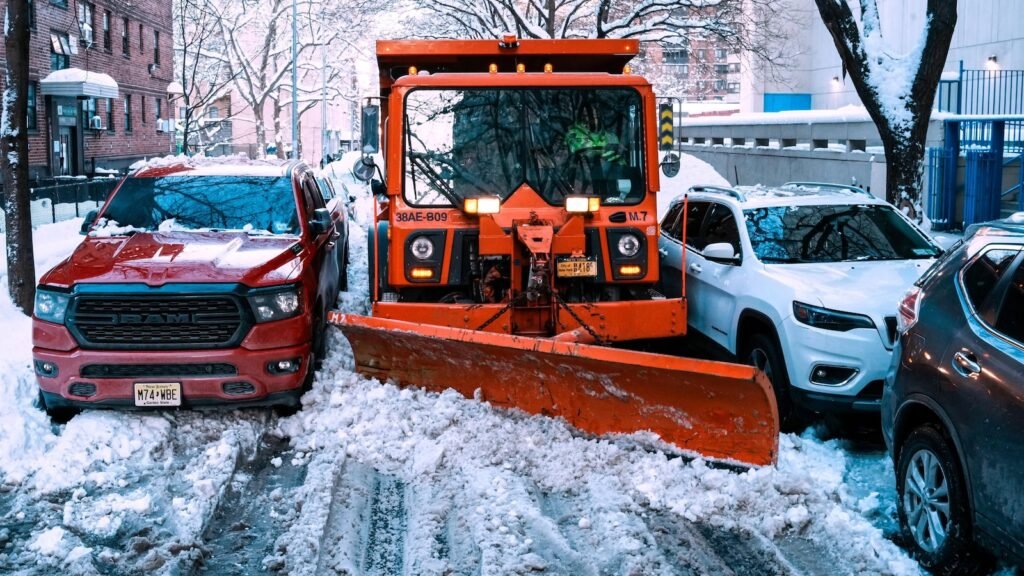
Residents of Syracuse, New York — America’s snowiest city — once barraged a service hotline with street neglect complaints during blizzards, even if plows had passed two hours earlier but the work was hidden by fresh snow. Now public trust seems to be rising as Syracuse and other cities across the U.S. integrate upgrades such
Residents of Syracuse, New York — America’s snowiest city — once barraged a service hotline with street neglect complaints during blizzards, even if plows had passed two hours earlier but the work was hidden by fresh snow.
Now public trust seems to be rising as Syracuse and other cities across the U.S. integrate upgrades such as video monitoring, GPS mapping and artificial intelligence into snow operations that once relied almost entirely on manual planning.
Syracuse was one of the first to revamp the way it deploys its snowplows, and complaint calls have dropped by 30% under the new system, said Conor Muldoon, the city’s chief innovation officer.
“People will look out their window and say, ‘Hey, you guys are doing a terrible job,’” Muldoon said. “And we can point to a public map and say, ‘Here’s all the breadcrumbs for when that plow was there.’”
Each winter, Syracuse averages 126 inches (3.2 meters) of snow, more than any other U.S. city of at least 100,000 people. Even before the blizzard that pounded the Northeast last week, the city had already surpassed its typical average due to a record 2-foot (60-centimeter) accumulation on one day in late December.
With a goal of clearing every street within 24 hours after a storm, Syracuse partnered in 2021 with San Francisco-based Samsara to put live GPS tracking and dashcams on city fleet vehicles including snowplows. Integrated with GIS mapping software, the system allows officials to monitor live video and plow locations in real time.
While residents can’t access live feeds, they can view a public map that updates every 5 minutes to show which roads have been cleared.
Samsara started incorporating AI into its products in 2019. This winter, for the first time, it has provided customers with footage from other cameras within its large network, helping officials better understand conditions on a street even when no worker is there.
Kiren Sekar, the company’s chief product officer, cited an example of needing to dispatch the closest plow for a snow emergency in Plainwell, Michigan.
“Rather than having to sift through a list of vehicles, it can actually figure this out: ‘We’ve got Trevor in vehicle 203, 15 minutes away,’” Sekar said.
Samsara partners with communities of various sizes to upgrade their snowplow systems, but the nation’s largest city — New York City — developed its own.
Its tracking program known as BladeRunner monitors snow removal equipment (including garbage trucks with plows attached) while a human in a command center — not AI — analyzes the GPS data. The city is exploring AI in the future to process the thousands of 311 calls and online service requests it can get in a single day.
The other way the big city’s approach differs from its upstate neighbor of Syracuse is that every block gets the same treatment, with each plow assigned a specific route during a storm. Typically 99% of the city’s roads will be plowed within the first four hours after a moderate snowfall under ideal conditions, but it didn’t quite meet that mark during last week’s historic storm, said Joshua Goodman, deputy commissioner at the city’s Department of Sanitation.
Goodman said all streets in New York City get the same treatment, regardless of whether they are main or side streets.
“So what it does is allow equity,” he said.
With U.S. cities and states spending upward of $4 billion each year on snow operations, the new technology also helps assure roads aren’t overplowed or oversalted, which can cause environmental damage.
Fayetteville, Arkansas, launched a public-facing snow removal map for the first time this winter. It reported improvements in plowing time, labor costs and fuel savings, despite enduring about double the snow from a year ago.
“This is the first year some roads have ever been treated or plowed, and that goes right back to being able to see where we need to go and if we’ve been there,” said Ross Jackson Jr., the city’s fleet operations manager.
The township of Edison, New Jersey, reduced its spending on salt and brine by 35% and its insurance payouts by 60%, thanks to video that helped prove plow drivers usually weren’t at fault when the vehicles collided with another motorist’s car.
Video installed on snowplows in Iowa helped demonstrate that all but one of 12 snowplow accidents in a single day were the other driver’s fault, said Craig Bargfrede, the state’s winter operations administrator.
“How can you not see this big orange truck with flashing lights ahead of you?” he said. “Boom, they just drive right into us.”
Kalamazoo County was the first county in Michigan to employ turn-by-turn navigation to dispatch snowplows during a storm. Rusty McClain, assistant general superintendent of its Road Commission, called it a huge improvement in efficiency.
“The old-school way of doing it, that bird’s eye view of where everyone needs to go to plow, was just in a large book with paper maps,” McClain said. “You’d have to pull over, find the page you’re looking for, call somebody on the phone and ask if they have plowed that area.”




















Leave a Comment
Your email address will not be published. Required fields are marked with *