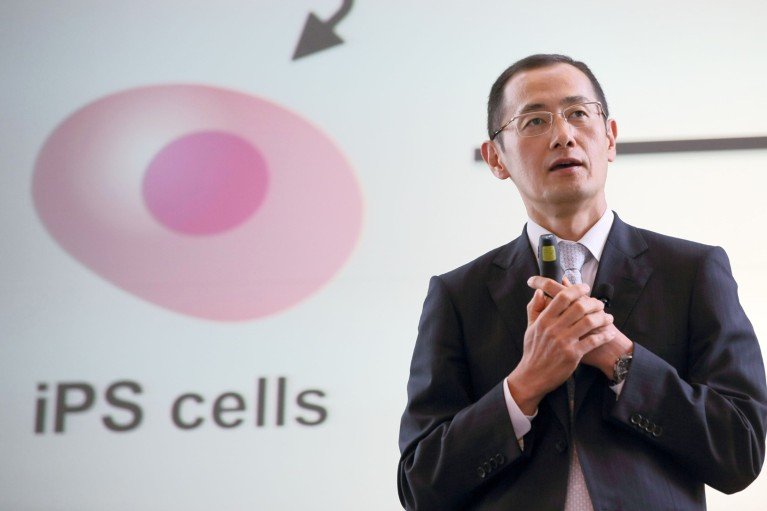
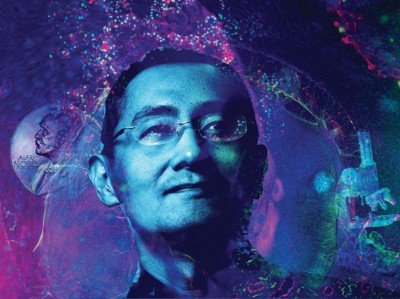
Shinya Yamanaka in 2012, the year he won a share of a Nobel prize.Credit: Aflo/Shutterstock Shinya Yamanaka doesn’t see himself as a celebrity. But people do recognize the stem-cell researcher when he’s out for a run, often while training for a marathon, on the streets of Kyoto, Japan. Many of them call out words of
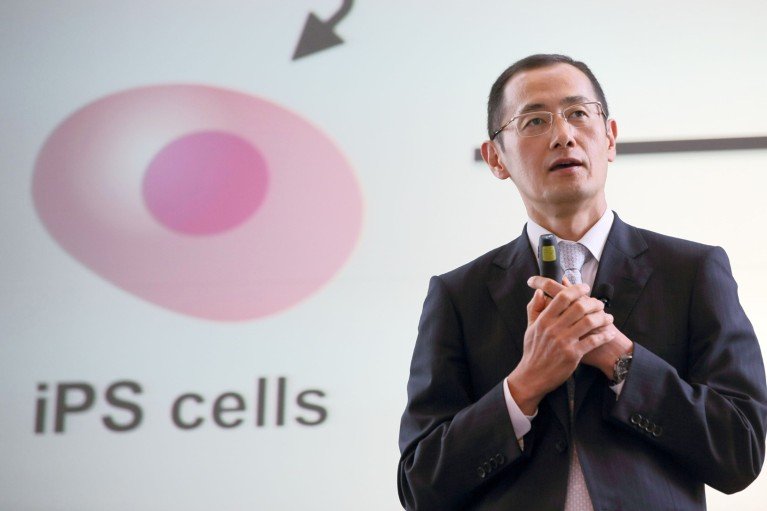
Shinya Yamanaka in 2012, the year he won a share of a Nobel prize.Credit: Aflo/Shutterstock
Shinya Yamanaka doesn’t see himself as a celebrity. But people do recognize the stem-cell researcher when he’s out for a run, often while training for a marathon, on the streets of Kyoto, Japan.
Many of them call out words of encouragement. Some tell him that they hope his research will lead to cures for family members who are battling severe illnesses. “I feel deeply humbled and grateful,” says Yamanaka, who splits his time between Kyoto University and the Gladstone Institutes in San Francisco, California.
Don’t rush promising stem-cell therapies
Some of the hoped-for cures could be nearing reality. It has been quite a wait — 20 years, in fact — since the paper1 that shook biomedical research and won Yamanaka a share of the 2012 Nobel Prize in Physiology or Medicine. In it, he and his colleague, Kazutoshi Takahashi, also at Kyoto University, unveiled a way to turn back time in adult mouse cells, erasing their identity and reprogramming them to an embryonic-like state — all by switching on just four genes.
That discovery opened up a possible way to treat disease. If those cells, called induced pluripotent stem (iPS) cells, could be coaxed to take on fresh identities, they might provide a source of healthy tissue, fashioned from a person’s own cells, that could repair diseased or damaged organs. Earlier this year, the first such therapies — one for Parkinson’s disease and the other for heart failure — received conditional approval in Japan2. Clinical trials of iPS-cell therapies are under way around the world.
The stem-cell field now stands at a turning point. As more therapies are rolled out, the goal of researchers, companies and regulators must be to ensure that these treatments are developed responsibly, and that they will be available to all who need them.
Japan’s big bet on stem-cell therapies might soon pay off with medical breakthroughs
Before the landmark 2006 paper in Cell, Yamanaka’s colleagues sometimes questioned the scientific path he was forging. They would tell him: “Those mouse cells may be interesting, but you should do something more closely related to human disease and human medicine,” as Yamanaka recalled during his Nobel prize lecture.
But his discovery was soon replicated in human cells3,4. After that, researchers had to work out how to induce iPS cells to acquire identities that could be useful for studying and treating disease.
Deepak Srivastava, a cardiologist and stem-cell researcher at the Gladstone Institutes, still remembers the joy he felt when he saw that his laboratory had finally generated heart cells from iPS cells. Even so, only about 1% of the iPS cells had adopted that new identity, he says. It would take more years of work before the lab could get 90% or more of their stem cells to become heart cells — enough for them to spontaneously beat in unison, generating waves in the culture medium.
Some medical applications were quick to follow. By deriving iPS cells from individuals with or without particular disorders, researchers were able to learn more about the molecular mechanisms underlying disease. Scientists can now use iPS cells to grow organoids, 3D masses of cells intended to emulate the structure and function of an organ. Pharmaceutical companies have incorporated iPS cells into their search for drugs against conditions such as motor neuron disease (amyotrophic lateral sclerosis).
How iPS cells changed the world
But before therapies based on iPS cells could be used in people, there was a major safety concern to address: stem cells that have not yet taken on a specific identity can seed tumours. Researchers needed to ensure that cells used for therapy had all been successfully reprogrammed to take on a new function, with no embryonic-like interlopers remaining that could give rise to cancer. This added to the development time for such therapies, says Srivastava.
Now, with those hurdles on the way to being overcome, it is time to test iPS-cell therapies. Many of the trials will report results over the next five years, covering therapies to treat conditions such as macular degeneration and diabetes. Researchers are continuing to collect data on the two therapies that received conditional approval in Japan after small, initial clinical studies to assess safety.
It is an exciting, but precarious, time for iPS-cell research. There is always a tremendous incentive to be the first in a burgeoning field, and iPS-cell therapy is at a stage when there are many potential firsts. These therapies could benefit very large numbers of people. But the field must proceed responsibly: moving too fast, without appropriate guidelines, increases the risk of harm. And one clinical trial that harms its participants could freeze the entire endeavour.
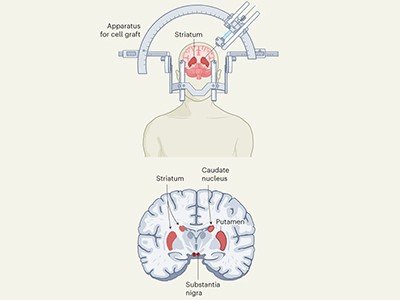
Clinical trials test the safety of stem-cell therapy for Parkinson’s disease
Making bespoke iPS-cell therapies from a person’s own cells is, in many cases, too slow and expensive to be practical. Researchers, including Yamanaka, have been working to develop off-the-shelf alternatives, in which iPS cells from one donor could be used to treat many people. This, along with improvements in how the cells are manufactured, could cut costs and make the treatments more accessible, as well as encouraging more companies to enter the field.
It might be hard, after a 20-year wait, to proceed slowly and steadily when treatments are finally in sight, but that is the nature of medical research. “Translational research is a marathon, not a sprint,” says Yamanaka, speaking from experience of races both literal and metaphorical. “Keeping patient benefit as your North Star will sustain you.”
For more tech updates, stay tuned to our blog.