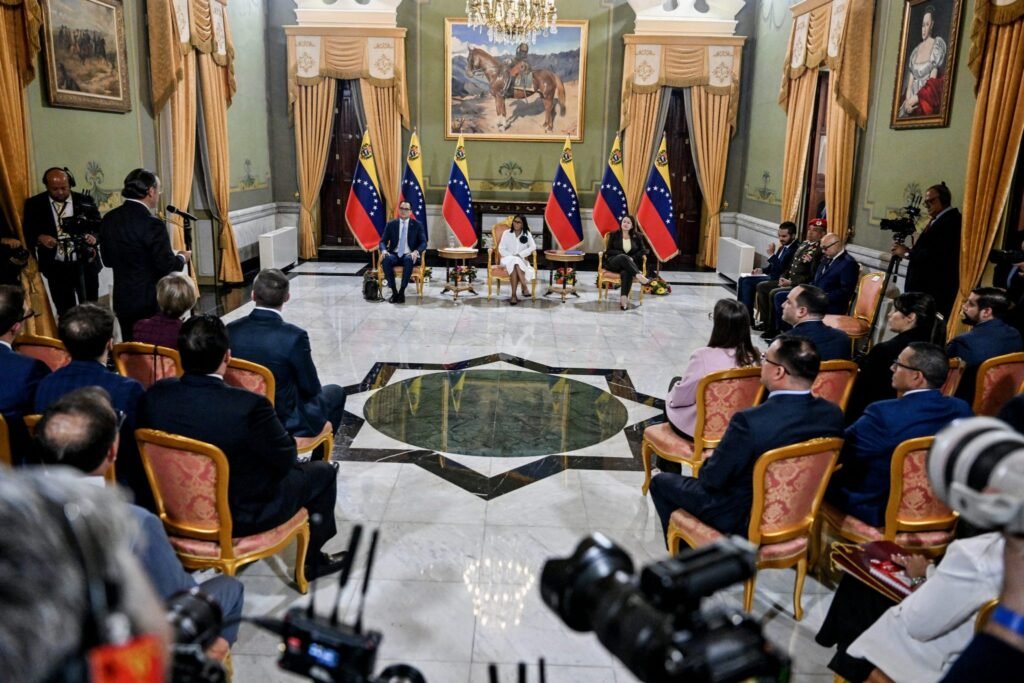
Venezuela’s new petroleum minister sees her South American home not as a dilapidated former oil giant, but as an emerging energy economy ripe for U.S. and foreign investments in new oil and gas exploration, both onshore and offshore. Paula Henao, who took over as the hydrocarbons minister in March after the forced U.S. removal of
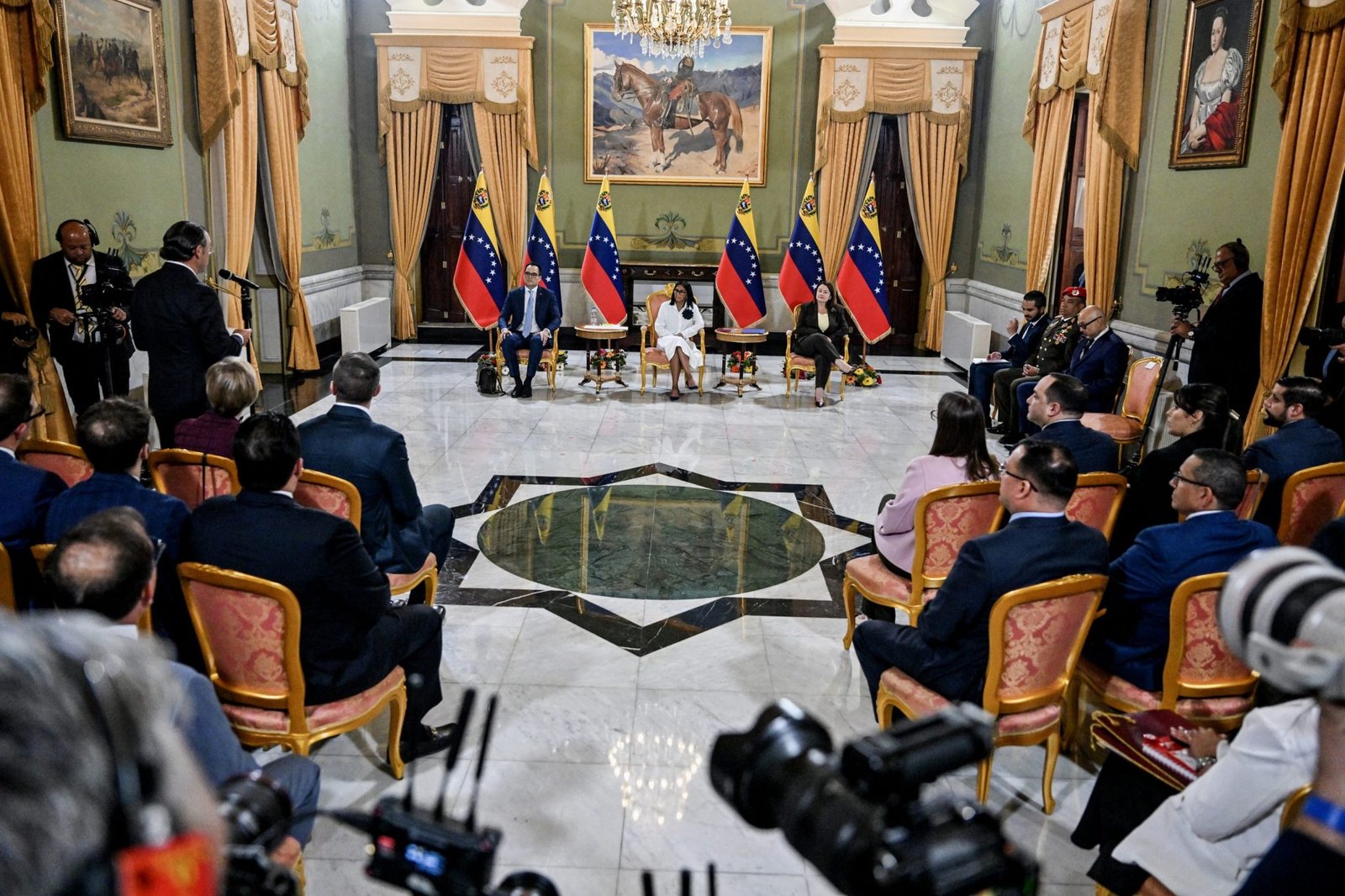
Venezuela’s new petroleum minister sees her South American home not as a dilapidated former oil giant, but as an emerging energy economy ripe for U.S. and foreign investments in new oil and gas exploration, both onshore and offshore.
Paula Henao, who took over as the hydrocarbons minister in March after the forced U.S. removal of former leader Nicolás Maduro, told an overflowing Houston energy audience on Wednesday that Venezuela is much more than just its famed heavy-grade crude oil. There are more than 916 exploration opportunities awaiting foreign investment, she said, including natural gas and other untapped oil basins. She cited an estimated 192 trillion cubic feet of natural gas reserves, as well as the country’s world-leading proven oil reserves of more than 300 billion barrels.
“It’s an entire world waiting to be discovered, just waiting for us to reach these agreements so we can develop these new areas,” Henao said in Spanish to the crowd at the posh Post Oak Hotel in Houston.
Henao and leaders of the Venezuelan state oil company, PDVSA, were in Houston this week for meetings and a showcase event in advance of a bigger Venezuela Energy Week in February in Caracas.
“Go to Venezuela to invest, go to Venezuela to develop businesses there,” said PDVSA Vice President Jovanny Martinez, also speaking in Spanish. “We are at the right place at this historical moment. We have the energy that the world requires.”
After decades of cycling between energy reform and renationalization, including the most recent 2007 appropriation of assets from ExxonMobil, ConocoPhillips, and others, there’s still a lot of hesitancy to invest in Venezuela as it again changes its hydrocarbon laws in the aftermath of Maduro’s ouster. There’s a recognition that this could be the last great chance for the Venezuelan energy sector to thrive.
President Donald Trump has repeatedly insisted U.S. oil companies will spend more than $100 billion in Venezuela to dramatically rebuild its failing infrastructure but, apart from Chevron which never left, large U.S. energy companies are mostly taking a wait-and-see approach, despite Exxon expressing optimism. Others, such as BP and Shell, plan to invest in offshore Venezuelan gas fields near Trinidad and Tobago.
Otherwise, it’s a bevy of smaller, private U.S. oil producers jumping in first. A day prior to the Houston event, Venezuela signed new oil production agreements with the Dallas-based, private producer Hunt Oil and the major oilfield services firm SLB, which already works with PDVSA and Chevron in Venezuela. Hunt CEO Hunter Hunt said in a statement that the company is “proud to be one of the first American companies to sign an agreement with PDVSA to help expand Venezuela’s oil and gas production, and we are looking forward to expanding our presence in the country.”
Crossing continents
One of the next deals signed is expected to be with Denver-based Crossover Energy, which sees more upside in Venezuelan oil—both mature and exploratory oil fields—than in pricier shale oil and gas acreage in the U.S.
“Hopefully we can jump the line by taking a little more risk,” Crossover CEO Eric McCrady told Fortune at the Houston event. “We think that’ll open up more opportunities on the back end with more fields, and growth beyond what we have today.”
Crossover already has acquired a local Venezuelan operator to develop an on-the-ground presence and workforce and expects to sign new productive participation contracts (CPPs) with a “few days or a few weeks,” McCrady said.
The plan is to begin operating Venezuelan wells in January, he said, delayed a few months because of the devastating and fatal earthquakes that rocked the country in June.
“In the oil industry you’re always managing risks,” McCrady said. “I think the risks here are more above-ground—the labor force, equipment availability, the political situation—versus below-ground geologic risk, well failure risk, things like that. We’re comfortable taking risks. I think by being one of the leading companies to get in, it gives us an opportunity to hire the right team and hopefully get moving first so we have access to services and equipment.”
He said more work is needed within the country to build up its power grid, develop infrastructure to transport and process natural gas, and further tweak the laws for regulatory and contract certainty.
Since last year, Venezuela’s oil production has risen from just under 1 million barrels per day to more than 1.2 million barrels daily, an increase of almost 250,000 barrels each day. Largely led by Chevron, that increase primarily relied on optimizing existing oil wells, and not by bringing in new drilling rigs and teams.
Venezuela’s oil industry last churned out more than 3 million barrels daily at the beginning of this century and was still above 2 million barrels a day a decade ago.
Simon Sjøthun, a partner with the Rystad Energy research firm, said the world will need Venezuelan oil over time as existing resources run dry—especially with global oil demand projected to remain stubbornly high for decades—and that Venezuela could again exceed 3 million barrels daily by 2040.
McCrady is more optimistic, he said. He believes Venezuela can grow to 3.5 million barrels a day within five to 10 years, citing how quickly West Texas’ Permian Basin boomed to new heights in the last decade. Modern U.S. drilling techniques could do wonders in Venezuela, he said. “Venezuela has been isolated from the world stage for almost 25 years,” he said.
“With the right legal framework and bringing U.S. investment in, I think 3.5 million [barrels daily] will be reached a lot faster than 15 years. We see tremendous opportunity.”
For more tech updates, stay tuned to our blog.