Sign Up For Goods 🛍️ Product news, reviews, and must-have deals. By signing up, you confirm you are 16+, will receive newsletters and promotional content and agree to our Terms of Use and acknowledge the data practices in our Privacy Policy. You may unsubscribe at any time. In the Mont Blanc massif of the French
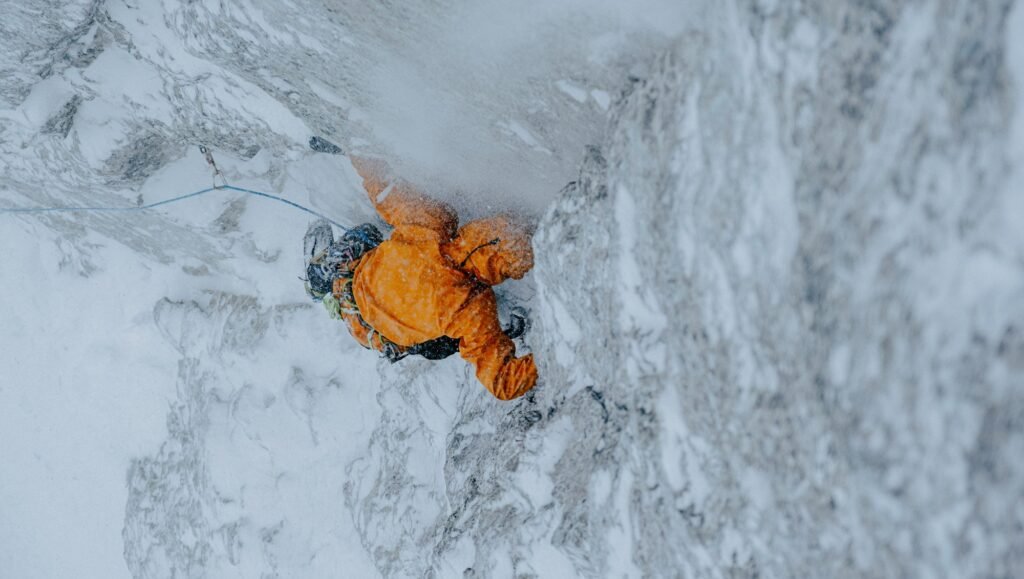
In the Mont Blanc massif of the French Alps stands Aiguille du Midi, a famed 12,605 foot-high peak that hovers above the alpine town of Chamonix. A fast 20-minute cable car lifts visitors from Chamonix’s center up a more than 9,000-foot vertical ascent, where it arrives at a legendary starting point for mountaineering routes. Here we’re about to begin our descent along the narrow, knife-edge Aiguille du Midi ridge, the weather is considerably cooler than down below. In fact, a heatwave has been pummeling the country for the last few weeks. At 39 to 48 degrees Fahrenheit the alpine temperature is still well above par, but it works for testing out the Sperro SV by Arc’teryx, a hardshell jacket designed to push the limits of durability and repairability in an effort to keep it on the mountain and out of the landfill.
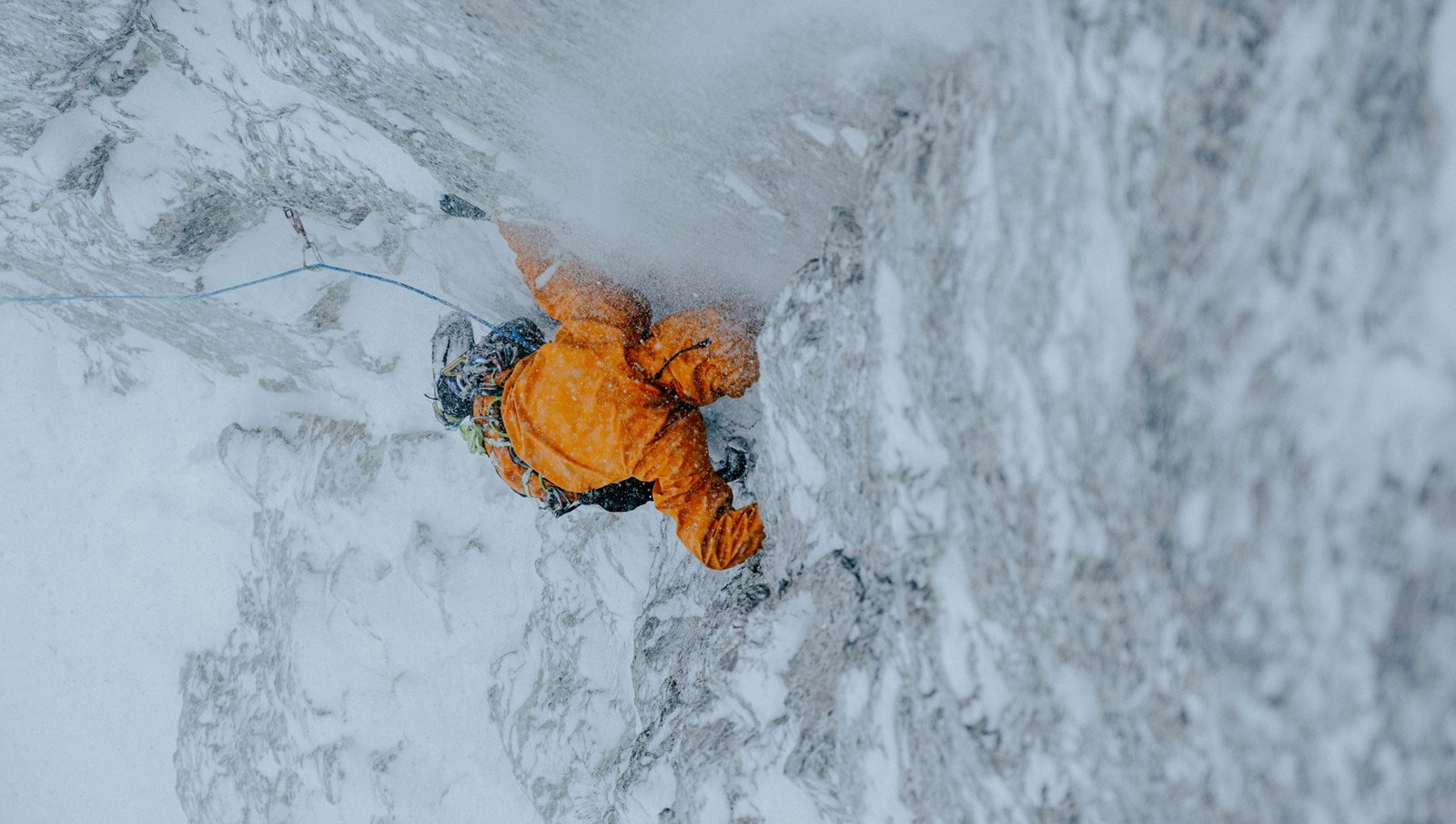
I’m one of a handful of international journalists that Arc’teryx has brought to France, for a hands-on opportunity to try out the company’s first GORE-TEX hardshell made with recycled and recovered material. Atop Aiguille du Midi, we rope together into five-person teams and set out onto the high-altitude glacial basin of the Col du Midi. I can see the top of Mont Blanc and in the distance—Switzerland’s iconic Matterhorn—two of Europe’s most legendary peaks. This is the exact kind of outdoor environment that the Sperro SV was designed for.
Introducing the Sperro SV
The Sperro SV is a part of System 0, the company’s newly launched circularity program created to maximize gear longevity, and eventually, recyclability. “It’s important to understand that the Sperro SV didn’t come from nowhere,” says Alex Plante, Vice President of Advanced Concepts at Arc’teryx. Although she is one of several Arc’teryx employees who’s joining us atop Aiguille du Midi, Plante and I talk in length a few weeks later over Zoom. Arc’teryx, says Plante, built both System 0 and Sperro SV on “decades of understanding and knowledge of building circular hard shells, experimentation on what works, understanding what doesn’t”
Arc’teryx has been specializing in high-performance technical outdoor apparel and equipment since 1989, when it was founded under the name Rock Solid. However, the Canadian company tends to function more like a precision science laboratory than a traditional outdoor brand. In fact, Arc’teryx runs a highly advanced in-house research and development center in North Vancouver, British Columbia, that focuses heavily on physics, ergonomics, and material chemistry. This is where they test out fabrics and prototype gear.
According to Plante, “Arc’teryx has spent years solving really challenging industry problems with our partners at GORE-TEX,” the waterproof and breathable fabric membrane and brand that they’ve been collaborating with since the 1990s. The company’s ReBIRD, a circular economy and sustainability initiative that focuses on keeping Arc’teryx gear in use as long as possible through repairing, upcycling, and resale, officially launched in 2021. Still, it wasn’t until early 2023 that the company
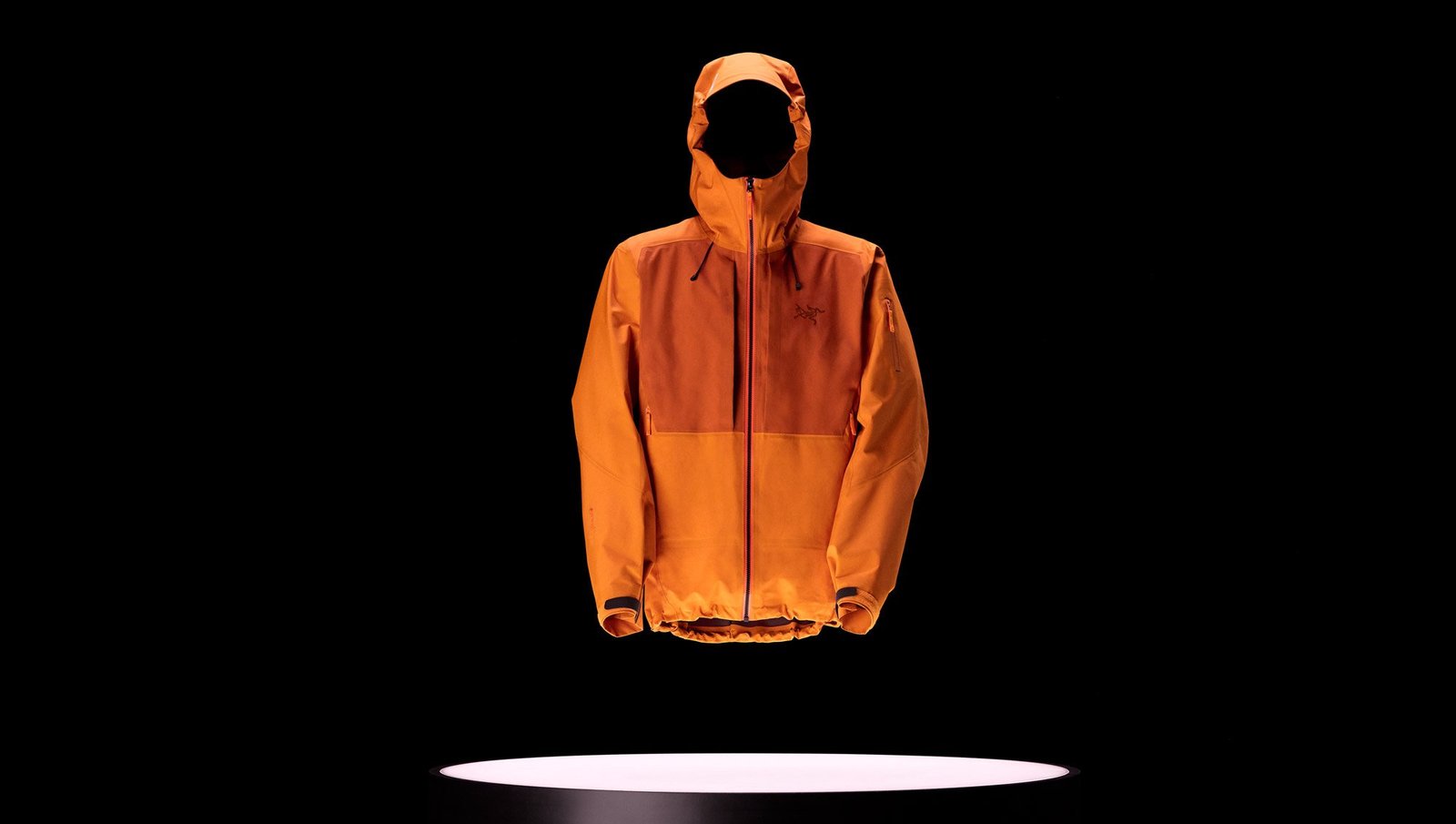
really started endeavoring towards the concept of developing a scalable blueprint for comprehensive, large-scale waste reduction that, along with ReBIRD, includes creating products from the point of inception with “end of life” in mind. Since the Arc’teryx legacy is in hardshells, the Sperro SV was a no-brainer.
Trial and error
For the Sperro SV, the answers didn’t come easy.
Plante and the Advanced Concepts team, which includes engineers and scientists, started with a hypothesis: that creating simplicity and using really smart design solutions would be able to bring functionality. What they immediately learned was that while building a system around circularity, their Sperro SV still needed to fulfill an athlete’s pinnacle needs. For example, the hardshell features a RECCO reflector built into the brim of the hood. It’s a pertinent feature for added searchability in rescue operations. However, the RECCO “can’t be recycled,” says Plante. It’s something that will need to be cut from the material when the jacket is in its end stages, but including it in the overall product was completely intentional.
In the Sperro SV’s earliest iterations (there were many of them!), Arc’teryx even experimented with a zipperless pull-over hardshell. While that quickly proved to be a bad idea (the ability to easily put on a jacket and remove it is a necessity in most multisport activities), they still had to figure out how to add zippers without compromising durability. “For example, the zipper itself is something that is one of the main failure points in hardshells,” says Plante. They face constant physical stress, trap dirt and mud, and are constantly breaking. So Arc’teryx equipped the Sperro SV zippers (which along with the main zipper, include zippers for pockets and underarm pit zips) with removable sliders. This way, ReBIRD centers can easily repair up to three broken zipper teeth with 100 percent nylon replacement components without having to replace either the zipper track or the zipper itself.
One small but substantial detail in the Sperro SV is the hardshell’s laser-etched pocket, which appears on the jacket’s left-side interior. It’s where you’ll find both the Arc’teryx logo and a QR code for information on the product’s repair and care. Because the code is a permanent feature, it’s highly durable, says Plante. It also has less impact on the environment by introducing less new materials. “For me, it’s a very small detail,” she says, “but it’s such a wonderful reflection of the fact that you can achieve higher performance and increase innovation while still having lower impact.”
Creating the base
In 2024, Arc’teryx—together with GOR-TEX—began transitioning from PFAS-based membranes, man-made compounds that are exceptionally waterproof but are nearly indestructible by normal biological, chemical, or environmental processes, to ePE (Expanded polyethylene). The latter is a thin and lightweight membrane that offers a significantly lower carbon footprint because it is completely fluorine-free: meaning it’s not a “forever chemical” like PFAS.
However, ePE is still a plastic. So to maximize the environmental benefits of the ePE membrane, Arc’teryx pairs it with recycled fabrics. In this case, Econyl yarn made by Aquafil, a pioneer of the circular model revolution. “Econyl is what’s used in both the face and the backer of the jacket,” says Plante. This premium nylon fiber is made entirely from waste—including discarded fishing nets, old carpets, fabric scraps, and industrial plastic—which workers have rescued from landfills and oceans worldwide. Creating the yarn involves a chemical process that breaks down the waste to its base molecules. Once being cleaned of impurities, these molecules are locked back together to form fresh nylon. The resulting material has the exact same strength, performance, and durability of a traditional nylon, and can be recycled over and over without losing quality.
“We know that if one jacket can work hard for you in your wardrobe,” spanning multiple sports and multiple uses, says Plante, “then that is reducing the impact of how many jackets you need to have.”
Testing the hardshell
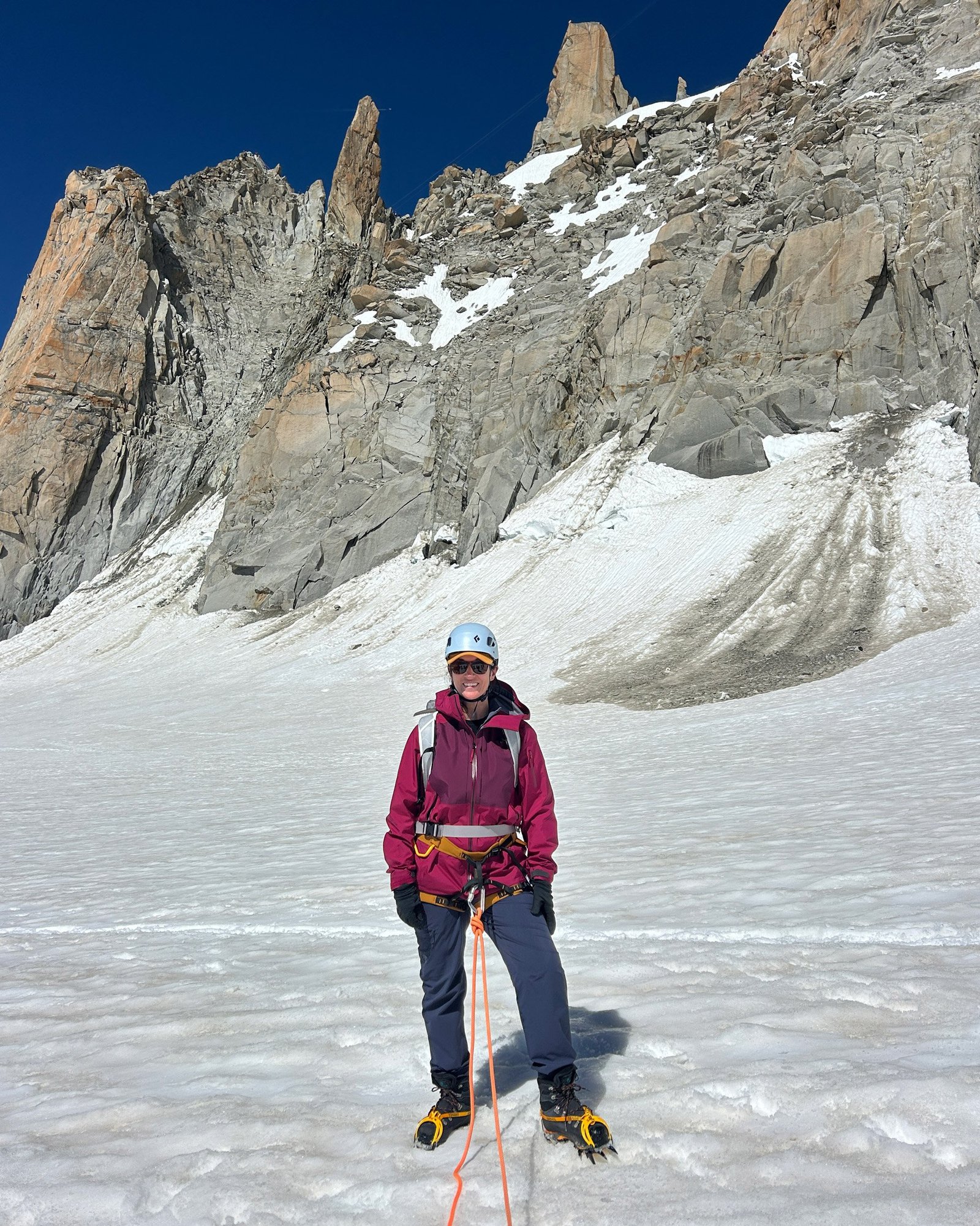
The Arc’teryx Advanced Concepts team also does the designs for the company’s professional category, which includes Search and Rescue and alpine guides. So when it came to durability and function, “[these] different categories were used as an influence,” says Plante. For example, mountain guides use their gear as equipment, meaning a hardshell not only has to keep out wind and water, but it also has to have accessible pockets, offer a high range of mobility, and be able to withstand serious outdoor elements. “[Their gear] needs to work so that they can work, essentially.”
To access the hardshell thoroughly during development, Arc’teryx put it to the test. They tumbled the jacket in a cement mixer with gravel and put rocks in the pockets, all to accelerate the aging and see how it fared. They also soaked the jacket in sweat to examine how human oils can affect the fabric. “Essentially, the oils come into contact with the membrane and it creates a barrier. This makes it impossible for [the membrane] to work properly,” says Plante. So to care for the Sperro SV, “you actually need to wash it and they need to dry it with high heat.” While she knows this is something that might feel counterintuitive, “ there’s some real education that we’ve been putting behind trying to have people understand how to care for your jacket.”
Still, it’s a team of pro-athletes that Arc’teryx turns to to run the hardshell prototypes through real-life situations. “We’re designing [the jacket] with them,” says Plante. Their input goes into everything from pocket size (What are you trying to fit into it?) to cuff size (Does this work well for hiking? What if I need a glove?). “We get them to test it for hours, and then months.” Essentially, says Plante, Arc’teryx will keep returning to the athletes with new prototypes until the athletes are no longer willing to give one back. “They love it too much. It’s a soft, not scientific, indication of when we know that something is ready.”
Over the next three to five years, Arc’teryx will be working towards trying to get as many products as possible into the System 0 framework as possible. Along with hard shells, this includes everything from apparel to footwear. Honestly, I can see why.
Back in the Alps
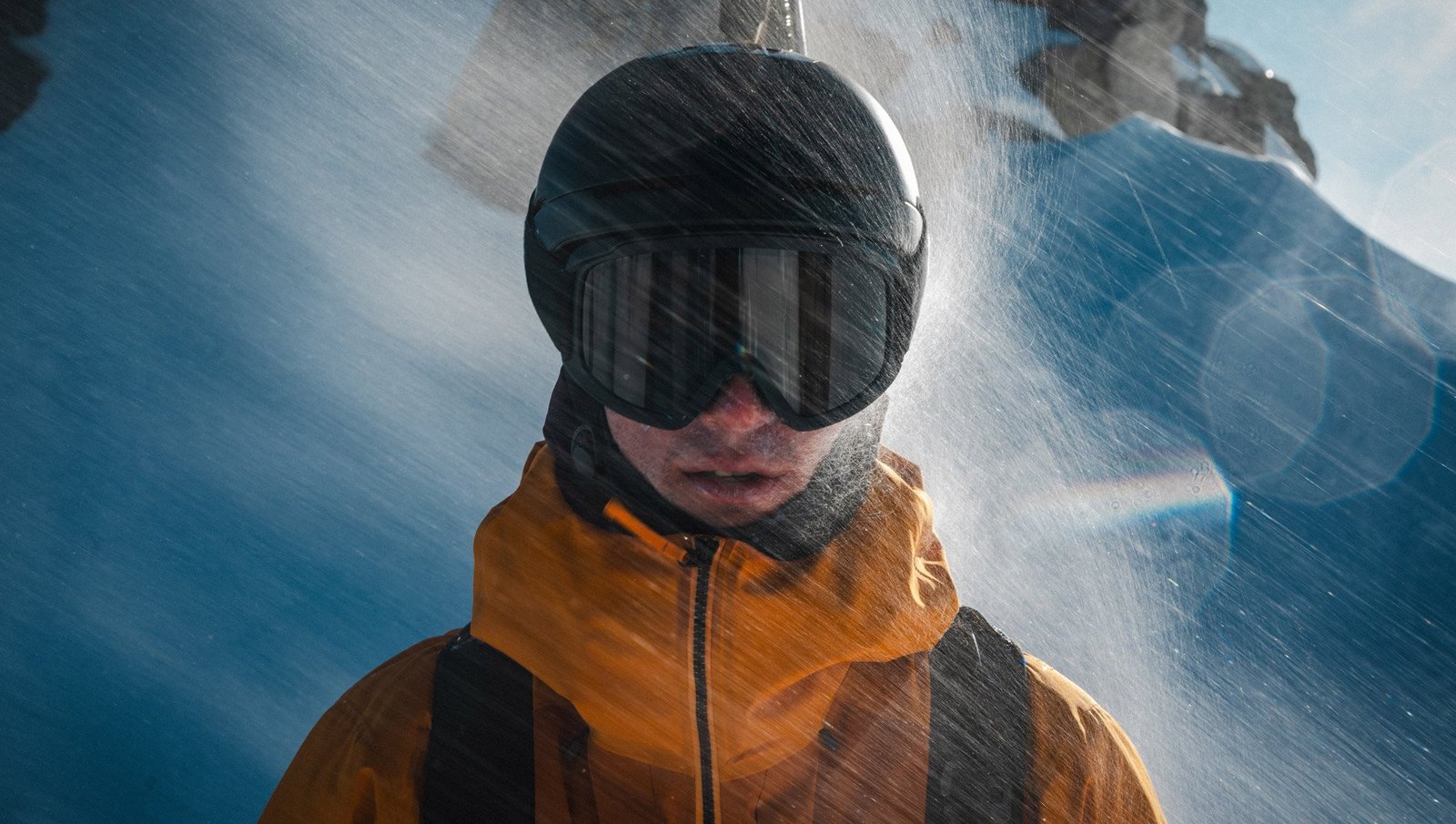
Not only is the Sperro SV extremely lightweight and easy to pack, it proved to be the perfect layer for the mountains’ changing weather. The slightly diagonal side pockets that zip vertically were accessible even while donning a harness (great for keeping my gloves when not in use), and matching breast pockets came in handy for storing my iPhone and a peanut butter Cliff Bar. But it was the underarm pit zips that saved me from an overly sweaty fate while we were reascending the Aiguille du Midi ridge.
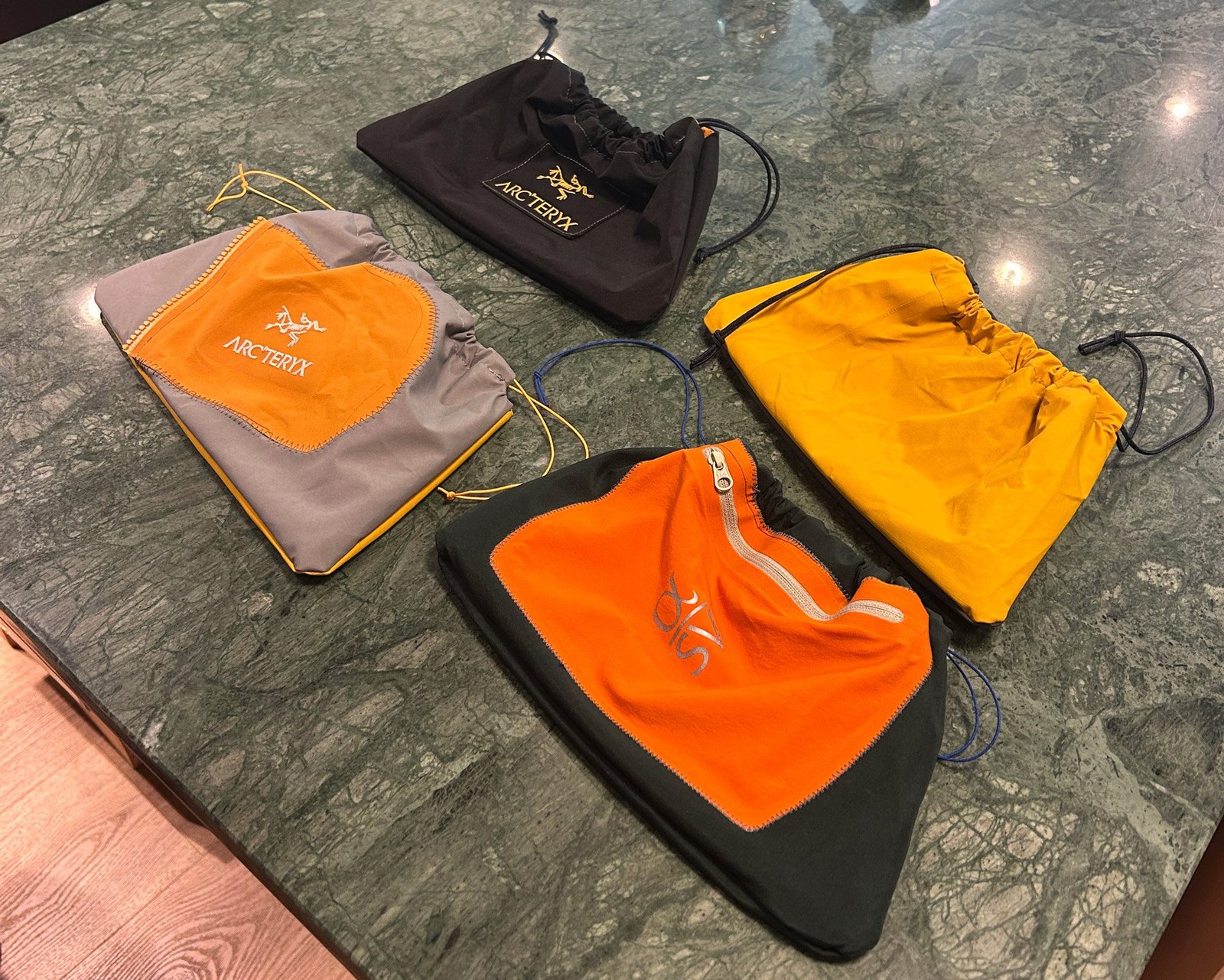
Back in Chamonix, I headed to the Arc’teryx ReBIRD workshop (part of a larger Arc’teryx Academy that was taking place over the weekend) to pick up the small pouch I’d made from some of the company’s “end of life” jackets. It’s just another way of showing that circularity can work.
I’ve been using it ever since.

2026 Popular Science Home of the Future Awards
Check back often for more exciting news!