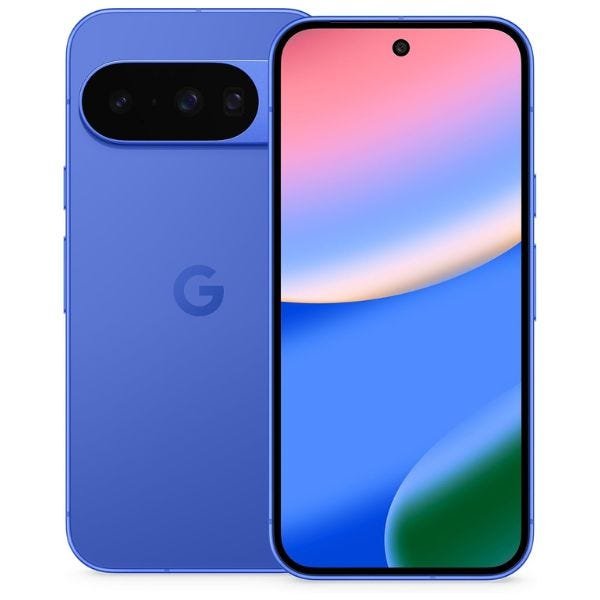
With its increasingly varied phone lineup, Google has an option for everyone. While we’ve assessed the best Google Pixel phone for most people, the right choice will depend on whether you want a larger or smaller phone, a regular or foldable phone, or a dedicated zoom lens. As we’ve come to expect from Google’s own
With its increasingly varied phone lineup, Google has an option for everyone. While we’ve assessed the best Google Pixel phone for most people, the right choice will depend on whether you want a larger or smaller phone, a regular or foldable phone, or a dedicated zoom lens.
As we’ve come to expect from Google’s own phones, regardless of price, you can count on all Pixels to exhibit superb camera quality and dependable performance.
Google has just refreshed the main Pixel line, launching four new models in August: the Pixel 11, Pixel 11 Pro, Pixel 11 Pro XL, and Pixel 11 Pro Fold.
We’re in the middle of reviewing all of them right now and will update this guide accordingly once we’ve put them through our rigorous tests and lived with them for a while. We expect them to replace our picks for the older Pixel 10 line featured in this guide soon, even if they are only looking like iterative upgrades this generation, as stock of last year’s phones is already drying up.
From our previous testing, the best Google Pixel phone for most people was the Pixel 10 – but expect the Pixel 11 to take that prize very soon. Both are excellent choices for Android fans or iPhone users looking from the other side of the fence, and they offer the best overall value within the company’s current lineup. The Pixel 10a is also the best option in the budget range.
Our top picks for the best Google Pixel phone
New Pixels we’re currently testing at home
Best overall

Google Pixel 10
Once you look past its original price, the Pixel 10 stands as a solid, shiny phone, especially with PixelSnap magnetic accessories and almost all of the same Gemini features as the Pixel 10 Pro series, like Auto Best Take and Gemini Live. While the 10a might be slightly cheaper these days, the Pixel 10 earns its upgrade and then some.
When describing the Google Pixel 10, I can’t help but use the word “awkward.” The $499 Pixel 10a that arrived back in March beats the originally $799 Pixel 10 in a couple of ways – bigger battery, better selfie camera, better colors and textures – but the RAM and PixelSnap alone justify the upgrade to the Pixel 10 in my eyes, let alone the rear cameras. For most buyers, skipping the Pro for the ‘regular’ Pixel 10 is an easy choice, as you get 88% of the Pro’s experience for a fraction of the price.
What visually sets the Pixel 10 apart from its brethren is that its rear glass sports a polished finish rather than a matte one, which not only makes it a fingerprint magnet but also makes it a bit more slippery in the hand. However, its matte aluminum frame and PixelSnap phone grips make up for it. Those don’t help how slippery the phone is face-down, though; the way the Pixel 10 drifts across uneven tables feels uncannily like an air hockey table.
The touchscreen under that Victus 2 cover glass can get plenty bright, but its PWM dimming is still noticeably worse than Apple’s or Samsung’s, and the new sensitive eyes toggle did nothing on the days I enabled it. My eye-strain headaches were less intense than on the Pixel 10 Pro XL but still noticeably more frequent than on my Samsung or on the pOLED Pixel 10a, though, as with any flicker sensitivity, your migraine triggers may vary.

Business Insider / Ara Wagoner
The Pixel 10 may not have quite as much memory as the Pro models, but 12GB helps the Tensor G5 smoothly shift from app to game to camera and back without dropping either from memory, and I saw none of the multitasking hiccups I did on the 10a. Gaming was mostly smooth, and without full-day gaming, I got at least a full day per charge. We’re sadly stuck with 15W wireless charging and 30W wired charging, as well as a smaller battery than the 10a’s, but I’ll take it to get the Pixel 10’s triple-camera array.
We don’t get the Pro-level controls on the regular Pixel 10 — though, really, the only one you’ll miss is the full-resolution toggle — but we do get up to 20x zoom and double the number of optical presets compared to the Pixel 10a. 20x zoom doesn’t sound like much compared to the gimmicky 100x zoom on the 10 Pro XL, but it was perfect for vacation pics and handled fireworks. Auto Best Take makes even mundane selfies seem a bit more magical, while Camera Coach and Edit for Me give amateurs a little leg up on their framing and levels, should they need it.
Best budget

Google Pixel 10a
While it won’t shatter any records or expectations, the Pixel 10a keeps on keeping on mechanically while giving us the first flat-backed Pixel phone since the Pixel 3a, all-day gaming on a single charge, a brighter Gorilla Glass 7i screen, and more Gemini integrations than you can shake a Circle to Search at. It’s missing the PixelSnap magnetic charging we’d hoped for, but there’s still a lot to appreciate in a phone that manages to maintain its value, build quality, and low price tag in a year where the price of any processor-powered tech is on the rise.
If you want the best Pixel without spending flagship money, the Google Pixel 10a is the easy recommendation. At $499, it delivers strong everyday performance, strong battery life, useful AI features, and what I still consider the best camera experience you’ll find in a new phone under $500. It’s an iterative update over the Pixel 9a rather than a dramatic leap, but Google’s formula continues to deliver outstanding value.
The Pixel 10a is comfortable to hold thanks to its flat profile, satin-finished plastic back, and aluminum frame, while the flush camera design means it finally sits flat on a desk. Google skips the PixelSnap magnetic charging system found on the Pixel 10, but that’s a reasonable compromise for a phone at this price.
The Tensor G4 handles everyday apps, streaming, multitasking, and casual gaming with ease, rarely feeling like a budget device. Battery life easily lasted me through full days of heavy use, and faster wired charging is a welcome improvement over the previous generation. The only noticeable limitation is the 8GB of RAM, which can occasionally struggle when switching between particularly demanding apps or leaning heavily on AI features.

Business Insider/Ara Wagoner
Google’s Gemini tools are among the phone’s most useful additions. Ask to Edit makes it remarkably easy to remove unwanted people or objects from photos, while Camera Coach and Auto Best Take help you capture better shots before you even start editing.
The camera remains the Pixel 10a’s biggest strength. Everyday photos look consistently great, Night Sight performed particularly well in my testing, and Google’s image processing continues to produce reliable, natural-looking results. Zoom performance is still the weakest part of the camera system, with image quality dropping noticeably beyond about 2x, but it’s an acceptable trade-off at this price.
Buy the Pixel 10a if you want the best Pixel for the money. Spend more on the standard Pixel 10 if you want a faster chip, better zoom photography, and PixelSnap charging. Otherwise, the Pixel 10a gets the fundamentals right, making it the best budget Pixel for most people, with the strongest balance of price, performance, battery life, and camera quality for the money.
For more on this model, check out Ara’s full Google Pixel 10a review.
Best camera and battery

Google Pixel 10 Pro XL
Flawless gaming, on-device AI-processing, and leveraging AI to make the most out of an already solid camera array, the Pixel 10 Pro XL brings Qi2 magnets into a flagship Android phone for the first time.
The only Android phone to support 25W Qi2.2 wireless charging naked — because Samsung was too chicken to put magnets in the Galaxy S26 Ultra — the Pixel 10 Pro XL is the first daily driver phone I’ve rocked without a case in years. PixelSnap may not be as robust an accessory line as I’d like, but being able to swap from a wireless charger to a kickstand to a PopSocket and back without needing a sticker or case feels liberating.
Caseless grip use comes in handy because the mirror-finish, SIM-trayless frame feels slick at times. It’s even more slippery face-down on a table, nearly yeeting itself off a slatted wood table twice, but the wide triple-camera bar keeps it steady and stable when face-up.
Those cameras are absolutely the selling point of the Pixel 10 Pro XL, especially when paired with Google’s processing secret sauce and Gemini-powered add-ons like Auto Best Take, which combines the best frame from each person to save your selfies and group shots. Asking Gemini to edit your photos can be painless for simple edits — especially Magic Eraser — but it can’t save a blurry take, like the 100x zoom Google claims for the 10 Pro XL. Stick to 20x or less; the 1x-to-5x photos I took during Magic Kingdom’s fireworks turned out fantastic, and daytime color fidelity is better than Samsung’s.

Business Insider / Ara Wagoner
Processing burst photos while playing Pokémon Go around the parks was the biggest stressor I could throw at Google’s Tensor G5, and apart from some predictable heat buildup in 90-degree sunshine, it handled it better than most of my Pixels and some Samsungs. Even my most visually intense game was silky smooth, even after six hours straight. The only times the phone slowed down were, ironically, during AI tasks like making images in Pixel Studio.
Apart from Pixel 10-exclusive features like Magic Cue — which hasn’t triggered once in over a week — Pixel’s software remains the same ‘streamlined’ version of Android with the same strange Settings arrangement. If you haven’t used a Pixel before, please try one in person, not just for the software but for the screen.
I found myself getting headaches and eye strain about twice as fast on the Pixel 10 Pro XL compared to my old Galaxy S23. Google added a ‘sensitive eyes’ setting that was supposed to reduce the migraines and strain caused by the flickering of PWM dimming. Just like the iPhone 17’s Display Smoothing, it doesn’t really have an appreciable effect, in either my daily use or in testing by PWM expert Nick Sutrich. This doesn’t impact everyone, but if you’re in that 10% of smartphone users, look elsewhere.
Best foldable

Google Pixel 10 Pro Fold
Google’s foldables are certainly on the chunky side compared to the competition, but the excellent durability and in-hand comfort make them a contender regardless. The wide coverscreen is the best in class, too, for fewer typos.
While the new Pixel 11 Pro Fold (which we’re currently testing) sees Google’s hefty foldables slim down a little, the 10 Pro Fold is still a worthy option, especially as it’s often found with a decent discount.
Google’s recent foldables remain the only ones on the market with both water and dust resistance, and their strong build quality gives them higher durability scores than Samsung and Motorola.
It has excellent cameras and built-in support for Google’s latest Gemini AI features. It’s also a vast improvement over Google’s first shot at the foldable phone market, 2023’s Pixel Fold.
What sets the Pixel 10 Pro Fold apart is its exterior 6.4-inch display, which offers a familiar, traditional phone experience when using the cover screen in folded mode. By contrast, many other foldable phones have awkwardly narrow cover screens and offer a somewhat unfamiliar and uncomfortable experience when folded, often leading to many typos due to a cramped keyboard.
The Pixel 10 Pro Fold also has an eight-inch interior tablet display, which is noticeably larger than the tablet displays of its competitors and makes it an ideal hybrid device to watch videos or use apps more comfortably.
The Pixel 10 Pro Fold does make some compromises on camera quality compared to the regular Pixel 10 Pro line, but it’s much more geared toward media viewing and productivity, as it’s excellent for writing docs or browsing spreadsheets – more so than any other phone we’ve tested, thanks to its size.
How we test Google Pixel phones

Antonio Villas-Boas/Business Insider
We test Google Pixel phones through standardized methods, but most importantly, we’ve used each model extensively as our main daily drivers. We’ve tested every Pixel phone since the very first model was released in 2016, so we have extensive experience with the line.
We test Pixel phone performance by running common, popular apps and games to ensure Google’s Tensor processors are as snappy and smooth as most people expect. To evaluate the potential longevity of Tensor processors, we keep older Pixel models up to date with the latest version of Android and assess performance by running the same apps and games. We also consider battery health, which significantly impacts the performance of older phones. The older Pixels we use to evaluate longevity have optimal battery health.
We exhaustively test Google’s growing list of AI features, an important part of the Pixel experience. Across compatible devices, we also evaluate and compare the accuracy and efficiency of the latest iterations of the Gemini and Gemini Advanced AI chatbots.
For camera quality, part of our testing involves taking photos of the same scenes across our phone reviews with each lens. Whenever a new Pixel is released, we bring its contemporary competitors to take pictures at the same time of day and time of year for the best and most accurate comparison.
The hundreds of personal photos we take with Pixel phones have the greatest impact on our camera quality evaluation, as they best reflect the photos most people take with their phones and what it’s like to use the camera app under day-to-day conditions. Personal photos also reveal a camera’s strengths and weaknesses that a controlled test doesn’t.
FAQs
Which is the newest Google Pixel phone?
Google released its newest phones, the Pixel 11, 11 Pro, 11 Pro XL, and 11 Pro Fold, on August 20, 2026. Before that, the Pixel 10a was released on March 5, 2026.
How long are Google Pixel phones supported?
In the past, Google surprisingly had some of the shortest support windows for its entries among the best Android phones, even though Google itself develops Android and produces Pixel phones.
However, with the Pixel 8 series, Google finally started offering a longer support window that competes with or surpasses most Android phones: seven years of Android upgrades and security updates from their respective release dates.
Previous Pixel models have shorter support windows for Android upgrades and security updates, and most also receive security updates longer than they get Android upgrades.
{For more tech updates, stay tuned to our blog.|Keep following us for the latest insights.|Check back often for more exciting news!}