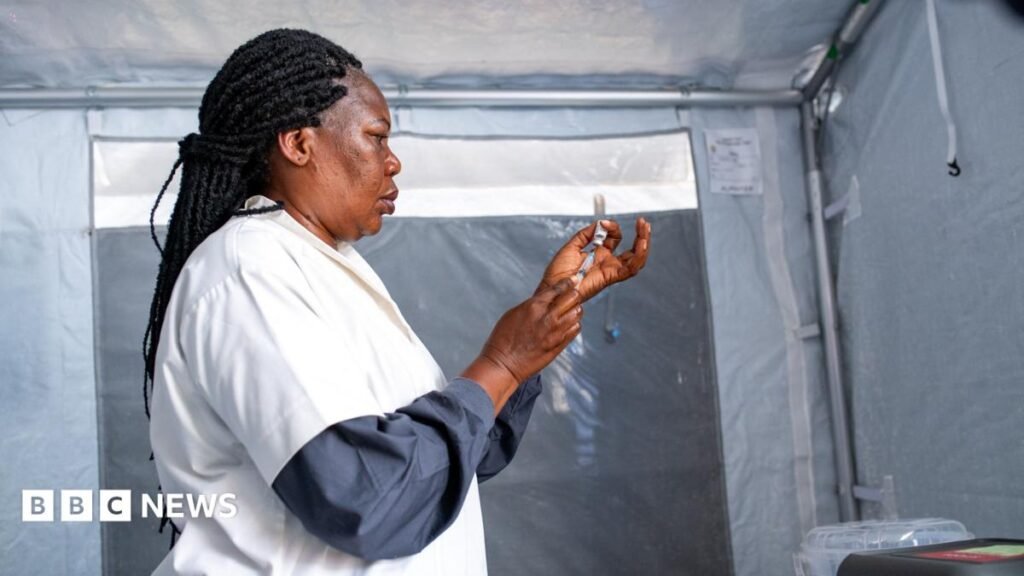
The current outbreak in DR Congo has been caused by the Bundibugyo species of Ebola, which is relatively rare, with no approved vaccine or treatment. There are however four vaccines in development, with human trials for one of them being launched in July. Duale confirmed that the Kenyan national had tested positive for the Bundibugyo
The current outbreak in DR Congo has been caused by the Bundibugyo species of Ebola, which is relatively rare, with no approved vaccine or treatment.
There are however four vaccines in development, with human trials for one of them being launched in July.
Duale confirmed that the Kenyan national had tested positive for the Bundibugyo species.
According to the minister, the patient first travelled by road from DR Congo to the Ugandan capital Kampala, where he boarded a flight to Nairobi
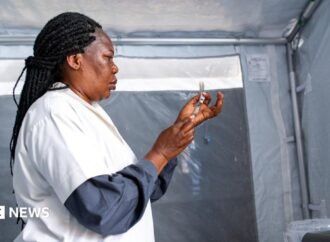
Duale said that after being taken to the Nairobi Hospital, the patient was transferred to an isolation facility which was built during the Covid-19.
It was there that the patient “developed fever, chills, intense fatigue and weakness, painful swallowing, muscle pain and bleeding under the skin”.
“Doctors suspected a viral haemorrhagic fever based on his symptoms and travel history and collected samples for testing. The sample tested positive for Ebola Bundibugyo virus,” Duale said.
The patient died at 23:30 (20:30 GMT) on Monday and his burial is planned for later on Tuesday in line with public health safety protocols.
At least 28 contacts, including family members and healthcare workers, have been identified, while health authorities are tracing a further 23 passengers and four crew members who travelled on the same flight.
The WHO has recorded 4,082 deaths out of 8,463 cases in the current outbreak, making it the largest ever recorded in DR Congo, where Ebola was first discovered.
Medical charity MSF believes the current toll could be even higher because of gaps in surveillance and testing in the war-torn country.
On Monday, MSF said the virus was spreading “like a megafire”, with new hotspots emerging in North Kivu province, which borders Ituri where the virus began.
Since early September this has “intensified dramatically” with the province now accounting for nearly 40% of all newly confirmed cases nationwide, MSF said.
For more tech updates, stay tuned to our blog.