
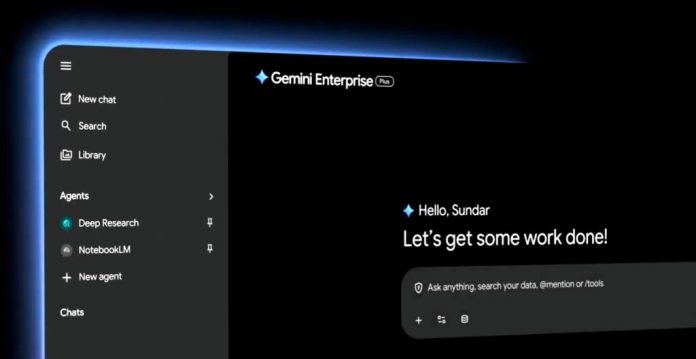
If you’ve followed my recent stories here on techAU, whether it’s the PAX Aus floor highlights or late-night Tetris showdowns—you know I’m obsessed with the moment a “cool gadget” becomes a “daily driver.” After watching the Google Cloud Next ‘26 keynote and in particular the developer session, it’s clear we’ve hit that moment with AI.
If you’ve followed my recent stories here on techAU, whether it’s the PAX Aus floor highlights or late-night Tetris showdowns—you know I’m obsessed with the moment a “cool gadget” becomes a “daily driver.”
After watching the Google Cloud Next ‘26 keynote and in particular the developer session, it’s clear we’ve hit that moment with AI. We’re moving past the era of chatbots that just answer questions and entering the era of AI Agents that actually get work done.
As Google CEO Sundar Pichai put it, the conversation has shifted from “How do we build an agent?” to “How do we manage thousands of them?”

Meet Your New Digital Teammates
The headline act this year was the Gemini Enterprise Agent Platform. In plain English? It’s an environment where your business data and AI models talk to each other to take action. It also means Google Gemini is now available in Google Workspace, giving you access to AI tools in your documents, spreadsheets, and presentations. At work, we’ve already started playing with both Google Workspace with Gemini and Gemini Enterprise Agent Platform.
Gemini Enterprise Agent Platform is changing what it means to be a “techie.” It’s no longer just about writing lines of code; it’s about being a “Director of AI.” You aren’t just building a tool, you’re managing a team of digital assistants—a planner, an evaluator, and a simulator—all working together.

The “Vibe” of Modern Tech
There was a lot of talk about “Vibe Coding” during the developer keynote (a term gaining steam—or maybe not?!—for building apps through conversation rather than manual typing). While the “vibes” are great, the utility is better.
Google showcased a massive marathon planning simulation to prove a point: you can use this tech for almost anything. Whether you’re organising a world-class sporting event or just trying to automate your company’s invoice system, these agents work within the “guardrails” you set. Guardrails are like safety nets, where you tell your agents how they need to act, what they can do, and what they can’t do. It’s essentially the “Adulting” version of AI. Google introduced things like Agent Identity and Agent Gateway.
This might sound dry, but it’s huge. It means these AI agents have their own secure IDs and strict rules. It’s the difference between a random bot and a trusted employee. It means your security team won’t have a collective heart attack when you hit “deploy.”

Veo 3.1: Hollywood in your pocket
For the creatives and content creators out there, the Veo 3.1 model is the one to watch. We’ve seen AI video before, but this update brings “cinematic consistency.”

Whether you’re a marketer needing high-quality social clips or a dev wanting to put slick visuals into an app, Veo 3.1 is designed to be production-ready and—crucially—cost-effective. It’s allowing for the democratisation of high-end video production.
Don’t just throw AI at the wall
Despite the excitement, Google Cloud CEO Thomas Kurian hit on a vital point: you can’t just throw technology at a problem and hope it sticks. Just because “AI” is the buzzword of the decade doesn’t mean every business needs to pivot into an “AI Company.” The goal should always be:
- Identify the problem.
- Design the experience.
- Decide if AI is actually the best tool for the job.
AI is non-deterministic (a fancy way of saying it can be unpredictable), so it’s not a magic wand for everything. But for the things it does do well? It’s a game-changer.
Final Thoughts
The era of the “Autonomous Cloud” isn’t some far-off sci-fi concept; it’s sitting in the tools we use every day. Google even open-sourced the code for their keynote demo, so if you’re feeling brave, you can go poke around the repo yourself. The real question is: Are you ready to manage a digital team of agents, or are you sticking to the old-school way of doing things?




















Leave a Comment
Your email address will not be published. Required fields are marked with *