
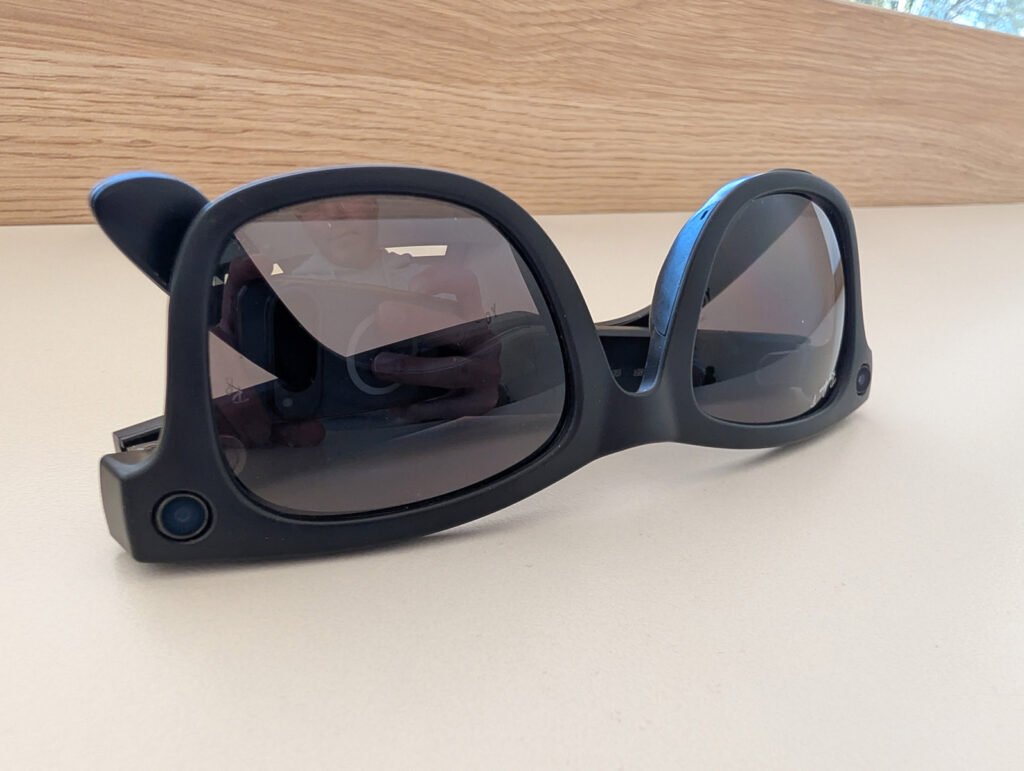
I’ve worn sunglasses for as long as I can remember, and until now, they’ve protected my eyes, and that’s the end of the feature list. In 2026, smart glasses are finally here, ones that people will actually wear and don’t look like a science experiment. For the past couple of months, I’ve worn the Ray-Ban
I’ve worn sunglasses for as long as I can remember, and until now, they’ve protected my eyes, and that’s the end of the feature list. In 2026, smart glasses are finally here, ones that people will actually wear and don’t look like a science experiment.
For the past couple of months, I’ve worn the Ray-Ban Meta (gen 2) glasses almost every day and have been impressed by the wearable technology. While not perfect, they offer great functionality, solving some of my long-time challenges with using your phone to capture the world.
The glasses do a few key things right. Firstly, they place the camera at your eye level, meaning you can create videos that do a great job of showing other people what you saw, as the footage is shot from the same height and angle that you experienced it. When you hold up a phone, you consume one or sometimes two hands to do so, which dramatically limits the things you can capture. Having used the Wayfarer Gen 2 glasses, I now appreciate just how many times there are when you can’t hold your phone.
Capturing hands-free video is just one feature; these are smart glasses in the true sense of the word. They contain a microphone and speakers, and are connected to your phone, which means you can interact with Meta AI. While Meta AI may be my least-used LLM, using these glasses has forced me to use it more often.
During my time with the glasses, I received an update that further expanded the functionality, with Meta now integrating with not just their own properties (Facebook, Instagram, WhatsApp), but also 3rd parties like Google Gmail/Contacts/Calendar, Outlook.com Email/Calendar, Spotify, Amazon Music, Audible, Garmin, Shazam, and Strava.
The target audience for this device is wide, spanning from tech enthusiasts and social media creators to busy professionals who need to stay connected without constantly reaching for a phone. It is particularly effective for those who want to capture point-of-view memories or listen to audio while maintaining full situational awareness of their surroundings.
Design
The design of the second-generation Wayfarer features some very impressive engineering. Meta has managed to reduce the overall weight and thickness of the frames, miniaturise the circuitboard, battery, camera modules and other components, making them virtually indistinguishable from standard non-smart eyewear.
Compared to the first generation, the frames are lighter, and the arms are slimmer, which significantly improves comfort during extended wear. While competitors often struggle with design being bulky and oversized, the Meta Wayfarer maintains the classic silhouette that has made Ray-Ban a household name for decades.
The notable difference between regular sunglasses and these is the symmetrical camera and recording LED, which sits on the outside of each eye. The camera lens is obviously there to capture photos and video, but the LED is a critical element that addresses privacy concerns. This ensures anyone you interact with will be aware you are recording, with a bright white LED that pulses as you record.
Inside the glasses, there’s also a white LED that pulses as you record, ensuring you know if it’s on or off. This may sound silly, given you would have to first start a video with a press of the button on the right side of the frame, or a voice command. Given that you can record up to 3-minute clips, it certainly is possible to question if the recording is still going or not. In daylight, this LED isn’t always obvious, particularly given its close proximity to your vision, but in low-light conditions, it certainly is.
Another aspect of the glasses is the touch panel on the outside of the right frame. This allows you to swipe left or right to adjust the volume of audio. This works great in the event you’re listening to music, and someone approaches and starts a conversation, just tap to pause music playback, then tap to resume. Alternatively, swipe back towards your ear, and it reduces the volume.
One of the standout design elements is the new charging case. Redesigned, it now features a premium leather look and feel, while housing a battery to recharge the glasses, and USB-C charging, complete with its own multi-coloured LED indicator to let you know what’s happening.
In terms of design, the partnership with Ray-Ban has enabled the glasses manufacturer to support a wide variety of frames and colours. The choice of finishes, including the classic shiny black and various transparent options, ensures there is a style to suit every preference.


Performance
Performance is where the second generation really pulls away from its predecessor. The new 12 MP ultra-wide camera captures significantly better detail and performs much better in varied lighting conditions. Video recording quality options include 1080p with a choice of 30 or 60fps, but the highest available quality is 3K at 30fps.
While 3K or 2880 x 1620 in a 16:9 widescreen aspect ratio certainly offers a significant quality bump, at around 2.25 times the pixel density of 1080p, it does have a couple of drawbacks. The first is that you will consume more battery life and the second is that you’ll lose any video stabilisation.
When you compare the smoothness of the 1080p footage, the difference is significant and you’ll need to be far more conscious of making your audience sick with rapid head movements when you don’t have software assistance. The second impact is battery life.
These video clips of up to 3 minutes are generally perfect for capturing quick clips for social media and are easily available on your phone thanks to auto-importing via the Meta app.
One challenge I found was the hard 3-minute limitation. There’s no recognition of what the camera is watching, and if the action is still ongoing when the 3 minutes are up, you’re out of luck. Naturally, you can start a new clip, but this often results in seconds ticking away and on a live event, you simply miss the action.
This limit is certainly a prevention from the device getting too hot, but something that obviously needs to be addressed in future versions. Personally, I’d love to have a recording time of up to 10 minutes and the ability to record clips for most of the day. Ideally, I’d love to see 4K video support, given that this footage may be integrated into video projects that use drones, sports action cameras, mobile phones, full-frame or DSLR cameras that all support 4K quality.
When it comes to battery life, I found that aggressive capturing rapidly eats into the battery life. At 1080, I could capture 8 to 10 clips or up to 30 minutes of footage, while on 3K quality, this dropped to 6 to 8 clips or up to ~24 minutes of video. If you just listened to music (streamed via Bluetooth from your phone) and use the ‘Hey Meta’ option occasionally, then you’ll likely get around 4 hours. This is adequate, particularly given you can pop the glasses back into the charging case and they’re ready later (i.e. when you get out of work), to go again without ever plugging them in. Would I like more? Sure, but that’ll have to wait for further magic from the design and engineering teams.
The audio performance was really surprising. This isn’t done using the bone-conducting technology of others, but rather an open-ear speaker design that points down from the frame. It is worth noting that this means your audio will be audible to those standing nearby, so be conscious of the playlist rating in public spaces. The volume was good, so if you want to skip wearing earbuds on a bike ride, you could get by with just the audio (i.e. podcast or music) from the glasses.
I found the microphone array does a great job of picking up your wake word and voice input, even in outdoor environments.
Features
Being the second generation of glasses, it’s clear these are a more mature platform, not only just in terms of hardware improvements, but also on the software side. A suite of intelligent features moves these glasses beyond just being a camera and speaker to a mobile, wearable computing device.
Ultra-wide 12 MP camera
The upgraded camera sensor allows for high-quality photos and videos from a first-person perspective, featuring improved low-light performance and electronic image stabilisation. The 3K video quality is incredibly usable and can work for both landscape and vertical content.
Configurable in settings, you can have the button on top of the frame take a single photo or start a video recording. Just tap it again to stop, or use your voice to command Meta: “Hey Meta, stop recording.”
Meta AI integration
Users can interact with one of the most common generative AI models via voice, acting like an assistant to get information for you, control the glasses, or even identify objects and landmarks in your field of view.
One of the newer features is the ability to provide a custom prompt for Meta AI, so when you press and hold the touch panel on the right frame, it’ll feed your prompt to Meta, and give you a response without the need for you to start with ‘Hey Meta’. This means in crowded or quiet environments, you could have your prompt fire “Give me the latest tech headlines” and Meta would respond by reading you the latest headlines from technology that day.
Open-ear audio system
Custom-built speakers deliver immersive sound while allowing the user to remain aware of ambient noise, making them safer for walking or cycling in urban areas.
Improved charging case
The redesigned case provides up to eight additional charges, ensuring the glasses stay powered throughout a full weekend of travel or content creation.
LED Status light
Meta has done what Google Glass did not: inform the people around you that you’re recording, via a white LED that can not be turned off. You can adjust its brightness; however, even on the lowest setting, it’s still very obvious. This is a great privacy feature.

Issues and opportunities
While the Ray-Ban Meta Wayfarer is a massive leap forward, there is still room for growth in future iterations. The battery life is improved, but still sits at around four hours of active use, which might not be enough for a full day of heavy recording. Increasing the battery density without adding bulk remains the primary challenge for this category.
Something I noticed about my own experience while using the glasses was just the need to be conscious of others and how they may feel about being recorded. I was ultra sensitive to this, which meant even taking off the glasses as you pull through a drive-thru, so as to completely remove the opportunity for the customer service agent to potentially mistake these for actively recording, once they see the camera.
Not everyone is into technology and won’t understand that the visual LED indicator represents whether they are recording or not; their assumption will be that they are. While being out in public, there’s no expectation of privacy; it is something people can be incredibly sensitive about, so I think it’s best to err on the side of caution and be respectful of that.
I know this is an unlikely request, but I would love to see Meta open up the glasses, allow users to configure their favourite LLM, rather than be tied to the Meta ecosystem. There are starting to be a few connectors across the walled garden, but still not nearly the same experience as having Grok, Gemini or ChatGPT integrated that could allow you to command your AI agents while out and about in the world. These would be infinitely more useful if this were possible, as these services would have access to your full chat history and know you. Unless you’re an avid Facebook user, these may not be for you.
Unfortunately, Meta Live AI is not yet available outside the US and Canada. This provides a more natural interaction interface, like you’re having a conversation with AI, rather than question/answer.

Price and availability
The Ray-Ban Meta Wayfarer is widely available across Australia through major electronics and eyewear retailers. Pricing typically starts around A$449 for standard lenses, though this can increase depending on lens choices such as polarised or transition options.
The Ray-Ban Meta Wayfarer (gen 2) are available from Meta directly, starting at A$599 for Gen2 (you want Gen2) or A$337 for Gen 1. Some more expensive models include transition lenses, which can cost A$689. The model reviewed was the Matt Black frames with the Gradient Graphite lens colour, which cost $639.00.
For what you get, that price is reasonable; it’s a bit of a premium over, say, a regular $300-400 pair of premium glasses, but for the functionality you get, I think that’s justified.
The Wayfarer design is available in up to 7 colours, and a choice of standard or large frame sizes. There are also Skyler, Headliner, Blayzer, and Scriber options, but I’ll let you browse the website to learn more about those options. If Ray-Ban styling isn’t for you, Meta also partners with Oakley.
It is possible to get these with prescription lenses, although that will be more expensive.
Other purchase options for the Ray-Ban Meta Wayfarer Gen 2 AI Glasses include JB Hi-Fi, where these start at A$639.00, Harvey Norman: A$638 (with $50 bonus gift card), Bupa Optical: A$650 retail, or $487.50 for Bupa Members.
It is an option to get these with clear lenses, which would allow you to use them at night; however, that does not escape the core reason why you wear sunglasses, to protect your eyes from the sun and the glare.

Overall
The Ray-Ban Meta Wayfarer (Gen 2) is undoubtedly a breakthrough in smart glasses technology. They’re the first product I actually want to own and have regular use cases for. From capturing my own experiences while out and about in the world for memories, to creating hands-on content for techAU reviews, etc., these are very useful.
The design and packaging now offer a great blend of functionality, without a laundry list of compromises. These are regular glasses, but are smarter, with lots of functionality, even if I wish they could be even more.
If you’re looking at the price point, you can’t simply compare the price of these next to a pair from your local 7/11; compare these with a regular set of designer sunglasses, and the price is not that much of a premium. Sure, it’s more than I ever thought about spending on glasses, but that same thing happened when I bought an EV. The technology entices you to pay up.
If you bought the first generation, I feel bad for you, as these are significantly better, which I only mention as a background to those buying gen 2, be conscious that the gen 3 will be even better. Meta is also starting to make smart glasses with screens in them, to provide visual augmentation to your real-world experiences, on top of audible AR. These will come at a significant price premium, so I wouldn’t hold out for them.
If you’re someone like me who creates content, these are definitely worth strong consideration; they offer functionality and design not yet seen in the market. The only downsides are that you are locked into Meta AI, so those of us who regularly use other LLMs, like Google Gemini or xAI’s Grok, may be left wanting. Until Google ships their own glasses, this is the next best thing.
Perhaps my favourite thing about these is the ability to capture the amazing things that happen in the world, that otherwise would have been a fleeting memory and lost forever. From kicking a football with my daughter, to scooter riding, to driving the car, there’s a range of activities that require both hands, and to put the phone away and be “living in the moment”, these glasses should be strongly considered.




















Leave a Comment
Your email address will not be published. Required fields are marked with *