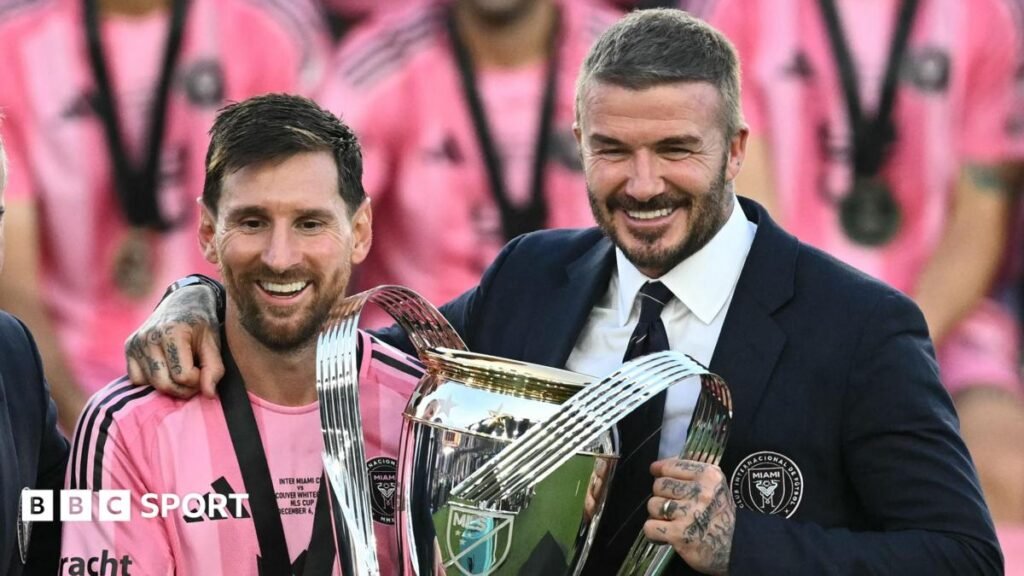
In some ways, MLS is already on par with major leagues around the world. There were 45 MLS players represented at the 2026 World Cup, including two in the final for Argentina, Messi and Rodrigo de Paul. MLS has a reputation as almost a retirement home for superstars: a lucrative place to play for legends
In some ways, MLS is already on par with major leagues around the world.
There were 45 MLS players represented at the 2026 World Cup, including two in the final for Argentina, Messi and Rodrigo de Paul.
MLS has a reputation as almost a retirement home for superstars: a lucrative place to play for legends like Beckham and Messi after their best careers in Europe.
But that reputation is outdated, Courtemanche says, as the average age of new international players in the league is now 23.8 years old. Although many of them dream of playing in Europe after experiencing the MLS.
MLS is changing its calendar in 2027 to adopt a summer-to-spring season, more aligned with Europe to make it easier for players to move between leagues.
And competition leaders are investing in youth development leagues.
All MLS teams have youth academies. As the LA Galaxy hosted a party to watch the United States’ victory over Bosnia-Herzegovina on a big screen, dozens of children ignored the game and instead battled it out themselves on three separate fields, occasionally running toward the big screen as the sound of a goal spread through the crowd.
These were unusual games in a culture full of children with tightly scheduled schedules and the skill level was high. Some of the children played for MLS youth teams.
Eight-year-old Landon (named after American star Landon Donovan) was one of the most skillful, transitioning from goalkeeper to striker with joy. His mother, Jen Wing, is a coach and says her sons attended MLS camps and played on travel teams at their home in New Jersey.
Landon dreams of one day being a professional soccer player in the MLS.
“LAFC,” he says, referring to his dream team.
But critics say MLS will never compete with Europe until it resolves its “pay-to-play” culture in youth development.
At the highest level, MLS academies train and develop youth players for free, just like their European counterparts.
But to get to that level, where an MLS academy team would look at a teenage player, families often pay thousands of dollars for private lessons and access to travel equipment, a common theme in American sports.
MLS officials say that development leagues are constantly evolving and improving when it comes to developing young talent, and that each team has scholarships available for talented players.
Commissioner Garber says the league is always improving and is determined to get even better at developing young players so they can contribute “more and more to the men’s national team and just be better, bigger, stronger, faster, all those things that give you energy to think about a better future.”
When it comes to attracting fans, Messi is the biggest draw in the league.
But the cult of celebrity extends throughout the league. More than two dozen entertainers and athletes own stakes in MLS clubs, including Will Ferrell (LAFC), Reese Witherspoon (Nashville SC), Matthew McConaughey (Austin FC) and Magic Johnson (LAFC).
And it is a lucrative business.
Drew Carey was the original owner of the Seattle Sounders when the club joined MLS in 2009 for a $30m (£22m) expansion fee. The Sounders are now valued at more than $900m (£668m). David Beckham’s 2007 LA Galaxy contract included the option to buy an MLS expansion team for $25 million. He now owns Inter Miami CF, a club that experts have valued at more than a billion dollars.
Keep following us for the latest insights.